Flensburg: our surprising home base on the fjord
Flensburg: our surprising home base on the fjord
We’re in the far north of Germany to find out whether this region is more than just a transit route to Scandinavia. Flensburg is our home base during this search. The city immediately feels both Danish and German. The mix gives Flensburg a character of its own that we didn’t expect. It instantly leaves us wanting more. And that’s exactly why we keep walking, looking and enjoying. Anyone who thinks Flensburg is merely a stop‑over is mistaken. This city deserves far more attention than it gets. And you’ll discover that the moment you walk along with us.
With Paul Erik through the old town
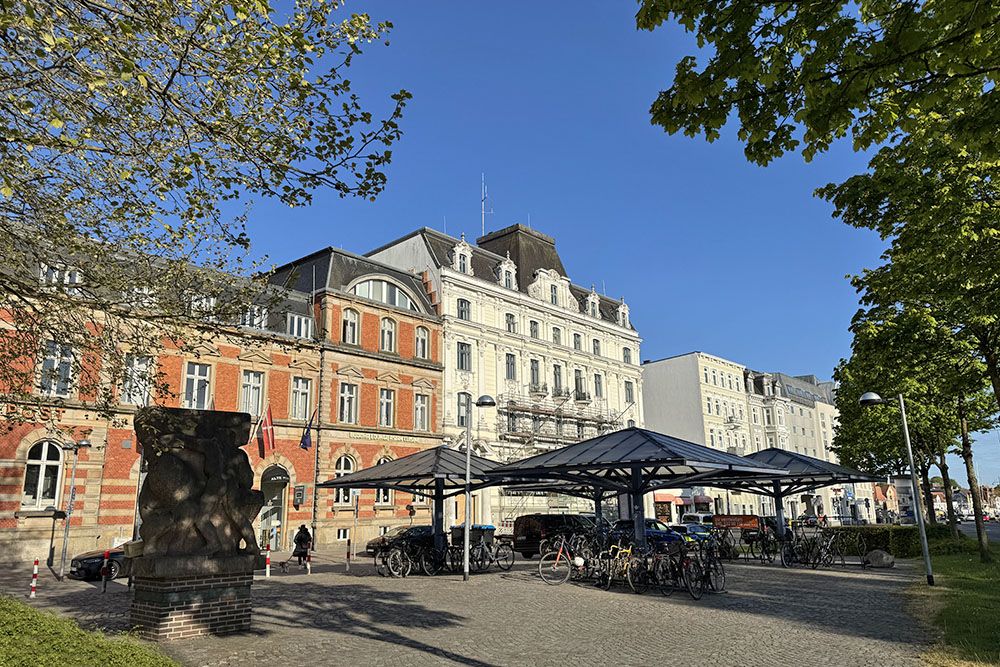
It’s mid‑afternoon when we begin our city walk at our hotel, Alte Post. We don’t yet know that this stately building will later play an unexpected role in the story. For now, we step outside with our guide, Paul Erik Jørgensen. He says his surname tells you everything about his background. He says it casually, as if it’s just a detail. The city feels warm and lively as we head deeper into the old town.
From Vikings to trading town
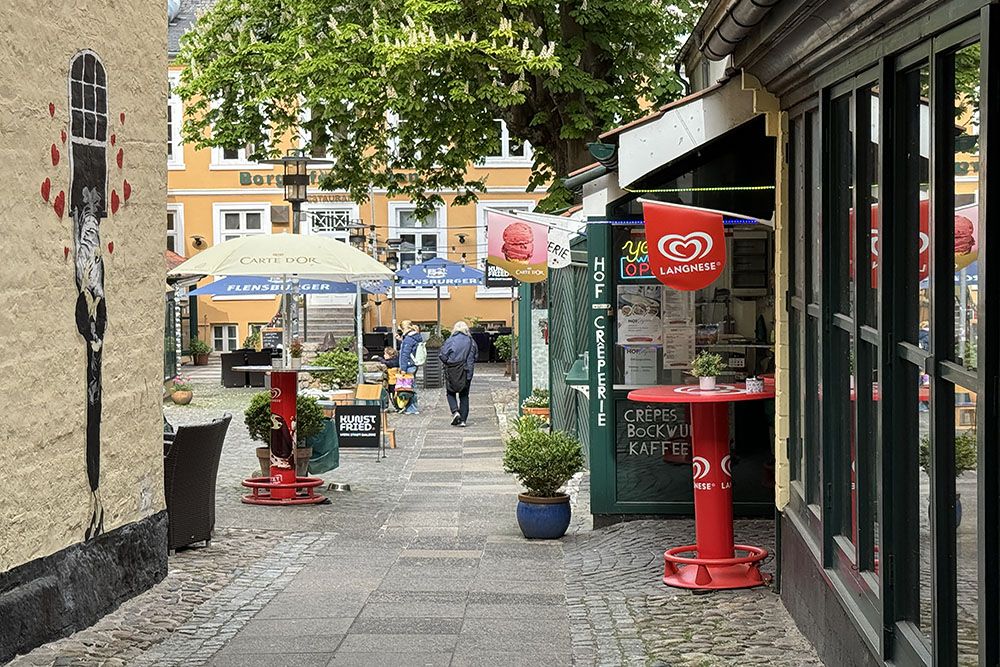
Along the way, Paul Erik tells us about the history of Flensburg. He speaks calmly, but with pleasure. The city emerged in the early Middle Ages, in a place where Vikings and Frisians met. The fjord was already an important shipping route. Boats sailed deep inland. Trade developed. Villages grew. For centuries the region belonged to the Danish kingdom. You can still see that in names, customs and buildings. Paul Erik points to façades and streets. “The border was never a hard line here,” he says. And we can feel it.
In the thirteenth century, Flensburg grew into a real town. Its location on the fjord was ideal. Traders arrived. Craftsmen settled. The city joined the Hanseatic League. Trade flourished — especially fish, salt, grain and later rum and sugar. The wealth is still visible in the merchants’ houses. Many of them still stand today.
Holm and the Holmnixe
We reach the Holm: a busy shopping street with a long history. Here, Paul Erik tells us about the ‘Holmnixe’: a sculpture on a fountain depicting a fantastical sea creature. Half human, half serpent. It looks at us kindly — or perhaps a little mischievously. The sculpture dates from the 1970s, but fits surprisingly well in the old street. The Holm buzzes with life. People walk or cycle past, chatting. We listen and look.
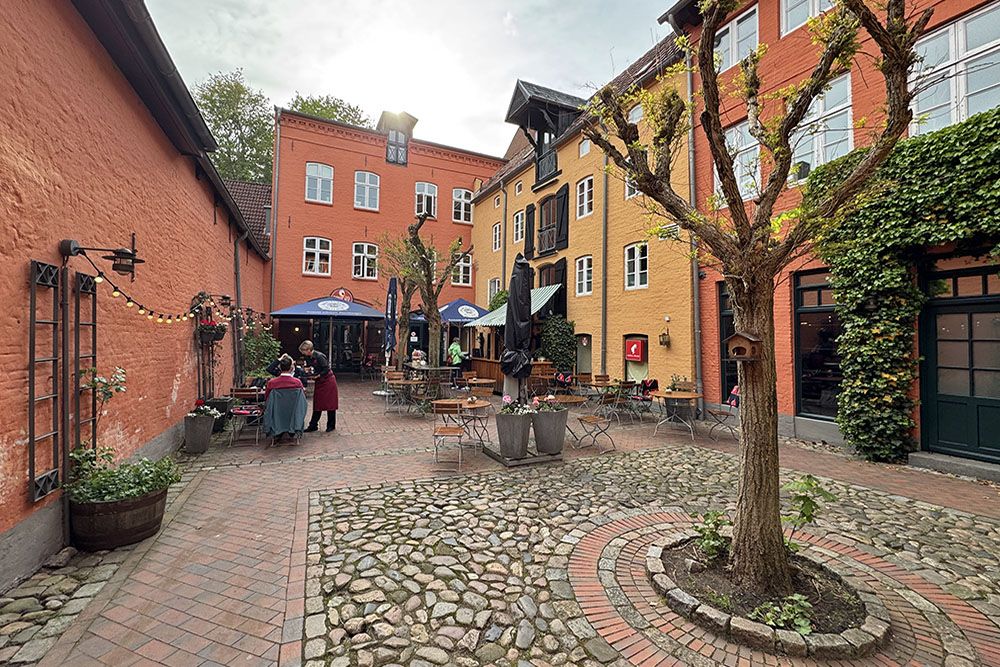
We turn into the Holm, but not far. Because we immediately slip into our first courtyard. The contrast is huge. From bustle to silence. It feels as if we’ve stepped into another world. We peek inside Trux Hairdesign. The salon has a strikingly beautiful ceiling — modern and bright. An unexpected find in an old courtyard. We smile. Flensburg surprises us again.
Warehouse, mural and courtyards
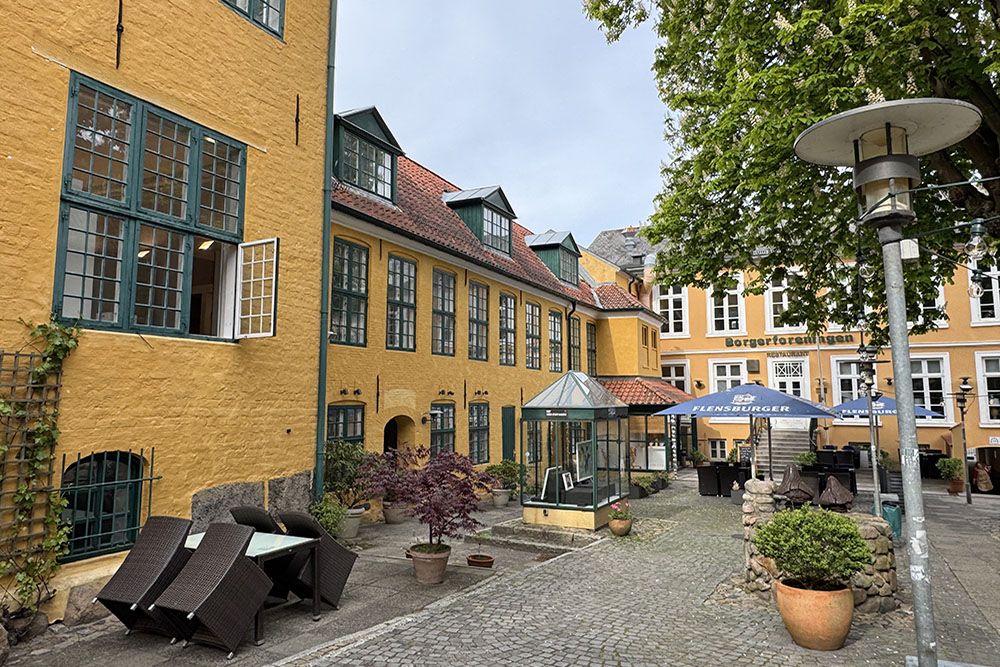
We continue and arrive at a small square with a centuries‑old warehouse. Right next to it we find a façade with a large, colourful mural. Paul Erik explains that Flensburg has an active street‑art scene. Artists give old walls a new life. It suits Flensburg — a city that blends history and renewal effortlessly.

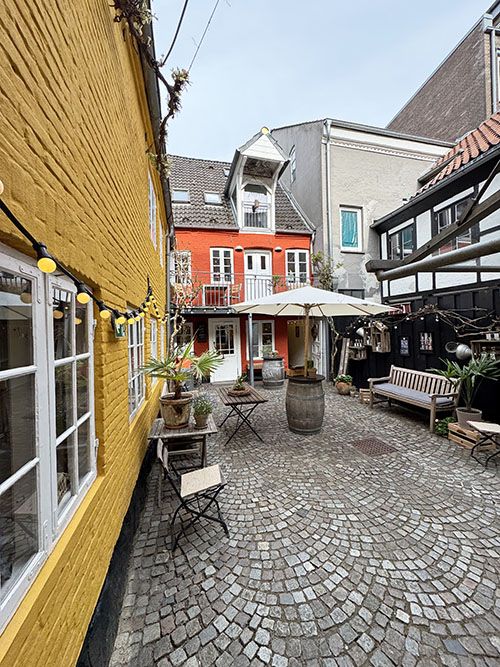
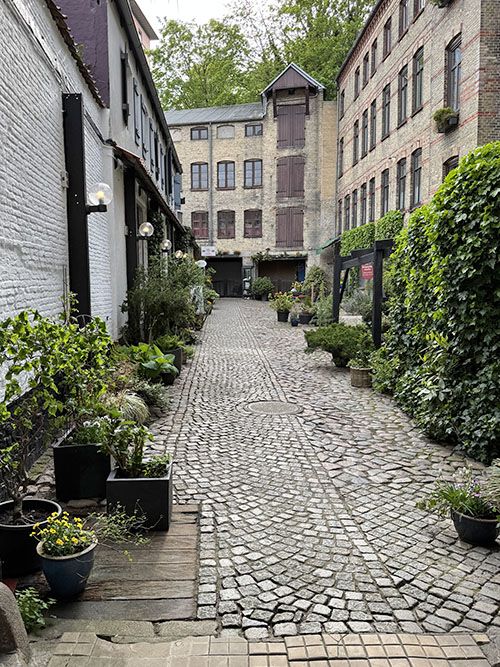
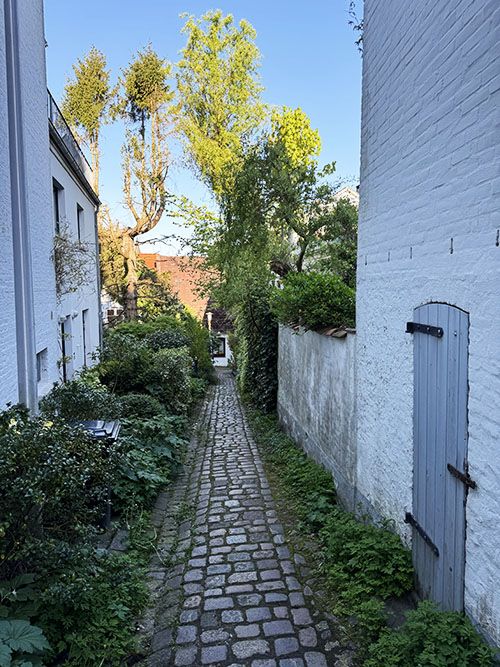
We walk on and slip into another courtyard. This one is even prettier. Small, intimate and utterly picturesque. Flowers along the walls. A few chairs. A quiet inner world. We pause for a moment. It’s the kind of place where you automatically lower your voice. Then we continue and pass the Nikolai Apotheke. A beautiful building. The oldest merchant’s house in the city, built after 1485. The façade is impressive. Paul Erik tells us that wealthy traders once lived here. The city thrived on trade, especially rum and sugar.
We visit a few more courtyards. Each with its own character. Some open. Others narrow. We see old doors and tiny windows. A cat that ignores us. Life simply carries on here. We walk on until we reach Wein & Rumhaus Braasch. A place that smells of history. And of rum.
Rum, wealth and rivalry
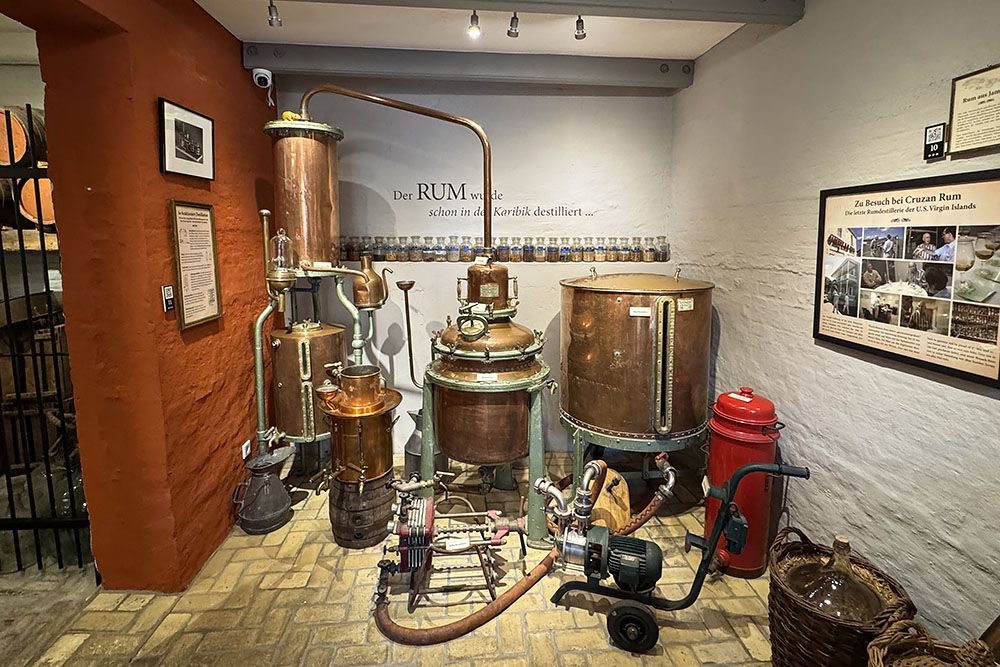
We begin in the courtyard. Then we visit the museum. It’s small, but full of stories. We learn about the rum trade. About ships sailing back and forth to the former Danish West Indies. About families who became wealthy. And about Flensburg’s role as Europe’s rum capital. The trade brought wealth — but also rivalry. Merchants competed for markets, ships and influence. The fjord remained the city’s lifeline as it continued to develop.
During the tasting, a staff member takes over the story. He pours small glasses and explains the different types of rum. Some are young and fresh. Others have spent years in wooden barrels. You taste that immediately. The rum is soft and warm. The flavour lingers. We take a second sip. And another. It’s the kind of rum you drink slowly because you don’t want to miss anything. But also the kind that becomes dangerous when you’re hungry. And by now, we really are. The scent of molasses and wood doesn’t help. Suddenly we understand why rum here isn’t just a drink — it’s a tradition.
The 1920 plebiscite
After the tasting, we walk back towards the northern part of the old town. We follow the Holm, which later becomes the Große Straße. The street is wide. The buildings are beautiful. Along the way, Paul Erik tells us about the 1920 plebiscite. The First World War is over and the region must choose between Denmark and Germany. The border shifts. Villages are split and families divided. The vote is emotional. The outcome determines the border as we know it today. Flensburg remains German. But the Danish influence remains visible and tangible. Paul Erik tells it without drama, but with real involvement. It’s clear that this part of history touches him.
We see a plaque dedicated to Hans Christian Andersen. He stayed here several times in a hotel that once stood on this spot. He wrote about the city and walked the same streets.
Neptune, timber framing and St Mary’s Church
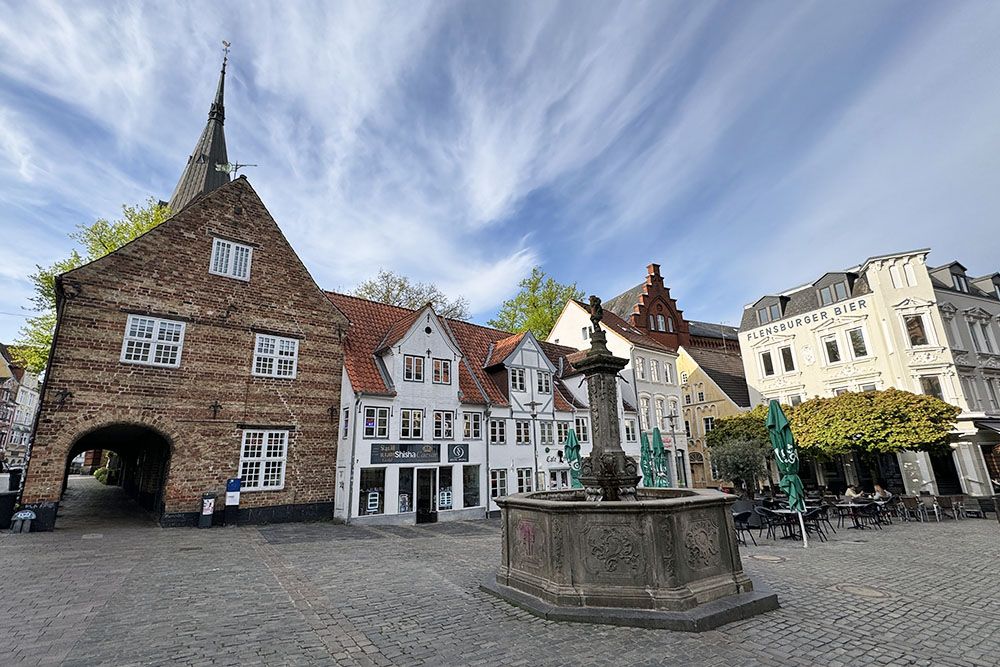
We continue until we reach a small square with a fountain: the Neptunbrunnen. The fountain was built in 1758 in Rococo style. Neptune, the Roman god of the sea and flowing water, looks at us sternly. His trident is a replica, as the original was often stolen. The fountain is a small work of art. It fits the square perfectly.
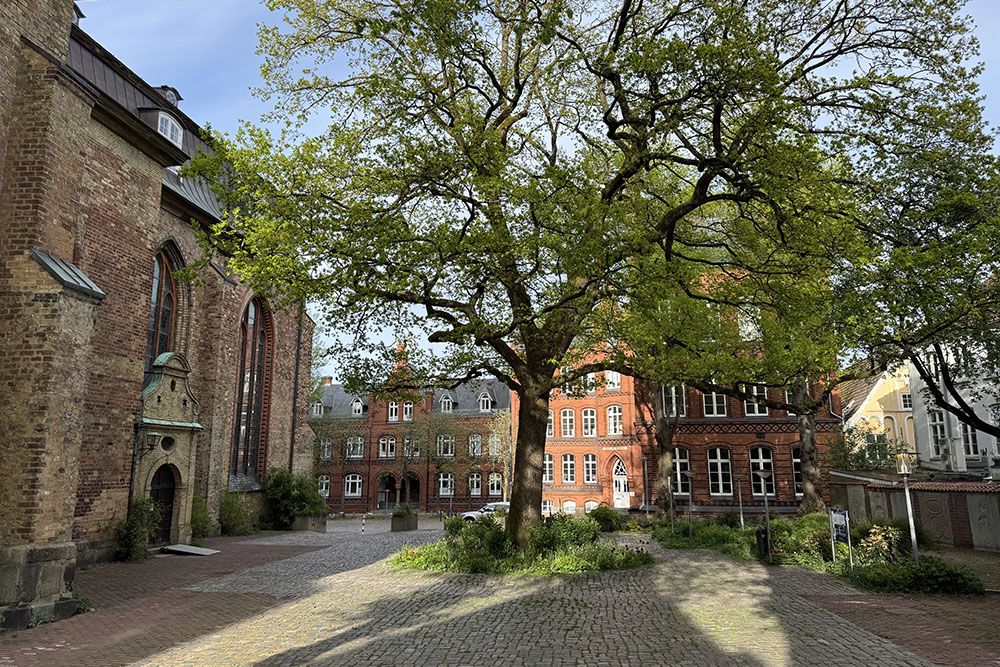
Next to the fountain stands a beautiful timber‑framed house: the Porticus from 1740. The building is elegant, with fine details. Further on stands St Mary’s Church, dating from 1170. It is one of the oldest churches in the city. The tower rises high above the houses. Together with the Nordermarkt, the church forms one of the oldest settlement cores of Flensburg.
The end of the war
Paul Erik tells one last story. About the end of the Second World War. Flensburg was then the final seat of government of Nazi Germany. Hitler’s successor, Karl Dönitz, led the government from here. The city was full of fleeing SS officers. They tried to escape. Some obtained false papers. They assumed the identities of fallen soldiers. Even Himmler tried. He received a new uniform. And a new name. It sounds like a film, but it really happened.
Our hotel, Alte Post, played a notable role in those days. In the courtyard stood a naval broadcasting van connected to Reichssender Flensburg. It was the last propaganda station of Nazi Germany. While newsreaders delivered their texts in the van, a canteen for postal workers inside was converted into an improvised studio. Here, Dönitz and several ministers addressed the nation. These were the final days of the regime. The city was full of rumours and fleeing officers. Flensburg was no peaceful fjord town then, but the tense end point of a collapsing dictatorship.
End of our city walk
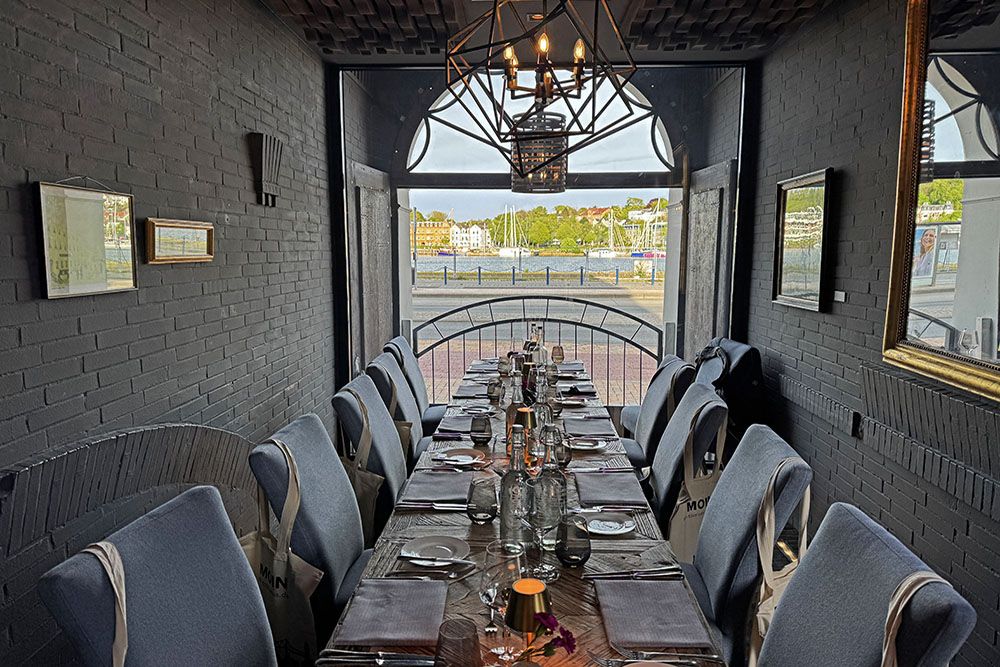
We walk through the Neustraße, which gradually slopes down towards the fjord. We end our walk at the restaurant of Hotel Hafen. An excellent restaurant where we sit down with considerable appetite. We look back on the walk. We’ve seen, heard and learned so much.
Exploring the eastern part of the city
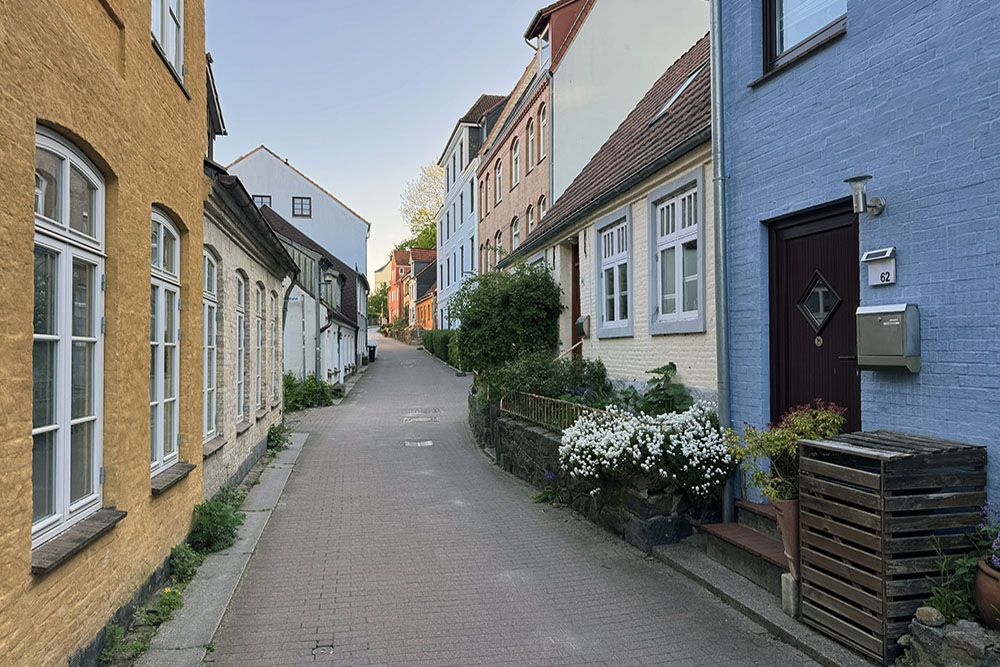
In the days after our walk with Paul Erik, we explore the old part east of the fjord. Not all at once, but in small sections. The streets are narrow and the houses stand close together. Everything feels more intimate than in the west. The atmosphere is calmer. We wander through alleys, up old stairways and past façades that have been part of the city for centuries. The fjord is always nearby. Sometimes we see it. Sometimes not. But it’s always there.
By the water
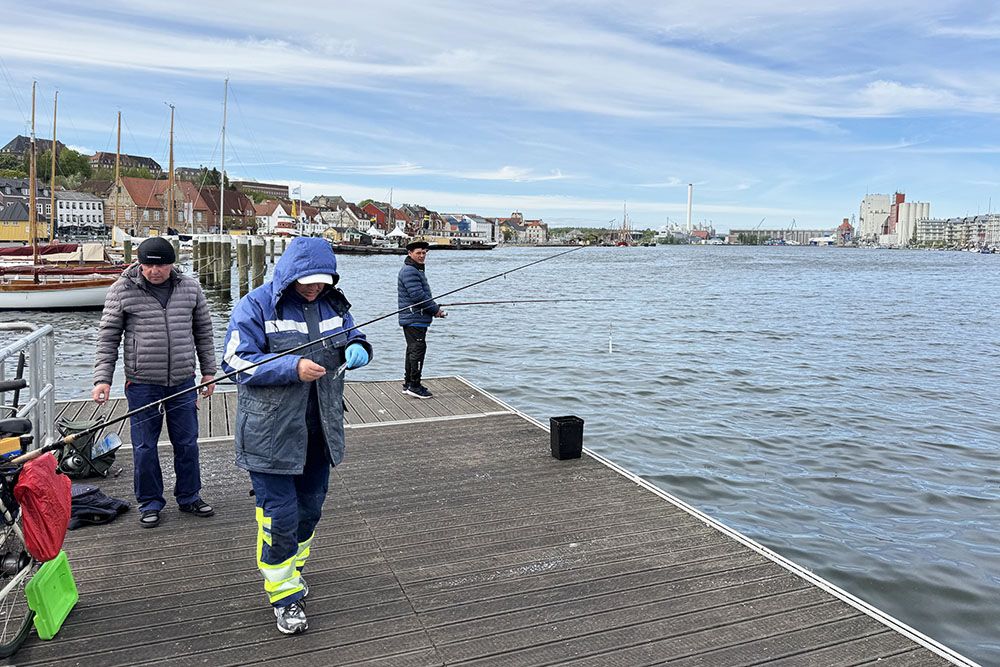
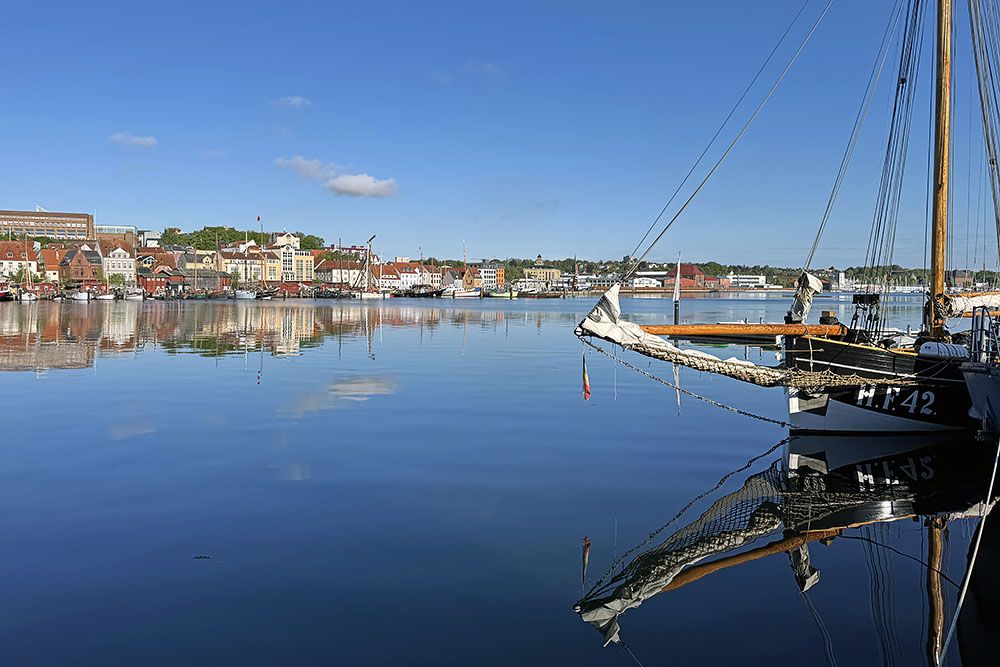
The boulevard is one of our favourite places. The quay is long and lively, but never crowded. Except during aperitif hour, when people stroll or sit on the many benches. They look out over the fjord as the water glistens and the boats gently rock.
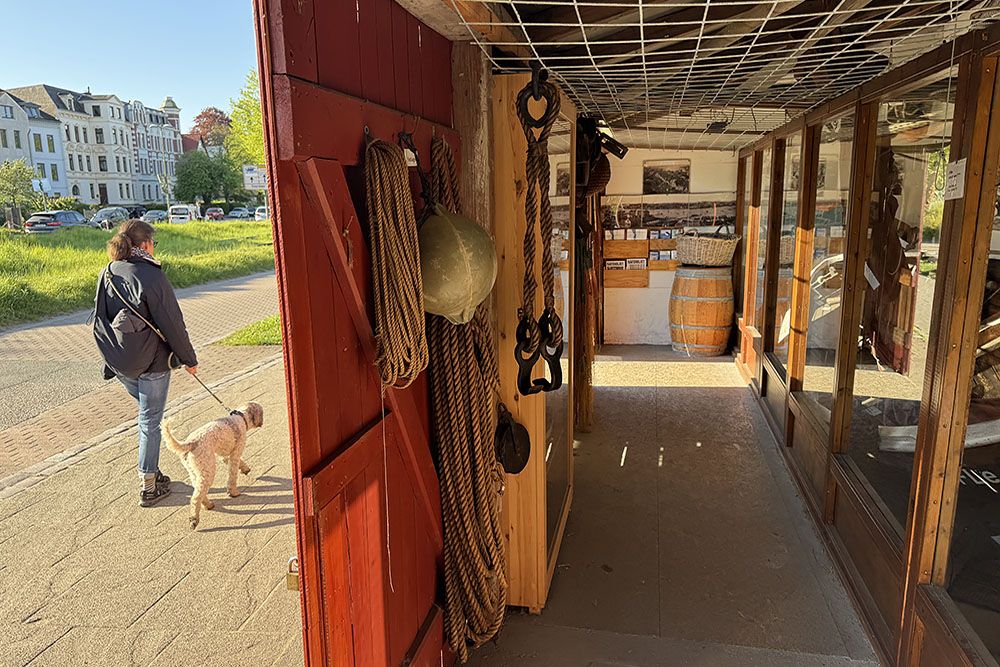
At the marina we discover a tiny museum. It’s really no more than a display case along the path. But the idea is charming. You naturally walk past it and see old photos, tools and small ship parts. It quietly tells the story of how this part of the city developed — from fishing harbour to marina, and from workplace to promenade. It’s small, but delightful. Exactly the kind of detail that makes Flensburg so appealing.
We continue past historic ships. Some restored. Others waiting for a new life. The wooden masts creak softly in the wind. We look and enjoy.
Up the hill
The eastern Altstadt lies on a slope. You notice it immediately. The streets become steeper, the stairways more frequent. We climb old stone steps that have served generations. They lead us past small squares, hidden passages and houses that sometimes seem slightly crooked. The architecture is a mix of medieval structures and later additions. It feels authentic. As if this part of the city has been less adapted to modern times.
Halfway up we reach a viewpoint. Not high, but beautiful. We see the fjord, the harbour and the rooftops of the city. It’s a place where you naturally pause for a moment. Just to look.
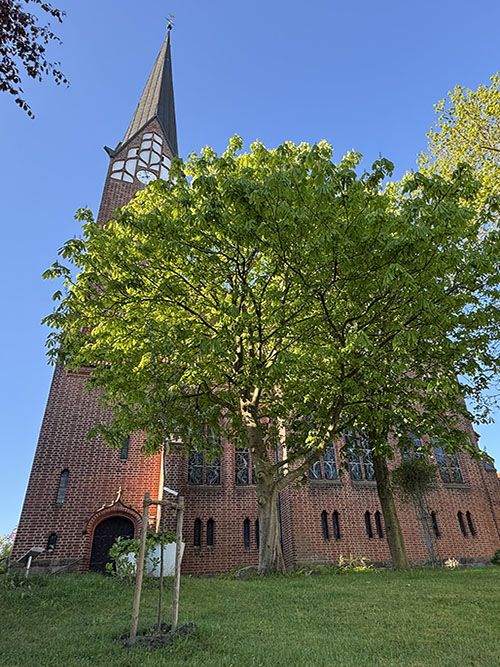
Not far from there stands St Jürgen’s Church. A simple church with a long history. Its origins lie in the Middle Ages, when this part of the city was still outside the main settlement. The church is closed when we arrive. But the exterior tells enough — thick walls, small windows and a peaceful setting.
Going out by the fjord
At the end of our visit to this region, we head back towards the water. The boulevard has transformed into a lively going‑out area. Terraces fill up. People talk loudly, but never annoyingly. The scent of fish, herbs and warm dishes hangs in the air. We walk through it and immediately feel the relaxed atmosphere. It’s cosy and pleasantly warm. Exactly the kind of place where you want to linger. We continue to Piet im Fischmarkt, where we eat royally. The restaurant sits at the edge of the bustle, but still with a view of the fjord. The sun sets. The light softens. The food is excellent. And both the evening and our trip to this part of Germany feel complete.
The immediate surroundings of Flensburg
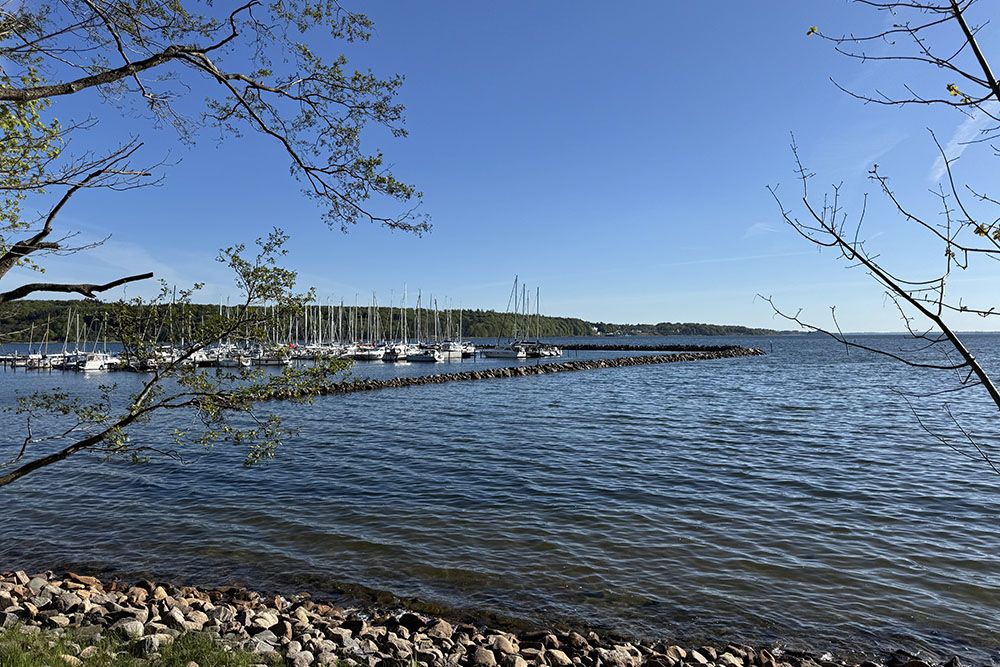
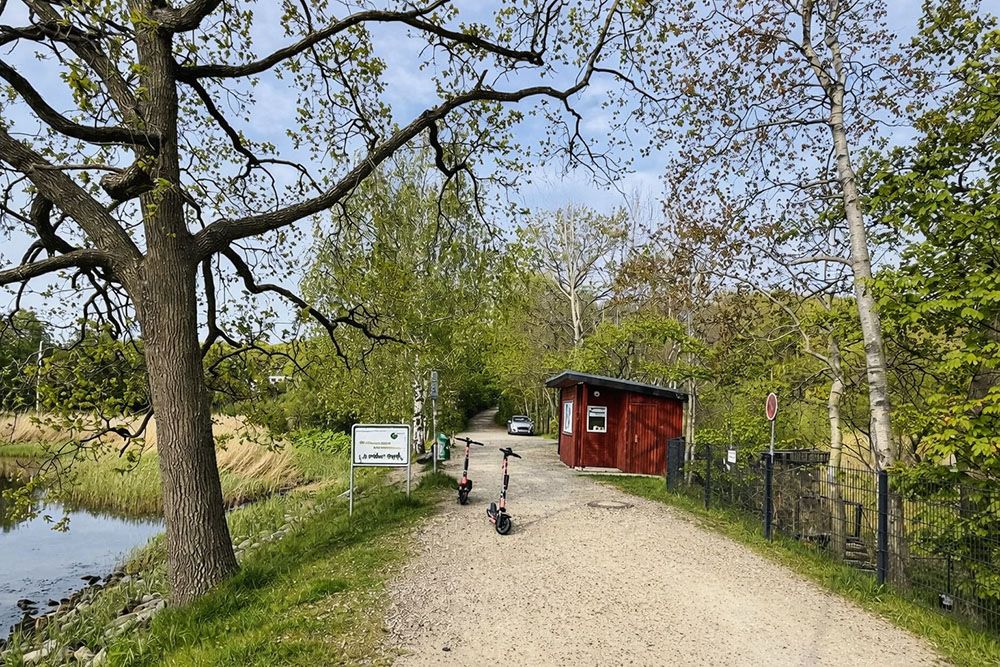
Flensburg is a fantastic city. But the surroundings are just as appealing. On our final morning, we hop on an electric scooter and follow the west side of the fjord. The first part of the route runs right along the water. Then we pass small beaches, a marina and a hotel that seems to lean almost into the water. It’s a peaceful world. No villages, no crowds. Just water, beach and a few boats gently moving.
The border with Denmark appears unexpectedly. An open barrier and no checks. Just a small wooden hut and a narrow bridge. We ride across and suddenly we’re in Denmark. It feels almost symbolic — as if the border here is mostly an idea. We pause for a moment. We look at the fjord. Then we turn back. The route is short, but beautiful.
Flensburg has many more routes like this. Coastal walking paths. Cycling routes through forests and hills. Small trails with views of the fjord. You can wander here for days without getting bored — and without taking the same path twice.
Practical tips for a city trip to Flensburg
Flensburg lies close to the Danish border and is easily reached by car or train.
Yes. Flensburg is compact, historic and surprisingly varied. You’ll find colourful courtyards, old merchants’ houses, museums, street art, a lively boulevard and beautiful views over the fjord. The city feels both German and Danish, which makes it especially unique.
The old town isn’t about big landmarks, but about atmosphere. You wander through narrow alleys, hidden courtyards and old merchant districts that still feel exactly as they once did. The historic warehouses, timber‑framed houses and inner courtyards form an open‑air backdrop best explored on foot. St Mary’s Church and the many courtyards are worth visiting, but it’s the combination of history, quiet corners and unexpected glimpses that makes this part of the city so special. A guided city walk really brings the stories to life.
Flensburg has a long history: from Viking territory and Danish rule to Hanseatic city and rum capital. In 1920, the city played an important role in determining the border between Denmark and Germany. At the end of the Second World War, Flensburg was even the last seat of government of Nazi Germany.
Along the fjord you can walk, cycle, enjoy a drink and admire historic ships. The boulevard is lively, with views of the harbour and marina. You’ll also find a small open‑air museum in display cases along the path.
Yes. The border is close and easy to reach via walking and cycling paths along the fjord. You cross the border via a small hut and a narrow bridge. No checks, no hassle.
This part of the city is more intimate and quieter than the western centre. You’ll find steep streets, old stairways, viewpoints, historic houses and St Jürgen’s Church. It feels authentic and less touristy.
Flensburg has many good restaurants, especially around the harbour and the fjord. For excellent fish dishes, Piet im Fischmarkt is one of the best‑rated places in the city. Restaurant Hotel Hafen also scores highly, thanks to its harbour views and refined regional cuisine. If you prefer classic German food, Hansens Brauerei is a great choice. In short: Flensburg has something excellent for every taste.
Flensburg has a surprisingly strong hotel offering, especially around the harbour and the old town. Hotel Hafen Flensburg is among the best‑rated hotels in the city, offering stylish rooms, an excellent restaurant and views of the fjord. Hotel Alte Post is ideal for those wanting to stay in the historic centre; it combines comfort with a remarkable wartime story. For a modern and affordable stay, Ramada by Wyndham Flensburg is a popular choice. If you prefer something small‑scale, Boutiquehotel Petuh is a charming and highly rated alternative. And Hotel am Fjord is perfect for travellers seeking a central location at a friendly price.
In the immediate surroundings of Flensburg you’ll find a mix of coastline, nature and historic sites. Along the fjord lie small beaches such as Solitüde and Wassersleben, where you can swim, walk or simply enjoy the view. The Twedter Feld nature reserve and the forests towards Glücksburg offer short, accessible walks with lovely views.
There are also plenty of options for short cycling and walking trips through varied landscapes: quiet country lanes, gentle hills, forest paths and stretches right along the water. The routes to Glücksburg and the Holnis peninsula are especially popular for their combination of coastline, nature and small villages. Just across the border, in Padborg and Kruså, you’ll find peaceful forests and nature areas that are easy to reach.
If you prefer culture and history, the area offers places such as Glücksburg Castle, maritime heritage around Flensburg harbour and several museums.
You can walk and cycle very well around Flensburg. The immediate surroundings offer a mix of coastal paths, forest routes and quiet country roads. Cyclists can choose varied routes such as the trip to Glücksburg and the Holnis peninsula, where you ride past beaches, cliffs and small villages. The Radrundum routes around Flensburg are ideal for those wanting short, themed loops through nature and countryside.
For walkers, the variety is just as great. The Wanderweg entlang der Förde combines forest, beach and viewpoints over the fjord, while the walk along the Holnis cliffs is one of the most beautiful coastal routes in the region.
One to two days is ideal to explore the old town, the fjord, the courtyards and the immediate surroundings. With an extra day, you can also include the border region and the coastal paths.
Yes, Flensburg is definitely a great city for shopping. The city centre is compact and atmospheric, with larger shops along the Holm and smaller boutiques, design shops and cosy cafés in the Rote Straße. That mix makes it a pleasant place to stroll without feeling overwhelmed.
What makes it extra special: many Danes cross the border specifically to shop in Flensburg. Not only because they enjoy the city, but also because shopping in Germany is simply cheaper. That creates a lively, international atmosphere in the shopping streets, making the experience even more enjoyable.
We visited Flensburg at the invitation of the German Tourist Board. The blog was written independently and objectively based on our own impressions.