Stage 8 of the Malerweg marks the final leg of our trek through the Elbe Sandstone Mountains, from Weißig to Pirna. We climb up to the Rauenstein, where spectacular views over the Elbe Valley await us. After descending through forested terrain towards the Robert‑Sterl‑Haus and the ‘Königsnase’, we reach Obervogelgesang. Here, storm Borus throws us an unexpected curveball: the path along the Elbe is impassable. We take the train to Pirna instead, which turns out to be a blessing in disguise. It gives us the time to explore this surprisingly charming town. Pirna proves to be a little gem where you could easily spend an entire day – a fitting finale to our Malerweg adventure.
The eighth stage of the Malerweg
The morning sun shines cheerfully on our faces as we set off from the sleepy village of Weißig. We’re ready for the final stage of our Malerweg adventure. Our rucksacks are filled with water and provisions for this last day of walking. We check the route description once more and take our first steps onto the trail. The Malerweg markers immediately guide us into the forest.
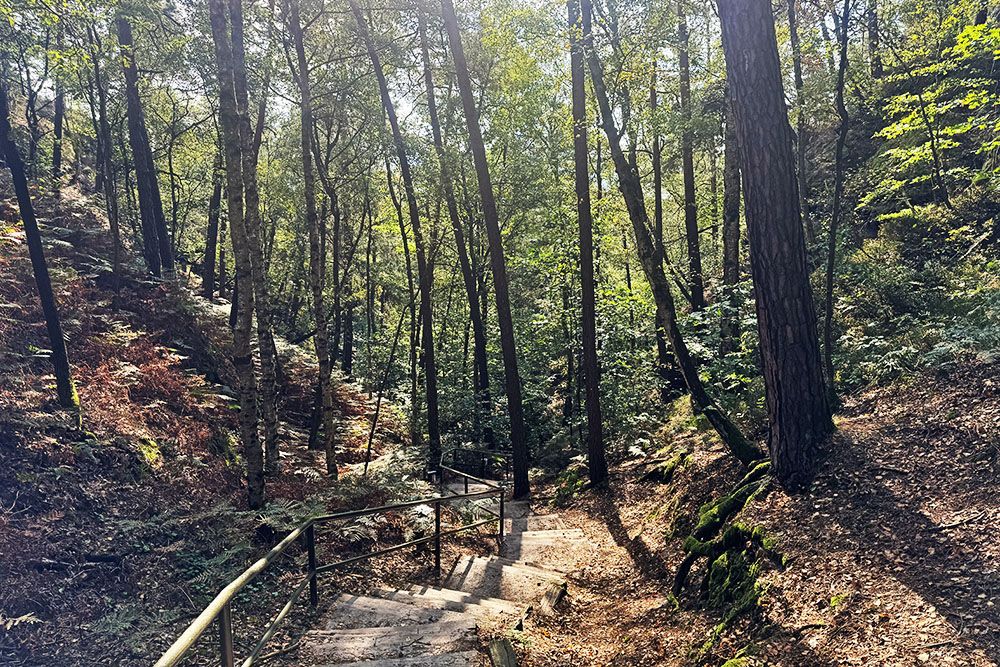
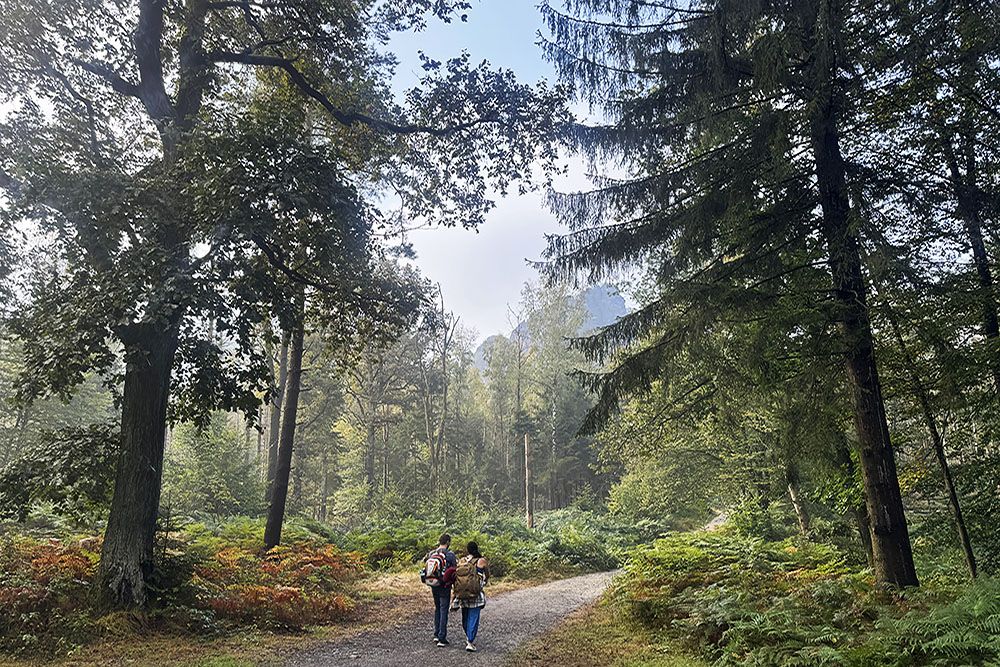
The path begins to climb quickly between the pine trees. We hear our footsteps crunching on the carpet of needles. The slope becomes steeper and our leg muscles protest after days of hiking. Still, we push on. The promise of beautiful views keeps us motivated.
The vegetation gradually changes as we climb higher. Ferns sway gently in the breeze. Mosses cover the damp rock walls along the trail. Now and then a dewdrop glistens in the filtered sunlight. We pause briefly to catch our breath. A quick sip of water, and then we continue upwards towards the Rauenstein.
The impressive Rauenstein
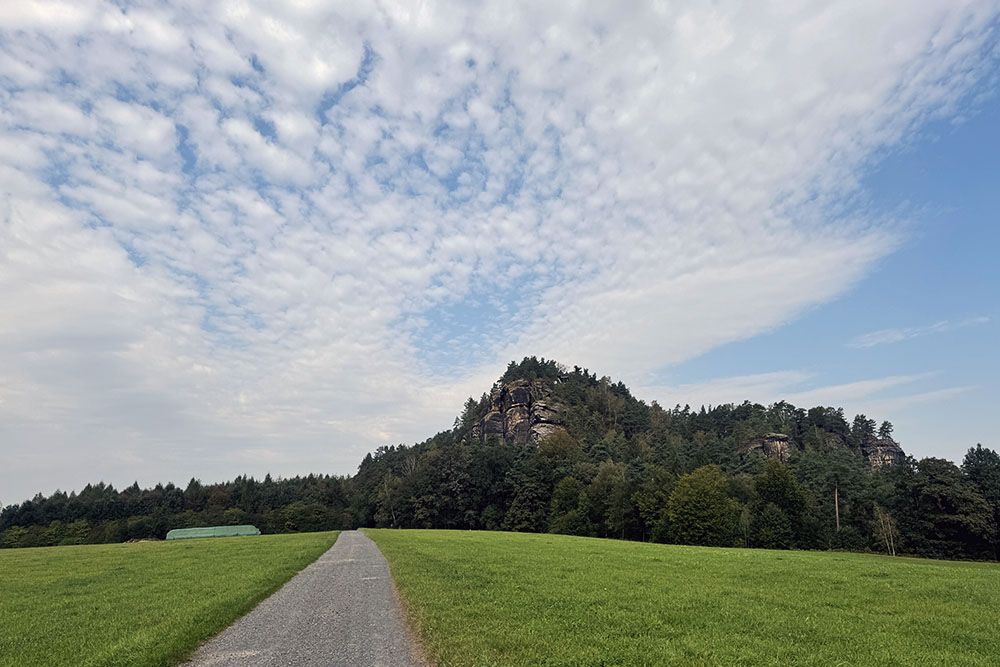
After about an hour of climbing, we reach the edge of the Rauenstein. This striking table mountain rises 304 metres above the landscape. We’ve already gained quite a bit of elevation. Sweat beads on our foreheads, but the view is worth every drop. Before us stretches a sensational panorama of the Elbe Valley. The river winds like a silver ribbon through the green landscape. Villages lie scattered like miniature worlds among the hills. Wisps of morning mist still hover above the river.
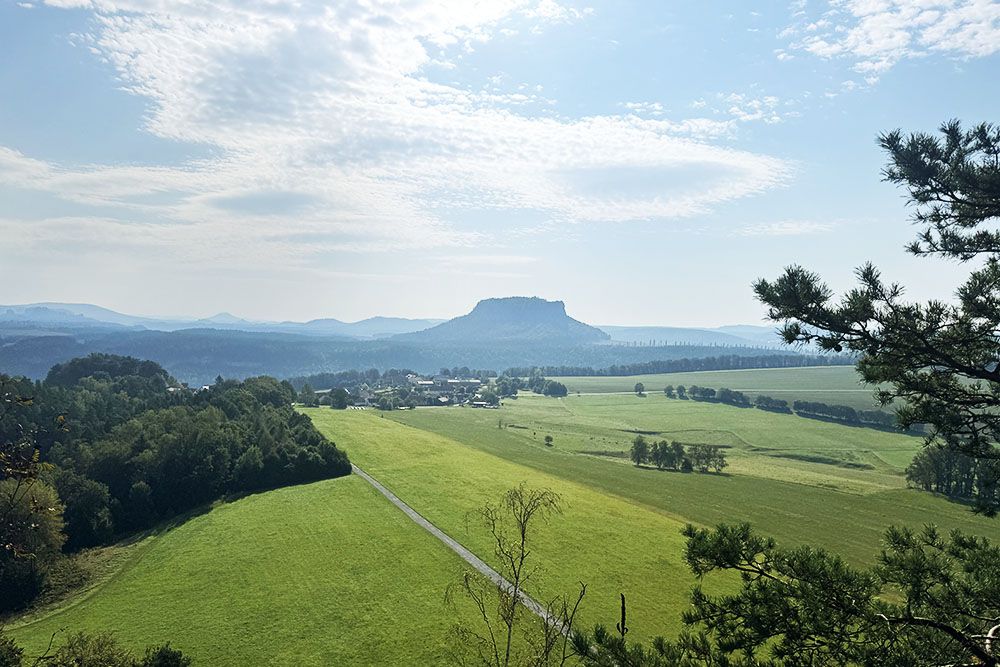
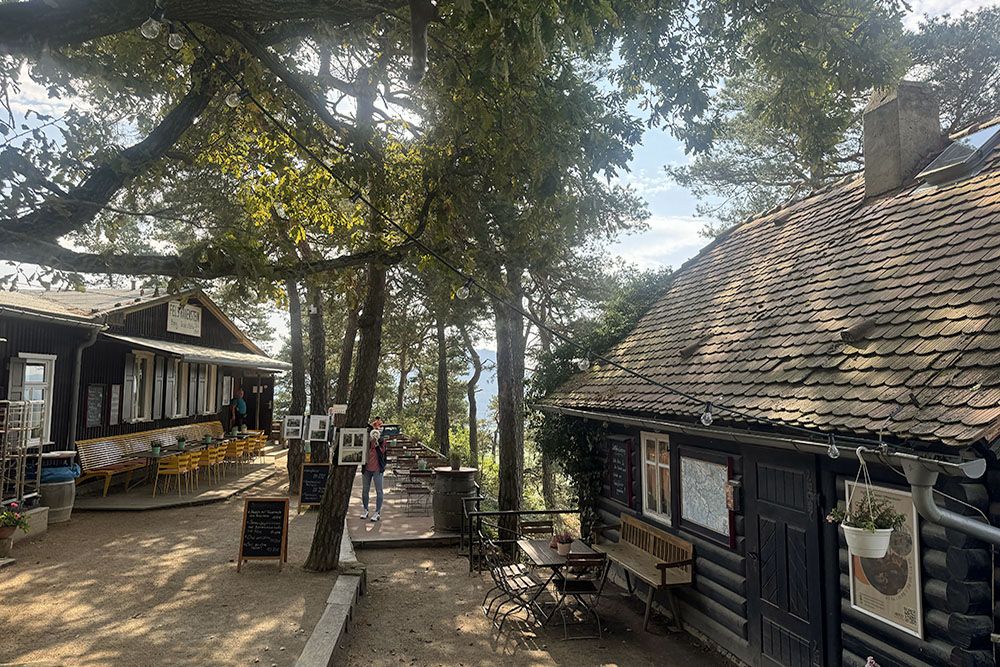
On the Rauenstein we discover a cosy Gaststätte with a spectacular view over the Elbe Valley. Because it’s still early, there are hardly any other walkers around. Although a warm cup of coffee is tempting, we decide to continue. We take in the impressive vistas from several viewpoints. The fresh morning air and shifting light make each panorama unique. Re‑energised, we move on.
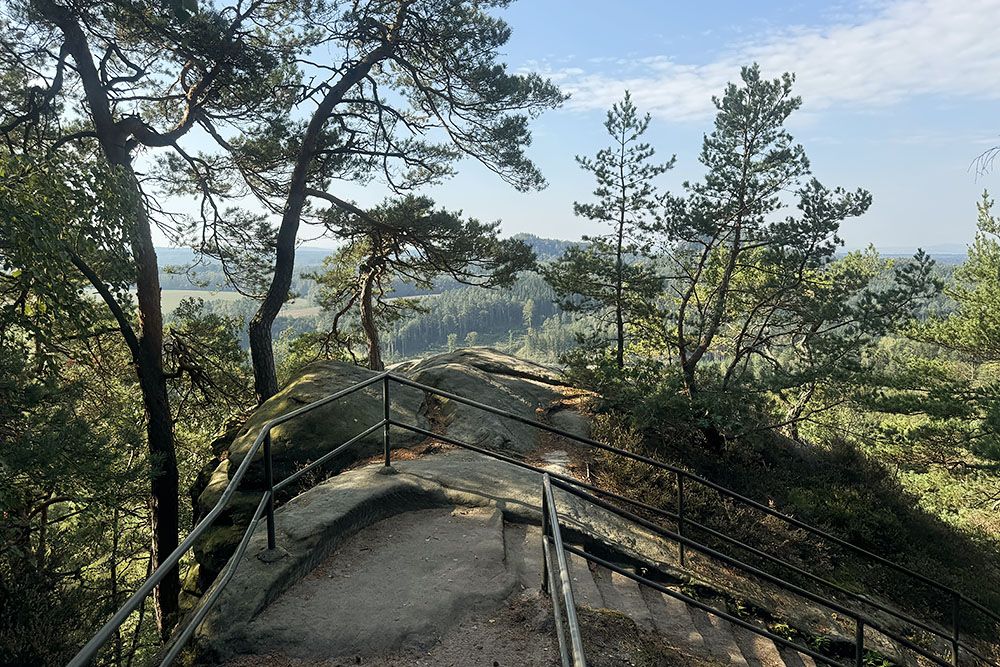
We follow the ridge path that runs across the entire mountain crest. This route is nearly a kilometre long. Underfoot, rocky plateaus alternate with forest paths. We tread carefully along the narrower sections. The 360‑degree panorama leaves us speechless. All around us we see imposing rock formations and table mountains. We take plenty of time for photos at this special spot. The camera can hardly capture what our eyes see.
From Rauenstein to Stadt Wehlen
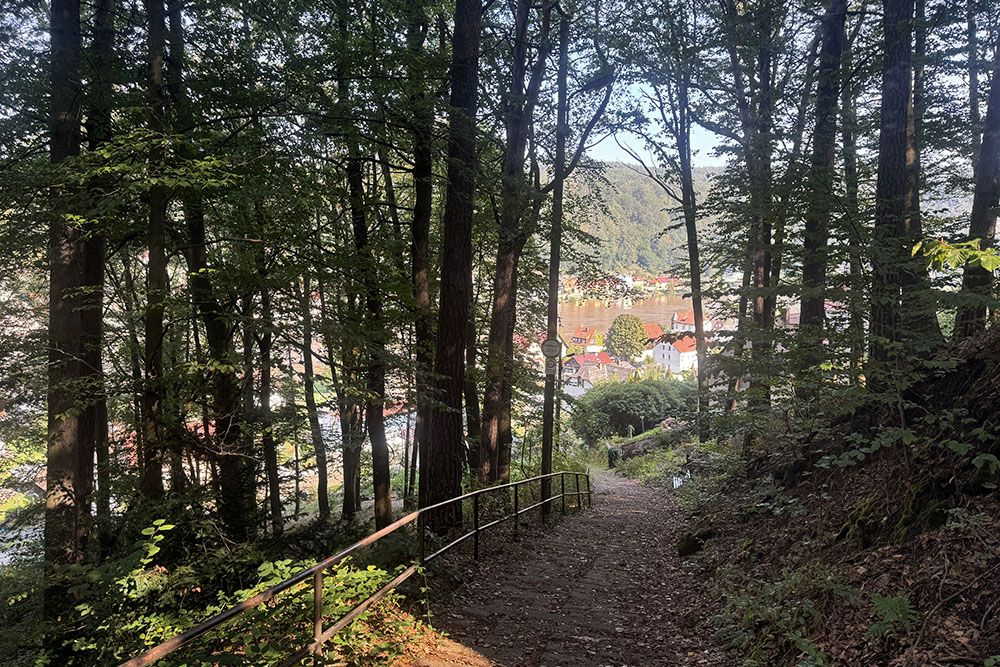
After the impressive Rauenstein, we begin our descent towards Stadt Wehlen. The path leads us through a beautiful mixed forest where sunbeams dance through the canopy. The descent is gradual and occasionally offers glimpses of the Elbe Valley in the distance. As we approach Stadt Wehlen, the landscape opens up and we see the first houses of this picturesque town on the Elbe.
We walk only a short stretch through Stadt Wehlen. Although not directly on our route, the Robert‑Sterl‑Haus is nearby – the former home and studio of the famous impressionist painter. The museum houses an impressive collection of his work and offers a fascinating insight into the life of an artist deeply inspired by the landscapes of Saxon Switzerland. We skip the museum this time, but it’s said to be well worth a visit for art lovers.
Through farmland to Naundorf
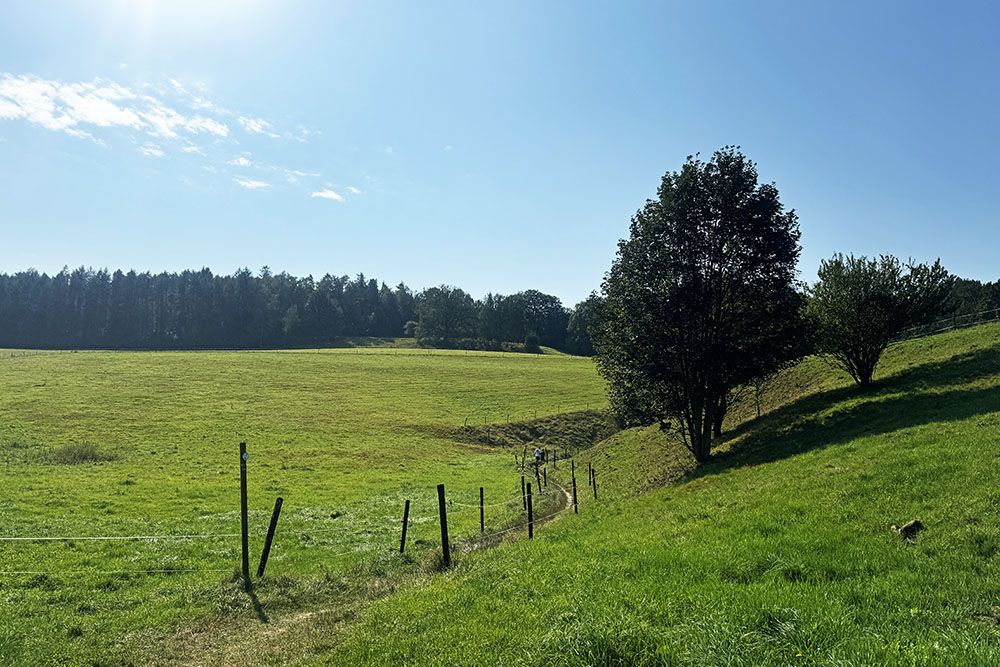
After Stadt Wehlen, we swap the urban surroundings for a gently rolling rural landscape. The path leads us through farmland, where meadows alternate with small fields. In the distance we see the distinctive silhouettes of the Elbe Sandstone Mountains. The climb to Naundorf is gradual and pleasant, offering ever‑changing views of the surrounding countryside. The peace and space of this part of the route form a welcome contrast to the busier tourist spots.
From Naundorf to Obervogelgesang
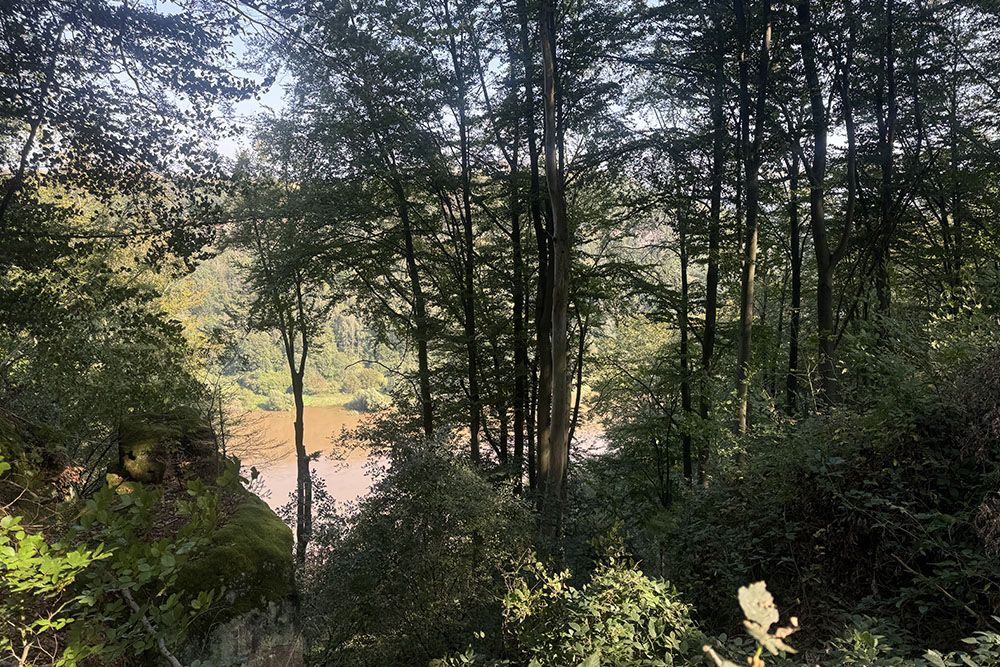
The final stretch towards Obervogelgesang is also a particularly beautiful part of the stage. We follow a narrow path that winds along a ridge. To our right, far below, flows the Elbe. Due to the dense vegetation of the ancient forest, the river isn’t always visible. Only occasionally do we catch a glimpse of the shimmering water through a gap in the foliage.
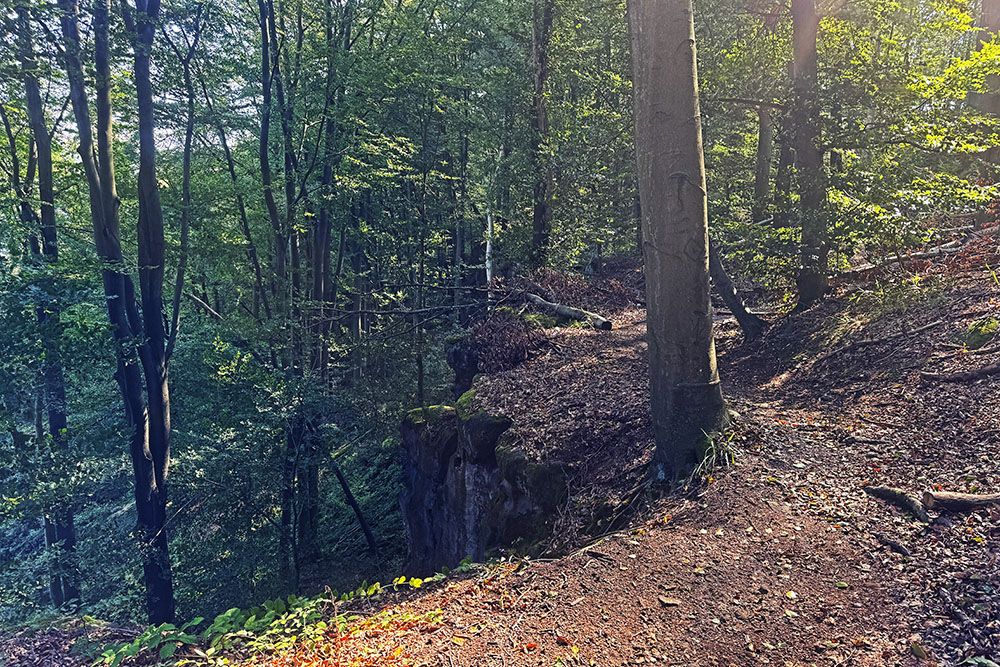
The path leads us through untouched primeval forest, where centuries‑old trees spread their branches wide. The silence is broken only by birdsong and the soft rustling of the wind through the treetops.
Along the way we pass the famous Königsnase, a viewpoint offering a spectacular panorama of the Elbe. Ironically, we barely realise we’ve passed it. The dense forest has largely reclaimed the view. Where artists once came to capture the dramatic river landscape, only a small opening remains. It’s a quiet reminder of how nature slowly takes back space and how landscapes change over time.
Taking the train back to Pirna
After descending through the forest, we eventually reach Obervogelgesang, a small settlement on the banks of the Elbe. This is where our walk ends today. The official route would normally continue along the river to Pirna, the final endpoint of the Malerweg. But due to the aftermath of storm Borus, this section is closed. Fortunately, there’s a train that can take us to Pirna.
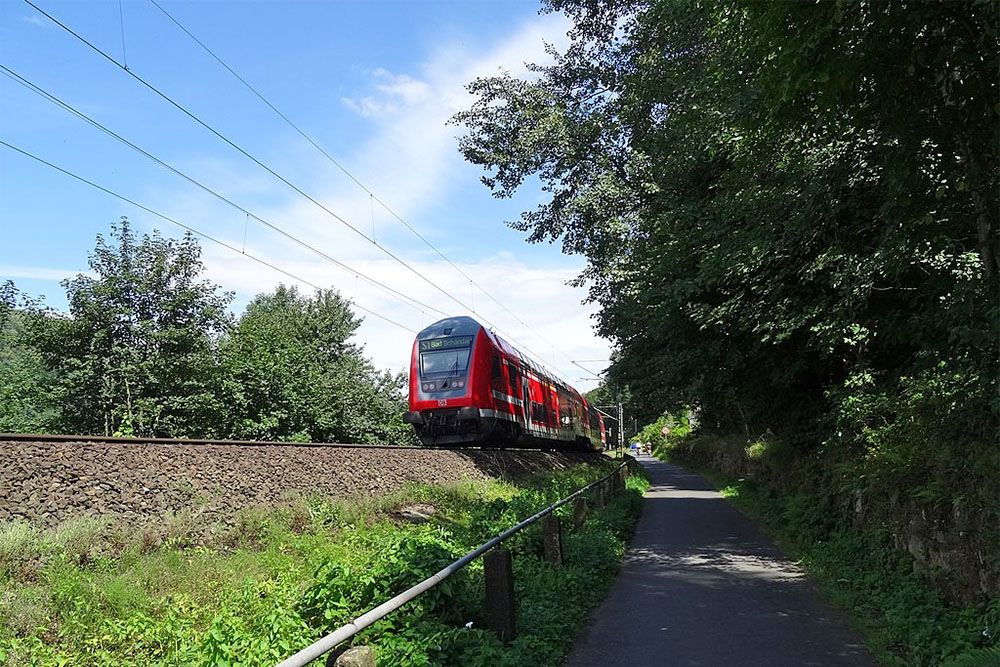
One of the pleasant surprises of hiking in Saxon Switzerland is the convenience of public transport. With an overnight stay in the region, public transport is fully included – an excellent initiative that promotes sustainable tourism. With our accommodation card in hand, we hop on the regional train free of charge, which takes us to Pirna in no time.
The train follows the scenic course of the Elbe through the narrow valley. On one side we see the gently flowing river with its characteristic bends. On the other side rise steep, forested slopes. Between the trees we occasionally spot the region’s iconic sandstone rock formations. This short but panoramic journey gives us time to reflect. We process the impressions of our beautiful walk as we travel comfortably towards Pirna.
Exploring the surprisingly charming Pirna
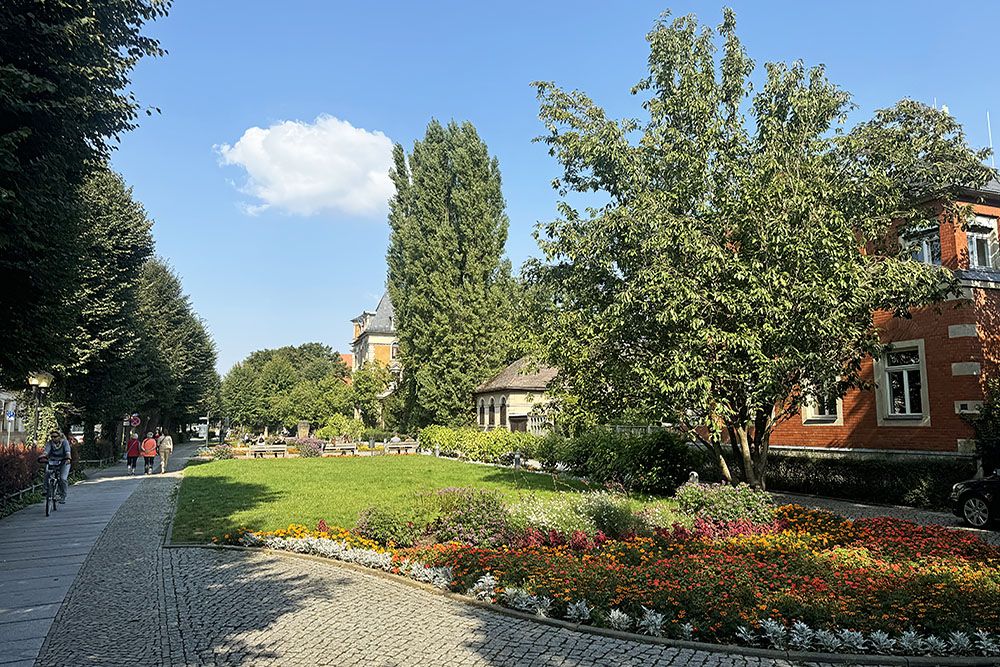
We step off the train at Pirna station, the official endpoint of the Malerweg. Our legs protest after days of walking, but Pirna’s charm draws us in. We head towards the historic centre and admire the colourful façades of the houses. The buildings tell stories of centuries of history and architectural beauty in this part of Saxony.
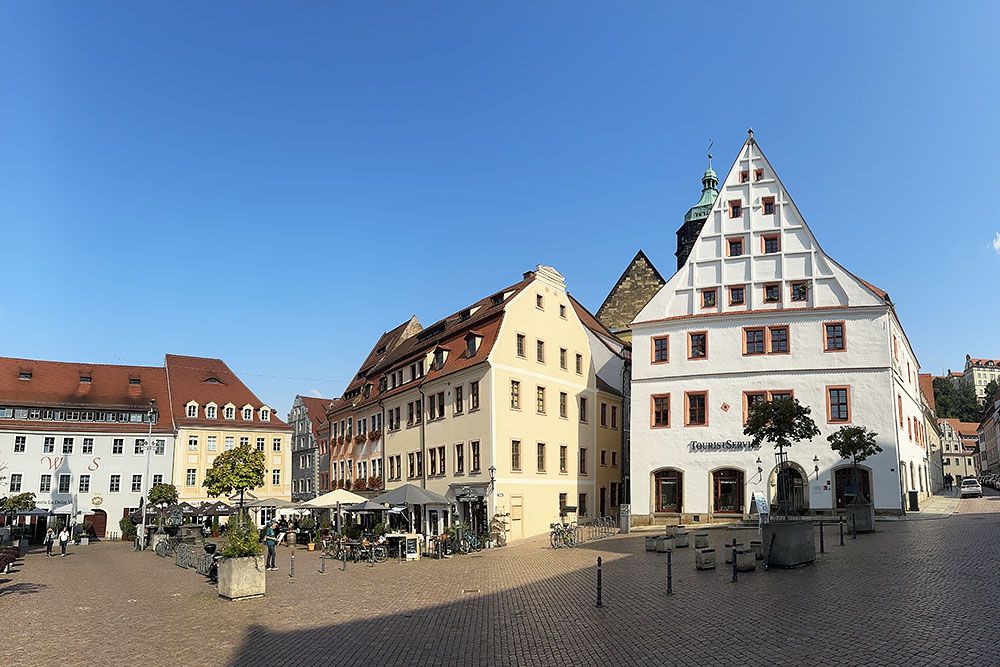
On the Marktplatz we pause to admire the beautiful Renaissance town hall with its striking tower. Street musicians fill the square with cheerful tunes as we enjoy the lively scene. We find a cosy terrace and order coffee with a slice of traditional Saxon cake. Our tired feet finally get a rest while we watch the locals go about their day.
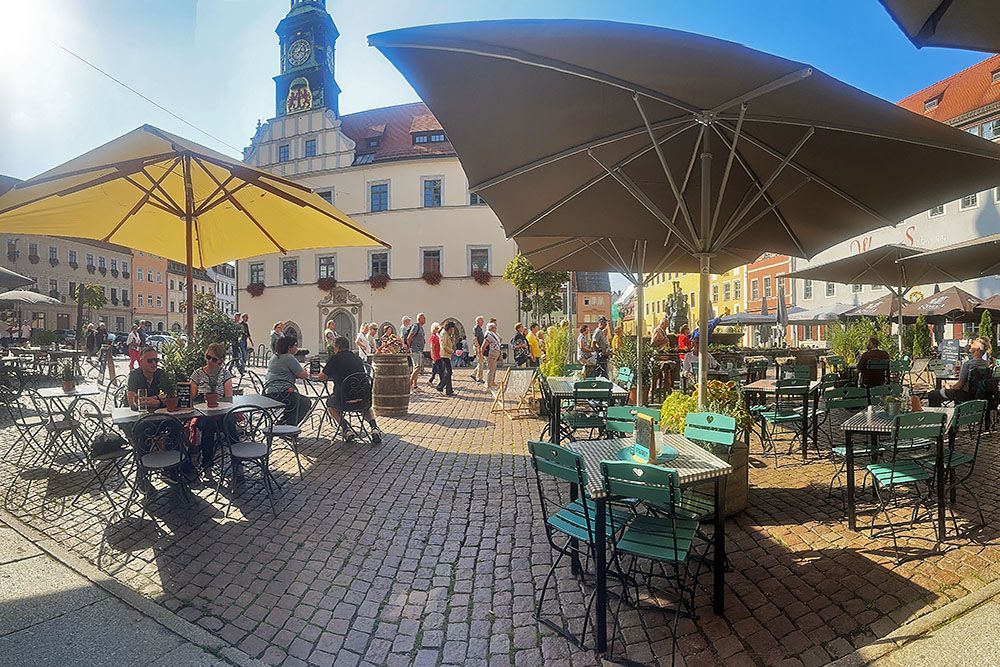
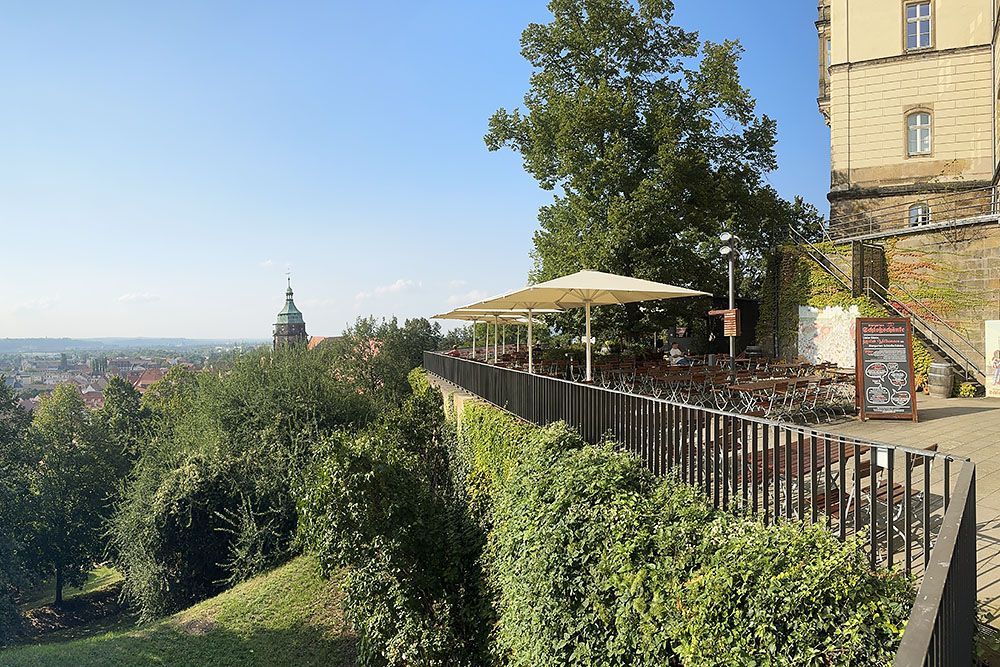
After our break, we explore the narrow streets that fan out from the square like a spider’s web. We discover hidden courtyards and beautifully restored half‑timbered houses with colourful beams and decorative details. Then we slowly climb up to the Schlossberghang, despite our protesting calves and weary feet. At the top, a breathtaking panorama of the town and the distant Elbe Valley awaits us. The sun casts a golden glow over the rooftops of Pirna and the river. We take photos of this perfect finale to our Malerweg adventure through Saxon Switzerland.
Looking back on our Malerweg hiking adventure
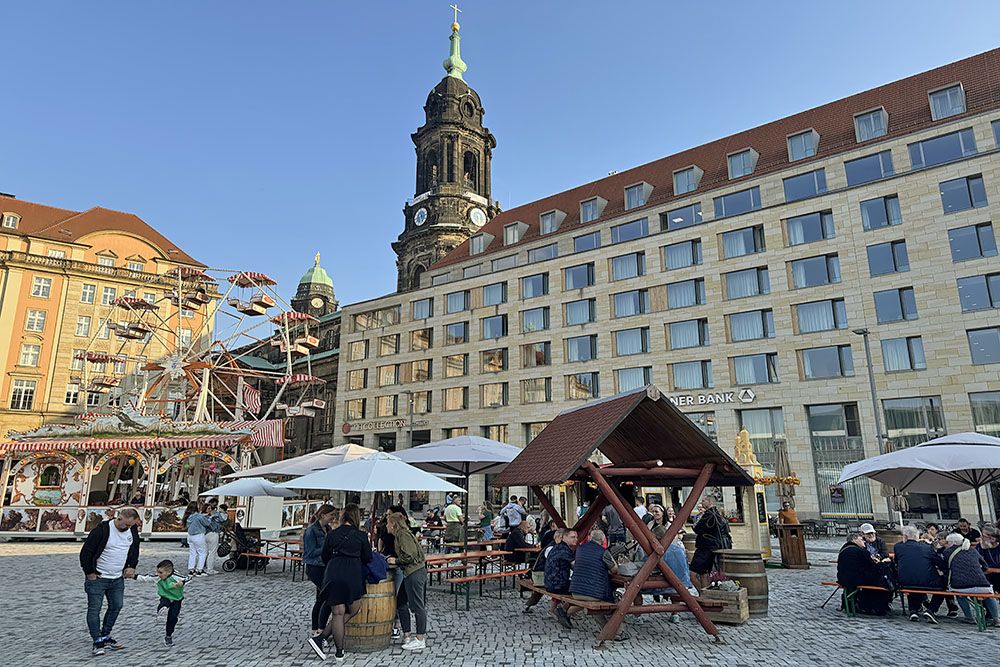
From Pirna we later take the train to Dresden. Later this evening, our night train back to the Netherlands departs. The city feels wonderfully lively. Just before sunset, many people enjoy the last warm rays of the day in this beautiful place. After a well‑deserved beer on a terrace, we head into a restaurant.
Over a delicious and nourishing meal, we look back on a fantastic journey – despite the challenges along the way. Storm Boris caused quite a bit of disruption during several stages. Stage 2, for example, turned into a completely rain‑soaked day. Fortunately, the weather improved every day afterwards. The Malerweg also turned out to be considerably tougher than we had expected. Each stage includes numerous elevation changes that put our leg muscles to the test. Despite our hiking experience, trekking poles were far from a luxury on the many descents.
Yet the positive experiences far outweighed the difficulties. Public transport in Saxon Switzerland is excellent and even free with overnight stays. In September we had no trouble finding accommodation along the route. The signposting is generally very clear and frequent, as are the available GPS tracks. We were pleasantly surprised by the amount of information available in English and even Dutch. Equally valuable were the encounters with fellow hikers who were just as enthusiastic about this beautiful trail. After eight stages through breathtaking landscapes, we look back on an unforgettable adventure.
Practical tips for Stage 8 of the Malerweg
Stage 8 is around 14 kilometres long. Allow roughly five hours of walking. This final stage takes you from Weißig to Pirna and forms a lovely conclusion to the full route. We recommend planning time to explore Pirna at the end.
A brief route description and overview map can be found on the Saxon Switzerland website. Combined with the excellent signposting, getting lost is virtually impossible. A downloadable GPX track is also available.
Stage 8 passes several interesting sights. You start in Weißig and soon climb to the Rauenstein, an impressive 304‑metre table mountain offering stunning panoramas over the Elbe Valley.
Along the way you pass the Robert‑Sterl‑Haus, an art museum in the former home of the painter, where you can explore his life and work. At the ‘Königsnase’ (King’s Nose) a spectacular viewpoint awaits. In the village of Obervogelgesang you walk past historical monuments before joining the Elberadweg, a popular cycle route along the river.
The final stretch follows the atmospheric Canalettoweg to Pirna, passing Schloss Sonnenstein. You finish the stage on Pirna’s historic Marktplatz, the official endpoint of the Malerweg. Here you can collect your final stamp and a well‑earned certificate after 115 kilometres of walking.
Stage 8 is moderately challenging and manageable for active walkers with average fitness. The 13.8‑kilometre route includes 256 metres of ascent and 360 metres of descent, considerably less than Stage 7.
The most demanding sections are:
- The climb to the Rauenstein (304 m)
- The ridge path across the nearly kilometre‑long crest
- The descent from the Rauenstein plateau
- The three descents to the level of the Elbe
The paths are generally good, but sturdy hiking boots are recommended. Basic fitness is sufficient for this final stage.
The highlights (Rauenstein, Robert‑Sterl‑Haus, Königsnase) offer regular opportunities for breaks. Expect around five hours of walking time, excluding visits or detours.
Around 30% of Stage 8 is on paved roads or paths. This includes the section along the Elberadweg, parts of Obervogelgesang, the Canalettoweg into Pirna, and the streets of Pirna’s historic centre.
The official start of Stage 8 is in the village of Weißig, part of the municipality of Struppen. The official endpoint is on the historic Marktplatz in Pirna, specifically at the Canaletto‑Haus where the tourist information office is located. Here you can have your stamp card completed and collect your certificate.
Check the Verkehrsverbund Oberelbe (VVO) website to plan your transport
There are several options:
- In Pirna’s historic centre, the endpoint, you’ll find numerous cafés, restaurants and bakeries.
- In Obervogelgesang, limited options are available depending on the season.
- At the Robert‑Sterl‑Haus, refreshments may be available during opening hours.
Bring enough water and snacks, as there are fewer options between Weißig and Pirna than on some other stages.
Pirna offers plenty of restaurants, including Gasthaus Zum Wesenitztal and Gasthof Zum Lindental, serving German classics. You can also enjoy a well‑earned drink in a beer garden along the Elbe.
There are various accommodation options along the route:
In Weißig (start):
- Several small guesthouses and holiday homes tailored to Malerweg hikers
- Often offering breakfast and packed lunches
In Struppen‑Naundorf:
- A few welcoming guesthouses near the Robert‑Sterl‑Haus
In Obervogelgesang:
- A handful of simple places to stay near the S‑Bahn station
- Convenient for splitting the final kilometres
In Pirna (end):
- The widest range of accommodation, from cosy guesthouses to comfortable hotels
- Many within walking distance of the Marktplatz
- Excellent tourist facilities and public transport connections
Many places carry the “Wanderfreundlich am Malerweg” label, offering services such as luggage transport and flexible breakfast times. Booking ahead is recommended, especially in high season. Most places along this stage offer the Gästekarte mobil, which allows free use of public transport in the region. You can also book accommodation for Stage 8 directly via the official Saxon Switzerland website.
Take the S‑Bahn S1 to Kurort Rathen. Change to bus 246 towards the stop “Weißig, Wanderweg zum Rauenstein”. This bus runs only on weekdays. Alternatively, take bus 24 to “Thürmsdorf, Abzw. Weißig”.
Some hikers choose a different starting point due to limited public transport to Weißig. Thürmsdorf (on Stage 7) is a popular alternative, served hourly by bus 241 from Pirna.
We walked the full Malerweg at the invitation of TMGS (Tourismus Marketing Gesellschaft Sachsen) and the Tourism Association of Saxon Switzerland. The content of this blog was created independently and objectively, based on our own impressions.