Stage 7 of the Malerweg leads us from Kurort Gohrisch to Weißig through a landscape of striking sandstone formations. From the spa town we head into the forest towards the imposing Pfaffenstein. Via rock clefts and stairways we reach the summit with its famous Barbarine rock pinnacle. The route then takes us through dense woodland and past rugged rock formations to the table mountain Quirl. We descend to the village of Königstein, crowned by its monumental fortress above the Elbe. After visiting the fortress, a final climb through lush greenery brings us to Weißig. Thanks in part to our visit to the fortress, we consider this stage one of the highlights of the Malerweg.
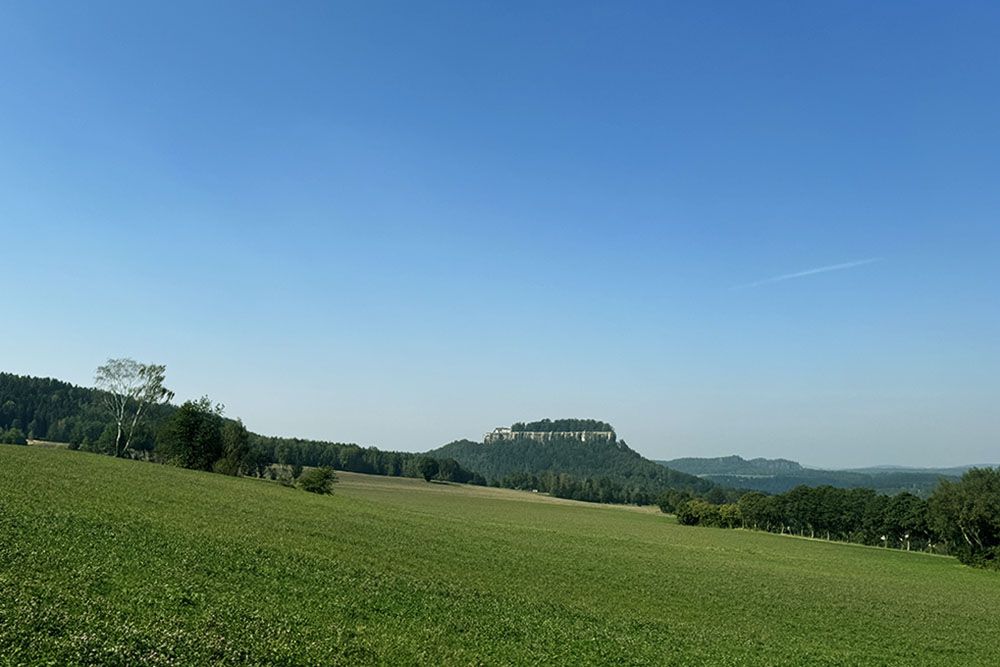
Via the Pfaffenstein to Königstein
From the picturesque spa town of Gohrisch we begin our walk along Stage 7 of the Malerweg. We first follow the Jagdsteig, a path that leads us through dense forest. We then continue along the historic Königsweg and the quiet Alter Schulweg towards Pfaffendorf. The village sits charmingly at the foot of the impressive rock formations of the Elbe Sandstone Mountains.
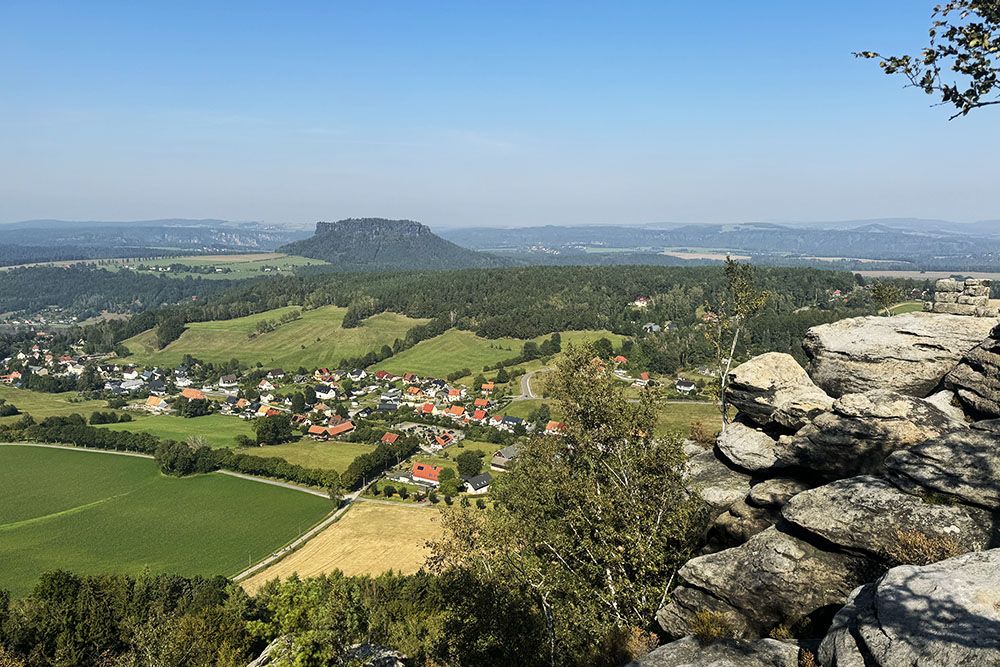
From Pfaffendorf our climb begins towards the striking table mountain Pfaffenstein, which rises 434 metres above sea level. The steep ascent rewards us with splendid views across the region. At the top we reach the Pfaffenstein viewing tower, which offers panoramic vistas. Today, however, the tower unfortunately appears to be closed.
In the distance we spot the famous Barbarine, a distinctive 42‑metre‑high freestanding rock pillar. Local legend tells a curious tale about this remarkable formation. The Barbarine was once a young woman named Barbara who preferred picking berries to going to church. Her mother cursed her for her disobedience, turning the girl into stone. To this day she stands there, frozen forever in that form.
Through the “eye of the needle” on Stage 7 of the Malerweg
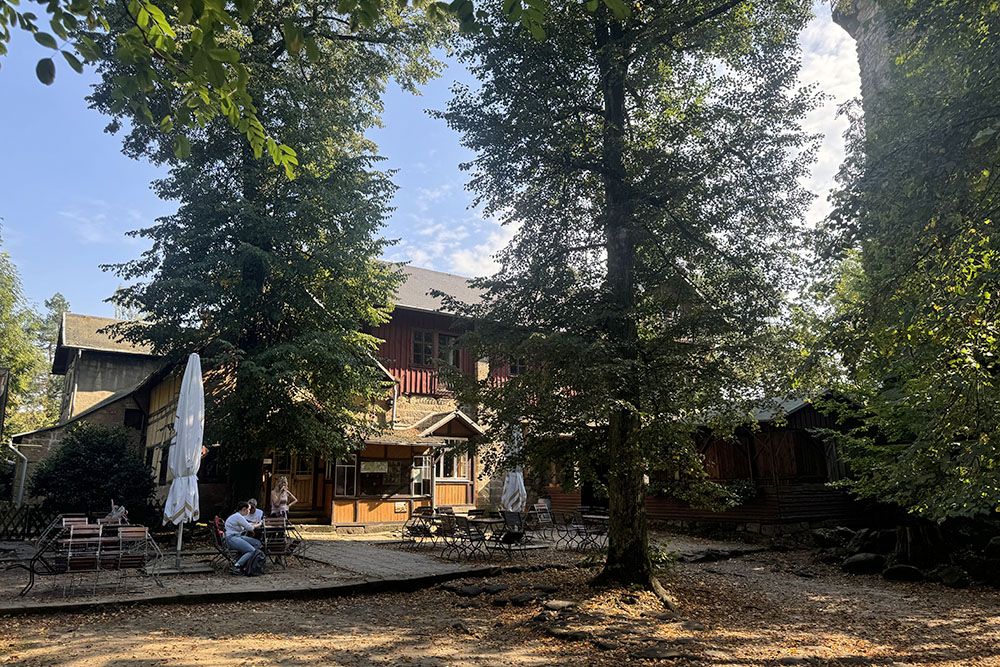
We pause at the welcoming Bergrestaurant Pfaffenstein, where walkers have been resting since 1898. Our route then continues to the famous “eye of the needle”, a narrow passage in the rock wall. This natural tunnel owes its name to the tight gap through which you can just squeeze. It’s an exciting part of the trail where we must wriggle our way through the rock formation.
We descend via the adventurous gorge path towards the table mountain Quirl, a lesser‑known but impressive formation. At 350 metres, the Quirl is slightly lower than the Pfaffenstein. A medieval castle once stood on this table mountain, and a few remnants are still visible. The vegetation on the Quirl is remarkably varied, with rare plant species that thrive on sandstone.
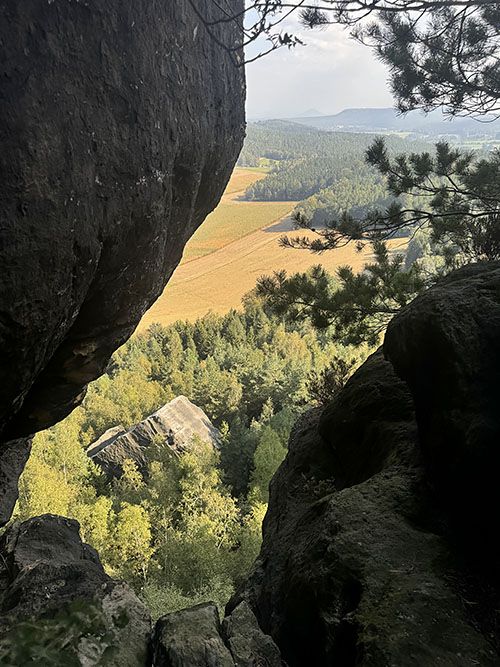
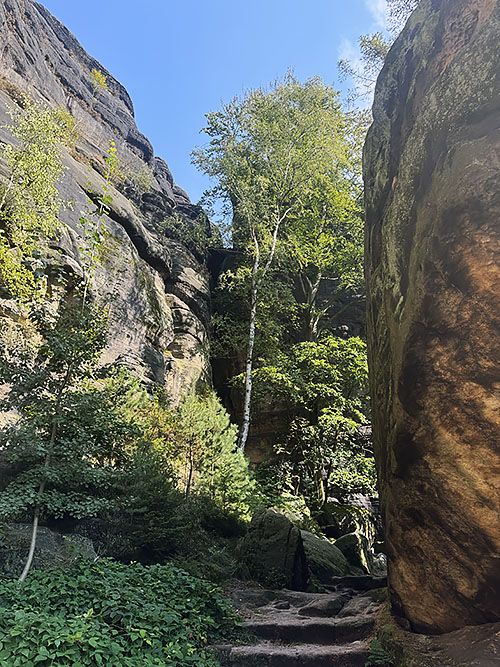
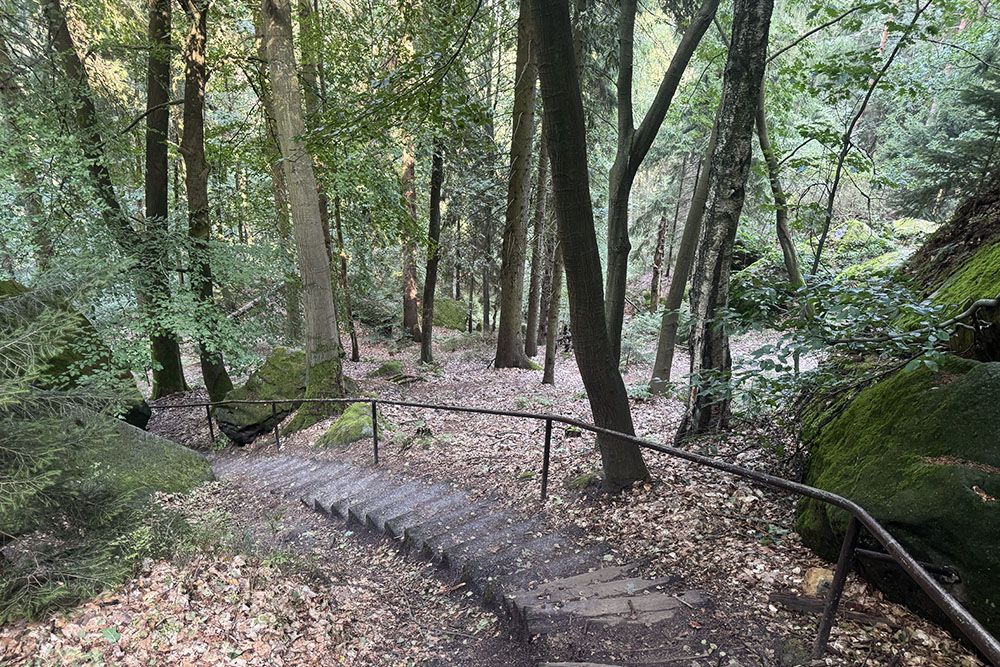
In places the path becomes fairly challenging, with narrow ledges and steep descents. Wooden and iron stairways help us through the trickiest sections. Along the way we enjoy unusual rock fissures and small caves that make the landscape so distinctive. After a varied walk through this dramatic rocky terrain, we eventually reach the town of Königstein.
Town and fortress of Königstein
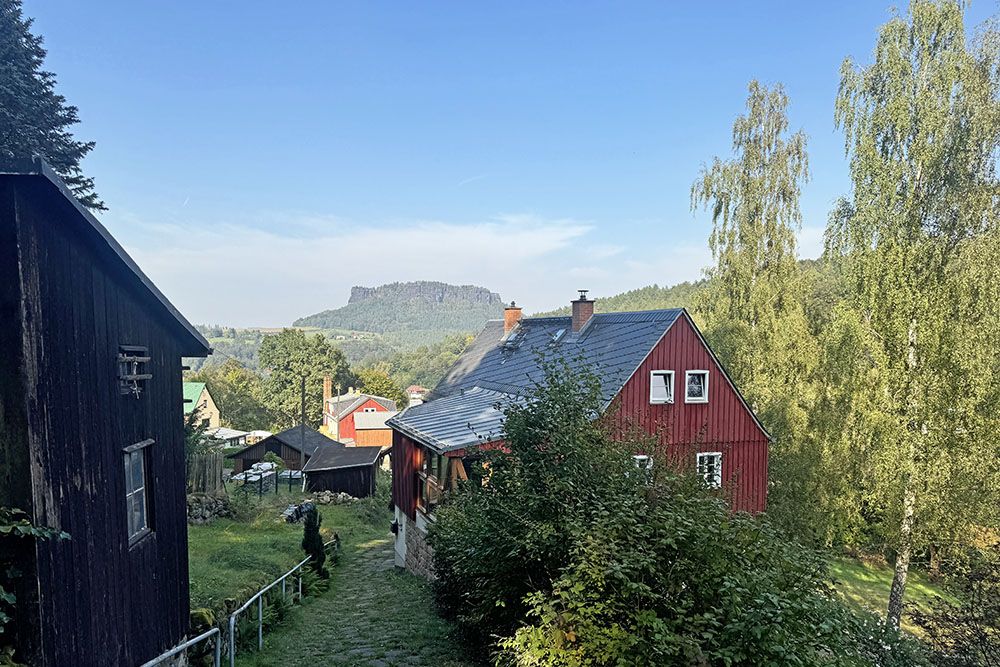
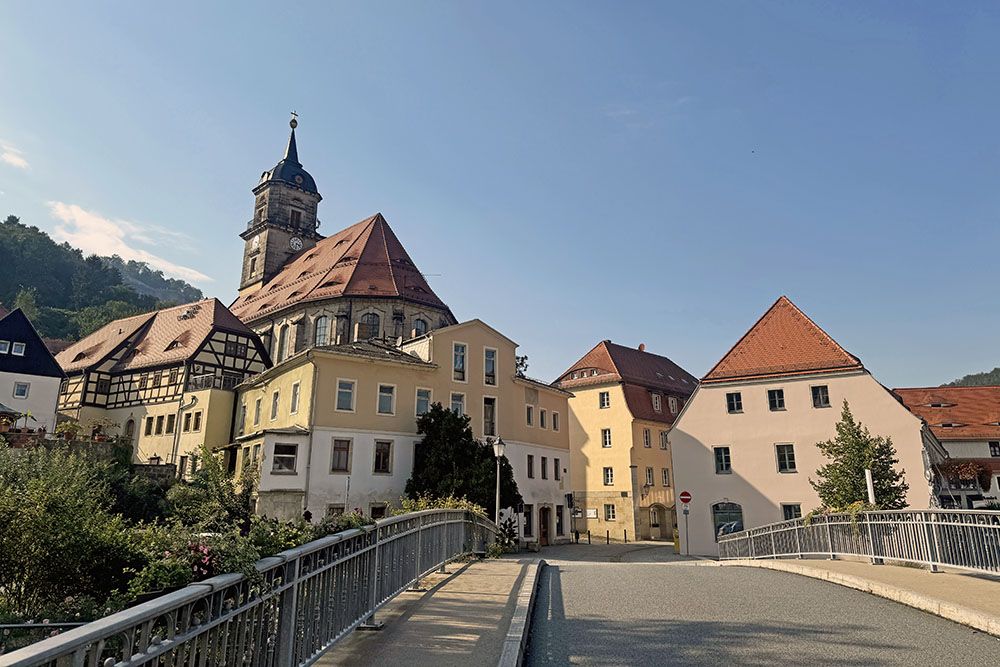
We enter Königstein via the narrow streets on the edge of the town. The history of this settlement on the Elbe dates back to the 13th century. Its charm lies in the well‑preserved old centre with half‑timbered houses and small, inviting squares.
As we stroll through the quiet streets, we pass local shops and friendly cafés. We also walk past St Mary’s Church, a simple yet atmospheric building that has stood here since 1810. Wherever we go, our eyes are drawn to the imposing Königstein Fortress towering above the town. During previous stages of the Malerweg we often saw this majestic stronghold in the distance. We had been curious about it for days – what it would be like up close, and what the view from the top would reveal. Now we finally stand at the foot of this historic fortification.
Visiting Königstein Fortress
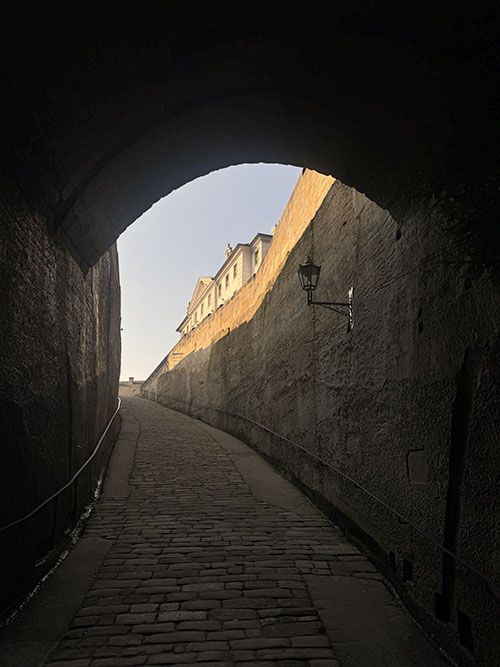
From Königstein we climb up to the mighty Königstein Fortress. The steep path leads us to the monumental entrance gate that has dominated the landscape for 750 years. We step inside and are immediately struck by the sheer scale of the complex. The fortress covers 9.5 hectares on a sandstone plateau, 240 metres above the Elbe. With a map in hand, we begin our exploration.
In the fortress museum we delve into Königstein’s fascinating history. From Bohemian castle to state prison and military stronghold – never conquered despite numerous sieges. The massive 40‑metre‑high walls offer breathtaking panoramas. We recognise places we walked through in the past days.
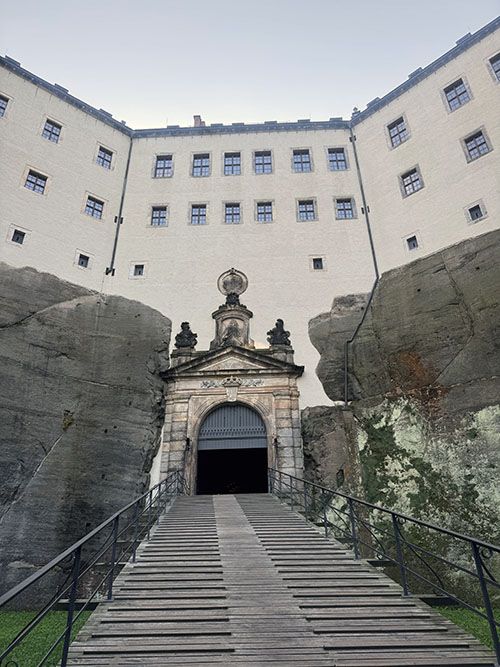
St George’s Chapel surprises us with its remarkably good acoustics. In the restored Magdalenenburg we try to imagine the lives of electors and kings. The 152.5‑metre‑deep well – the second deepest in Europe – makes a strong impression. A demonstration shows how water was once hauled up, a process that used to take fifteen minutes.
After a break in the fortress restaurant we explore the artillery platforms with their historic cannons. The Scherenhaus from 1550 fascinates us as the oldest surviving building, once the prison of the alchemist Böttger. The enormous provisions store, capable of supplying food for 4,000 people, is equally impressive.
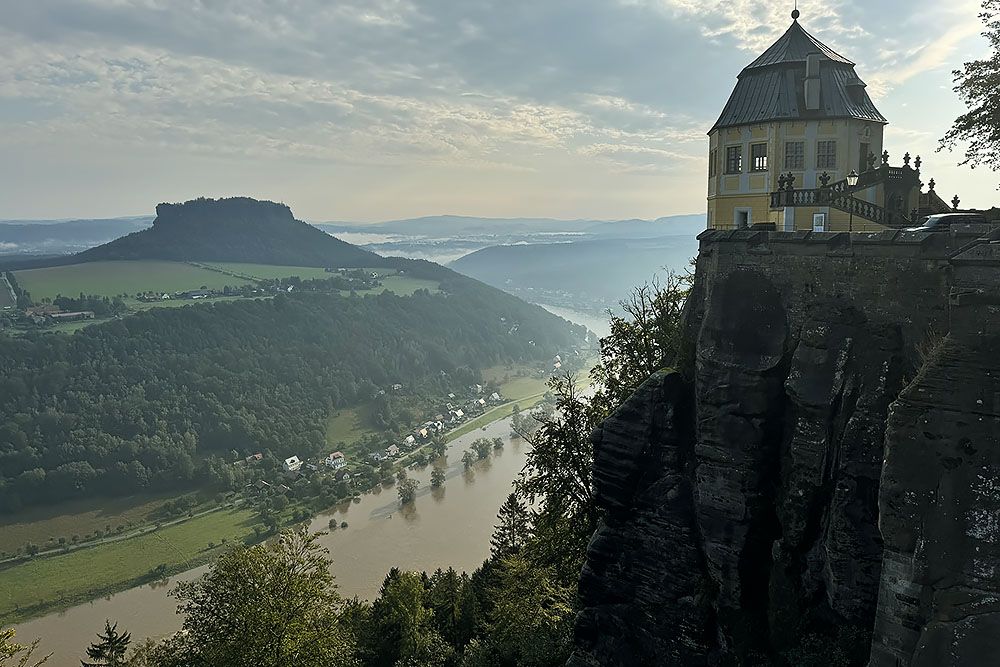
We finish at the Friedrich August viewpoint with its spectacular outlook over the Elbe and the surrounding table mountains. After two hours of exploration we leave the fortress with a deeper appreciation of its history.
To Weißig, the end point of Stage 7 of the Malerweg
After our visit to Königstein Fortress we continue Stage 7 of the Malerweg via the Old Fortress Path. This historic route once served as the supply road for the castle. It winds through mixed woodland where sunlight filters through the leaves and casts shifting shadows across our path.
We then emerge onto the Kanonenweg, named after the transport of cannons to the fortress. The path winds along steep slopes but remains relatively level, offering lovely glimpses of the surrounding hills.
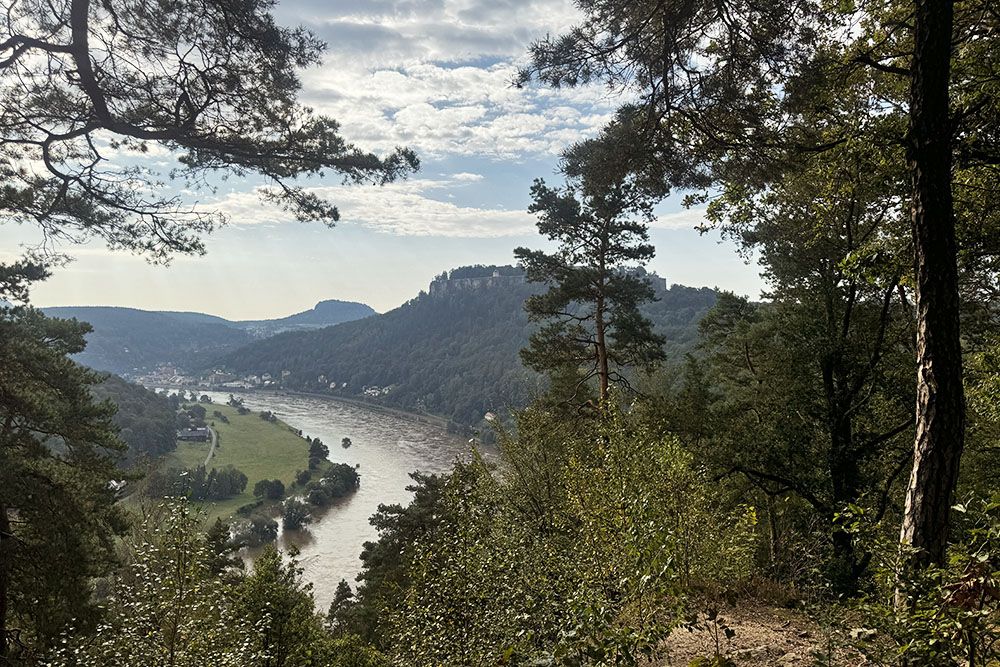
Leaving the forest, the landscape opens up and the picturesque village of Thürmsdorf appears ahead. This settlement, with its typical Saxon architecture, seems hardly changed since the 19th century. We continue to the elegant Schloss Thürmsdorf, an 18th‑century manor house. The surrounding estate is laid out as an English landscape garden.
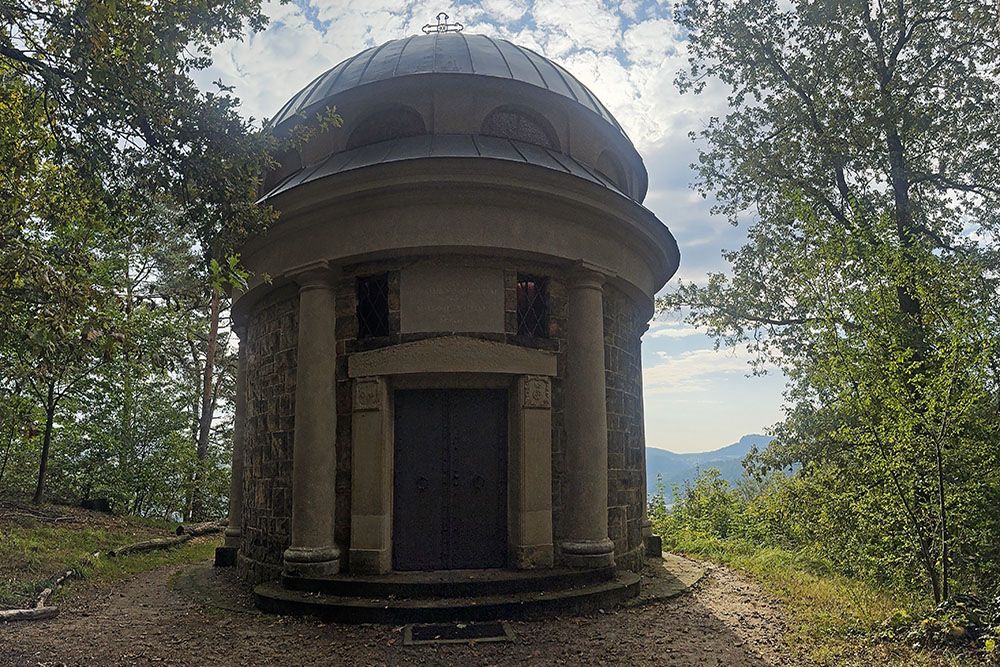
From Thürmsdorf we follow a path through meadows to the Malerweg Chapel, which offers a breathtaking view of Königstein Fortress. We pause here to admire the panorama. The fortress rises majestically, now from a completely different angle than this morning.
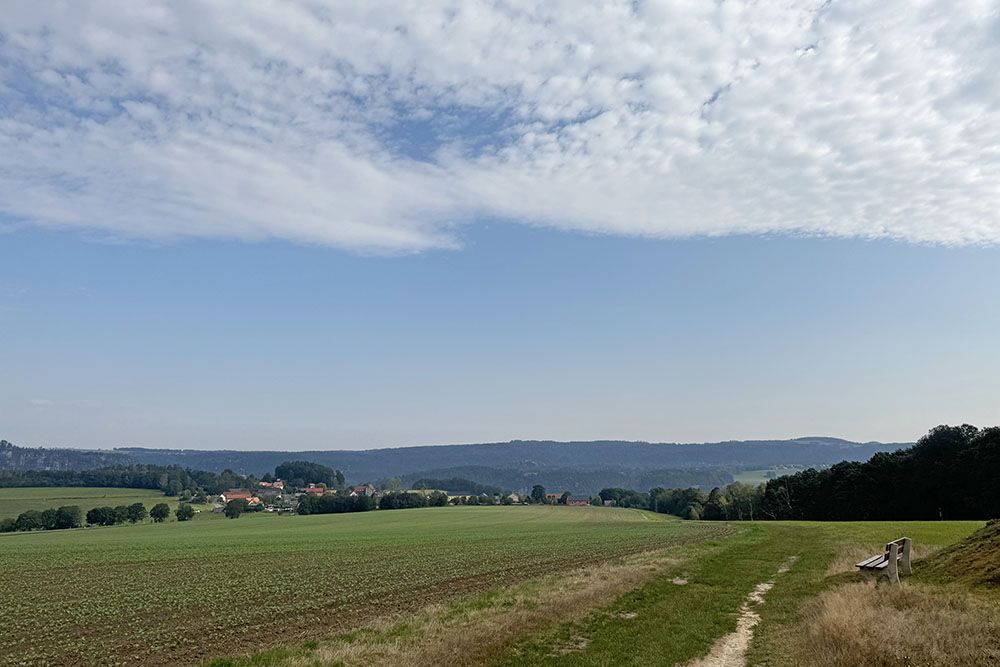
We continue across open terrain past wide fields of grain. In the distance we see the table mountains we explored in recent days. The final kilometres to Weißig lead us through gently rolling countryside dotted with small clusters of trees.
As we walk on, we reflect on this remarkable day. Stage 7 of the Malerweg has treated us to a rich variety of landscapes and historical sights. Before long we reach Weißig, the end point of this diverse stage. Tomorrow is already our final stage. Time has flown.
Practical tips for Stage 7 of the Malerweg
Stage 7 is approximately 16.5 kilometres (10 miles) long. Allow around six hours of walking time. Plan an additional two hours for a visit to Königstein Fortress. Our advice is to start this walking day early.
A brief route description and overview map can be found on the Saxon Switzerland website. Combined with the excellent waymarking, getting lost is virtually impossible. A GPS track (GPX file) is also available for download.
Stage 7 passes several wonderful sights. You begin with a climb to the Pfaffenstein, an impressive table mountain with a viewing tower and superb vistas. Nearby stands the Barbarine, a 42‑metre rock pillar with an intriguing local legend.
Along the way you squeeze through the narrow “eye of the needle” and discover the Quirl with its medieval castle remains. In charming Königstein, with its half‑timbered houses, the highlight awaits: the historic fortress with its museum, chapel and deep well.
You finish the day at Schloss Thürmsdorf and the Malerweg Chapel, which offers a beautiful panorama of the walking area.
Stage 7 is moderately difficult to challenging, but manageable for active walkers over 50 with hiking experience. The 16.5‑kilometre route includes 568 metres of ascent and 639 metres of descent, with demanding sections at the Pfaffenstein and the “eye of the needle”.
The most challenging parts are:
- The steep climb to the Pfaffenstein (434 m)
- The narrow passage “the eye of the needle”
- The path from Pfaffenstein to Quirl with wooden and iron stairways
- The climb from Königstein to the Malerweg Chapel
The technically difficult sections are well secured with steps and railings. Basic fitness and sturdy hiking boots are essential.
The sights along the way (Pfaffenstein, Königstein Fortress, Thürmsdorf) offer regular opportunities to take a break. Allow for a full day’s walk of around six hours, not including the visit to the fortress.”
Most of the route runs on unpaved paths.
The official start of Stage 7 is in Kurort Gohrisch, a small spa town in Saxon Switzerland. The official end point is in the village of Weißig, usually near the village centre. Weißig is a small settlement belonging to the municipality of Struppen.
Check the Verkehrsverbund Oberelbe (VVO) website to plan any necessary transport.
We recommend allowing at least two hours for a visit to Königstein Fortress.
Yes, there are several options:
- Bergrestaurant Pfaffenstein, located on the Pfaffenstein table mountain. Ideal for a first break, serving freshly prepared dishes with regional ingredients, including organic meat, milk and cheese. Vegetarian and vegan options are available.
- Königstein Fortress, one of Europe’s largest mountain fortresses, also offers refreshments. A visit takes around two hours.
Bring plenty of water and snacks, as the 16.6‑kilometre route with significant elevation changes is demanding. The route includes narrow paths and two steeper ascents to the table mountains.
There are several good accommodation options in the immediate vicinity of Stage 7 of the Malerweg. This stage runs from Kurort Gohrisch to Weißig, and along the way — as well as at both endpoints — you’ll find various places to stay.
In Kurort Gohrisch (starting point):
- There are several “walker‑friendly” accommodations in Kurort Gohrisch, specifically geared towards Malerweg hikers. As an officially recognised spa town, it offers excellent tourist facilities.
- Many places provide breakfast and can prepare a packed lunch for your walk.
In Pfaffendorf:
- This small village lies at the foot of the impressive Pfaffenstein table mountain and offers a few welcoming guesthouses — ideal for hikers wishing to split the stage.
- These accommodations are often small‑scale and family‑run, giving you an authentic experience of the Elbe Sandstone Mountains.
In Königstein:
- Königstein is the largest town on this stage and therefore offers the widest choice, from simple guesthouses to comfortable hotels.
- Many places benefit from their proximity to the famous Königstein Fortress and offer rooms with views of this striking landmark.
- Thanks to excellent public transport connections, Königstein is also a strategic base for exploring multiple stages of the Malerweg.
In Thürmsdorf:
- This picturesque village has a handful of charming places to stay, including small guesthouses and holiday homes.
- Its location between Königstein and the endpoint Weißig makes it a good choice for those wanting to break up the final kilometres of this demanding stage.
In Weißig (endpoint):
- Although smaller than Königstein, Weißig offers several accommodations tailored to the needs of Malerweg walkers.
- Many provide services such as luggage transport to your next stop along the trail.
It is advisable to book your accommodation well in advance, especially during high season. Most places along this stage offer the Gästekarte mobil, which allows free use of public transport in the region. You can also book accommodation for Stage 7 directly via the official Saxon Switzerland website.
We walked the full Malerweg at the invitation of TMGS (Tourismus Marketing Gesellschaft Sachsen) and the Tourism Association of Saxon Switzerland. The content of this blog was created independently and objectively, based on our own impressions.