During our city trip to Seville, there was one place we absolutely did not want to miss: the Real Alcázar. This morning we head there with Dori, our guide who now knows Seville better than her own handbag. She promises us a palace not built in one era, but in many. A place where kings, craftsmen and cultures influenced each other for centuries. What follows is a journey through rooms that try to outshine one another. And a garden that casts everything in a different light.
A palace built by two worlds
We meet our guide Dori at our Época Suites apartment. We have barely stepped outside when she already walks up to us. From here, it is less than two hundred metres to the Alcázar. That is how central our accommodation is. And that is how close one of Europe’s oldest palaces lies.
We walk with her towards the Patio de Banderas. The courtyard looks calm and almost modest. Yet this is where, in the 10th century, an Islamic fortress began that later grew into the heart of the city. Christian kings built their own halls on top of it in the centuries that followed. The Alcázar became a palace reshaped again and again by successive rulers.
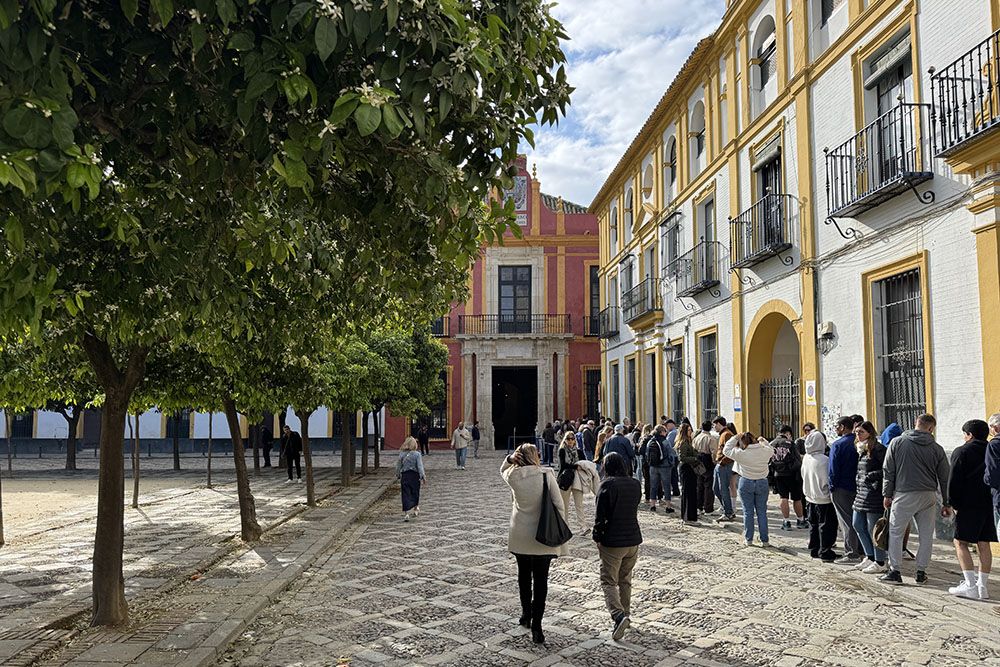
Thanks to Dori’s VIP entrance, we walk straight through without queues. No crowds. No hassle. Only the sense that we are entering a place still in use. “The Alcázar is not a museum,” she says as we approach the first gate. “It is still a royal palace.”
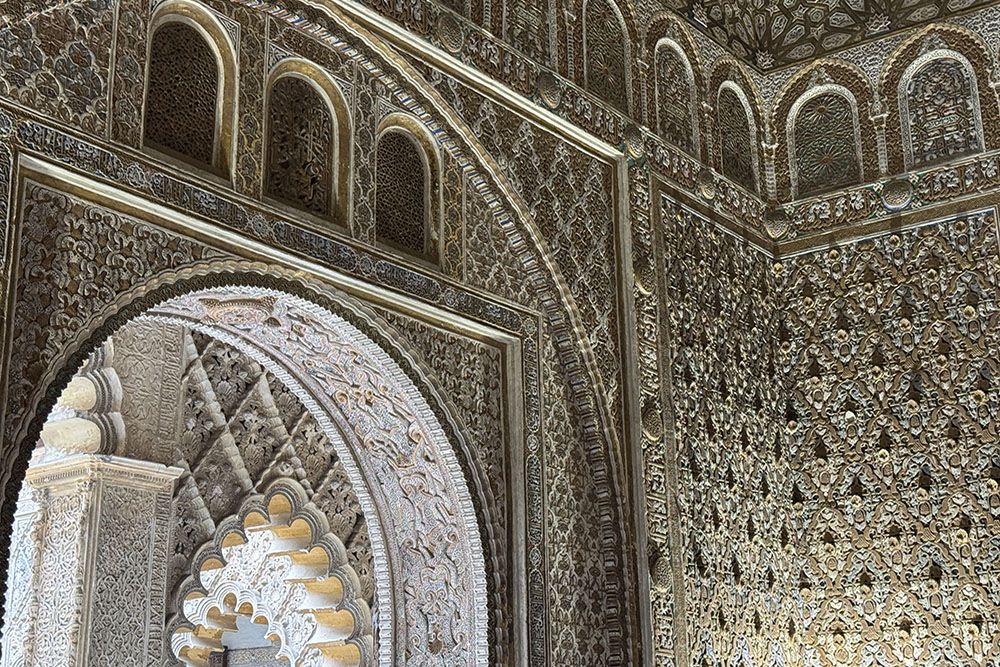
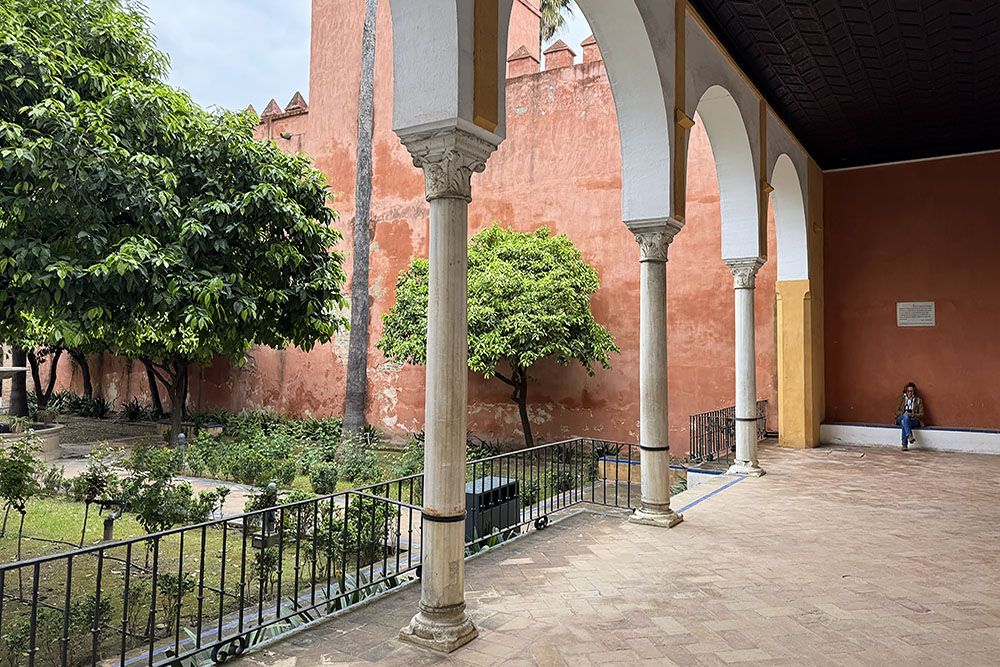
Inside, it immediately becomes clear how remarkable this complex is. The Real Alcázar was built in different periods. Islamic craftsmen worked here for Christian kings. Moorish patterns stand beside Gothic arches. Every room shows a different phase of construction.
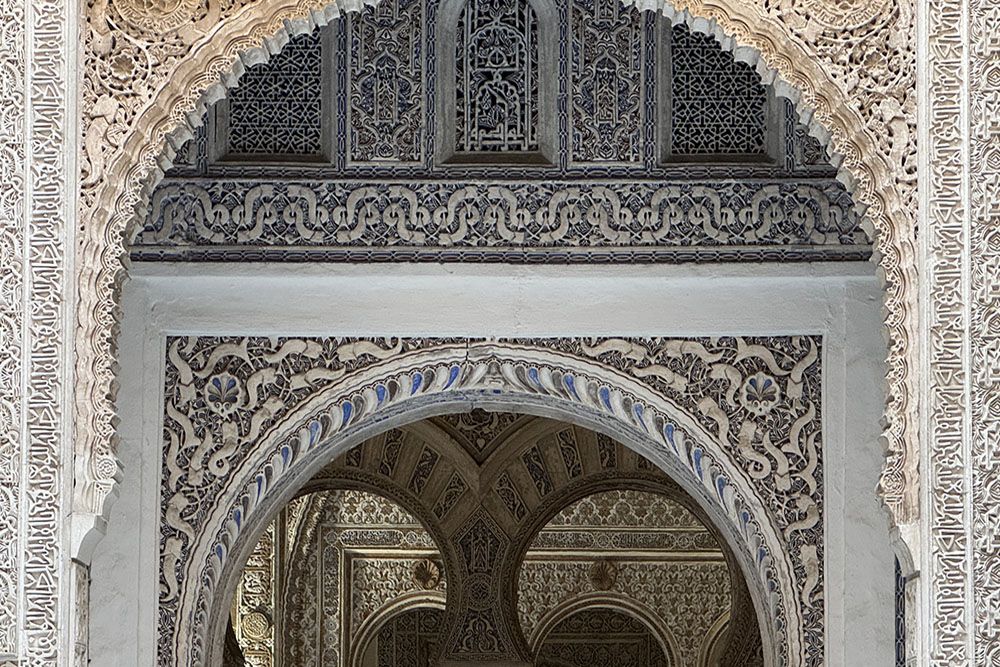
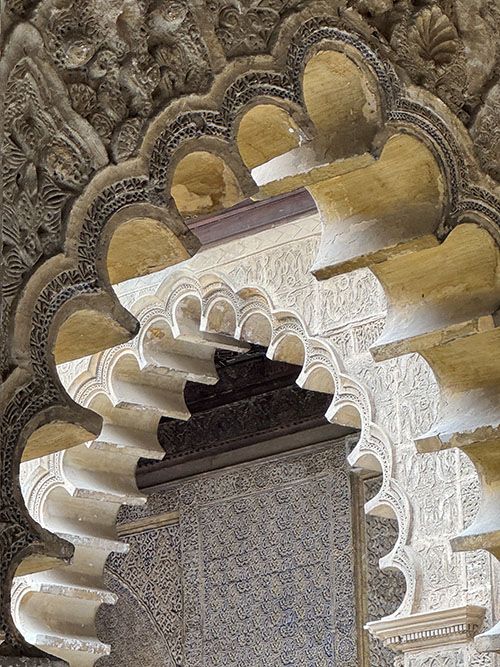
Dori points to the walls and tiles. To the rhythmic patterns appearing everywhere. “This is the Mudejar style,” she says. “Christian architecture with Islamic forms and craftsmanship.” Many of these rooms were built by Moorish artisans from Granada and Toledo. Some also worked on the Alhambra. King Pedro I admired that style so much that he asked them to create something similar in Seville. That is why this palace sometimes feels like an Andalusian counterpart to Granada’s most famous monument. Everything fits together seamlessly.
The heart of the Alcázar: rooms full of stories
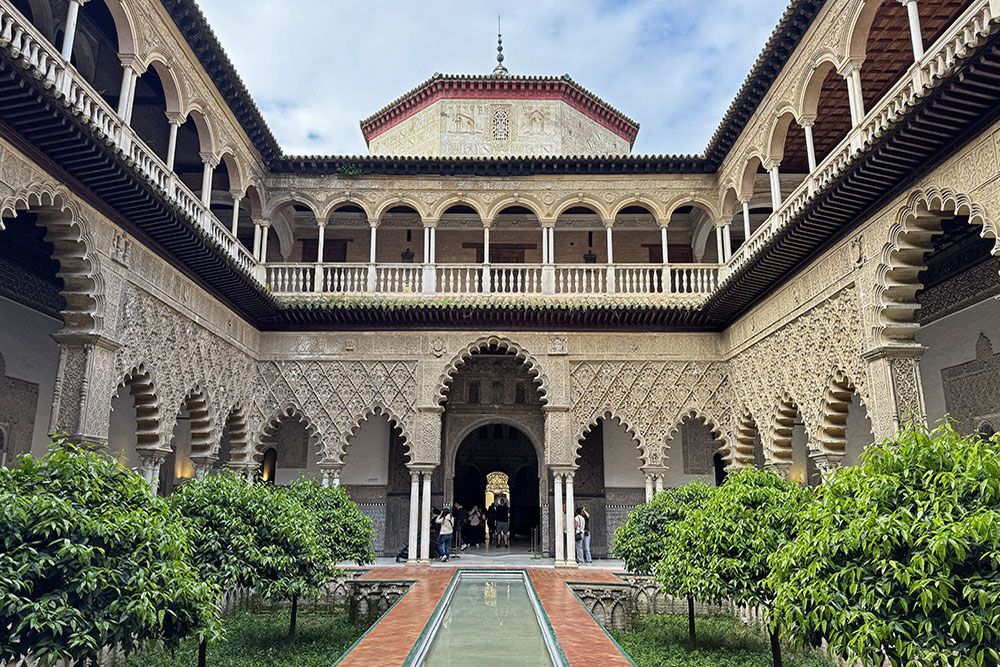
We reach the Patio de las Doncellas, the heart of the palace. The long reflecting pool lies perfectly centred. Orange trees flank the patio. The stucco shows geometric patterns that seem almost endless. “This patio was once buried under a layer of earth and rubble,” Dori says. “It was rediscovered and restored in the 19th century. But only after the major restoration in the 1990s did the palace appear as it was originally designed.”
Further on lies the Sala de Audiencias. This is one of the oldest rooms in the Alcázar. The hall is smaller than you expect, yet rich in detail. Wooden ceilings display fine carvings. Moorish arches frame the doorways. The tiles still carry the same colours as centuries ago. “This is where justice was administered,” Dori says. “And sometimes politics as well.” The room radiates craftsmanship.
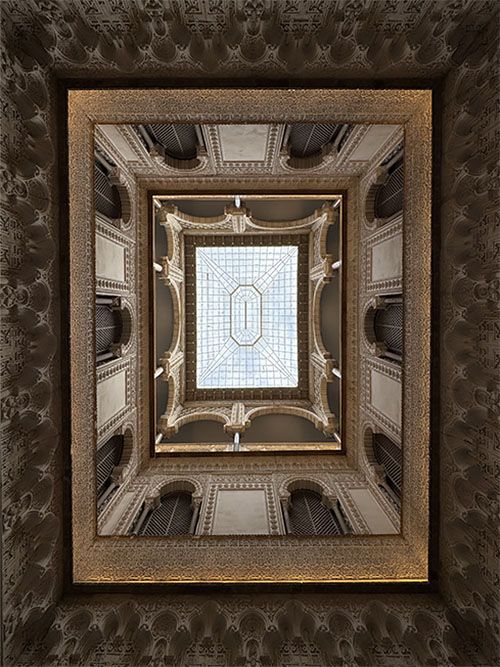
We then arrive at the Sala de los Embajadores. This room surpasses everything. The wooden domed ceiling represents the heavens. You see stars and symbols referring to the cosmos and the king’s power. It feels as if you are standing beneath a carefully ordered universe. “This was the throne room of Pedro I,” Dori says. “Here he received envoys and important guests.” The walls display inscriptions, patterns and tiles that together form a story about power and beauty. The room is a highlight of the Mudejar style. Mathematics, symbolism and craftsmanship come together here in one space.
We visit more rooms afterwards, each richer than the last. Like the Patio de las Muñecas with its delicate arches, and the tall Gothic halls added later. But also the chambers of Charles V with their sober, almost clean lines. And the Baths of Doña María de Padilla from the 14th century, lying partly underground. It is a succession of styles and stories. At a certain point, the impressions almost overwhelm you. Then it is time for something different. The gardens await. A welcome change after so much splendour indoors.
The gardens: calm after the splendour
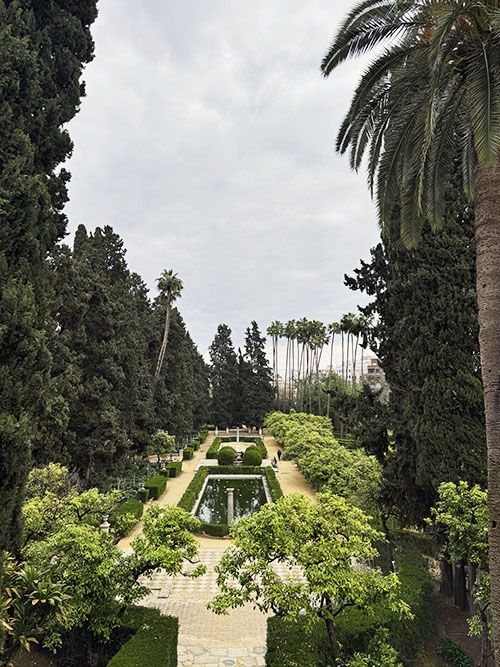
We walk outside and step into the gardens. The contrast is striking. Indoors everything was intense and full. Outside, a world opens that breathes more freely. Long sightlines draw your gaze forward and give the garden an almost regal calm. Galleries offer shade and guide you along walls that once provided protection. Here, the Alcázar feels even larger than it does inside.
The gardens have been shaped over the centuries. The oldest parts date from the Islamic period and follow a strict layout. Water played a central role then and gave the garden rhythm and meaning. Later, Christian kings added new terraces and galleries. They brought a different style, with more decoration and greater variety in plants.
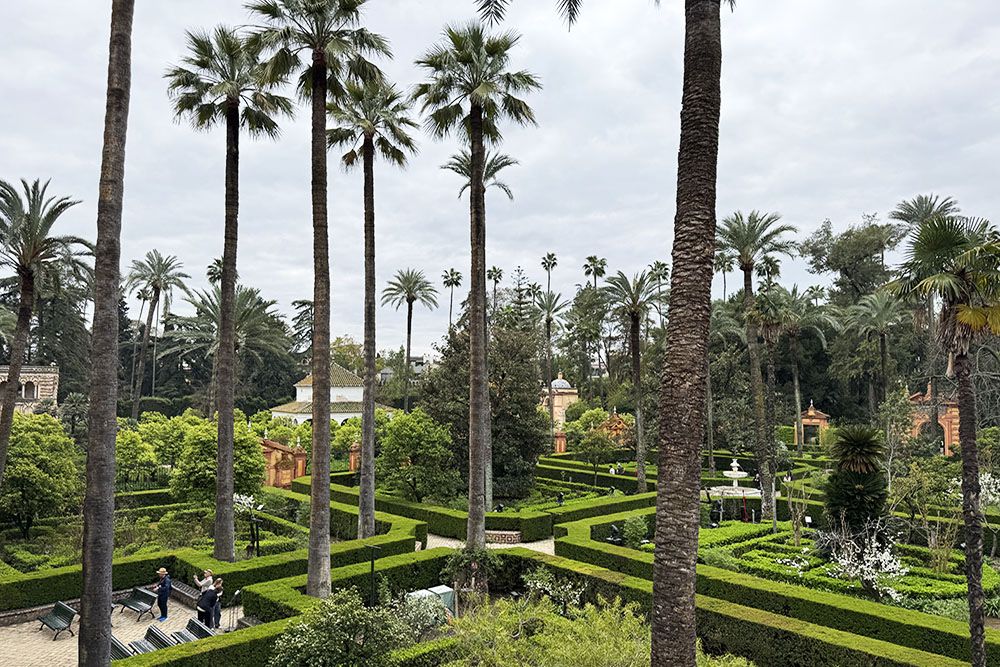
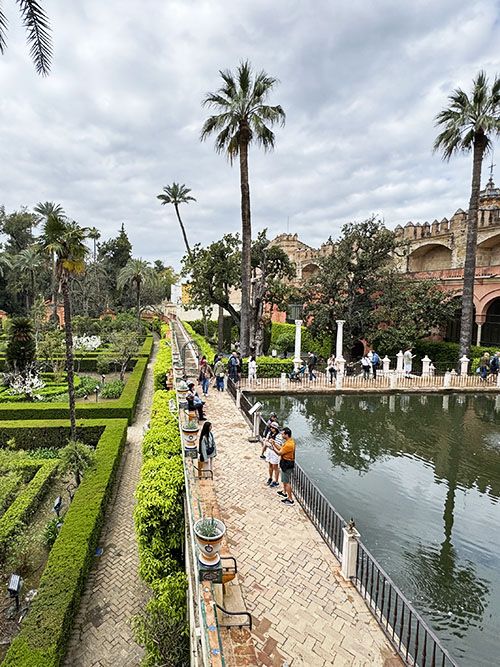
We walk slowly. The gardens invite you to do so. Water sounds everywhere. A fountain bubbles softly and fills the space with a gentle sound. A narrow stream slides along a wall and catches the light. A basin reflects the sky. The sound blends with silence. The orange trees release a light fragrance. Even outside the blossom season. Sun and shade alternate and give the garden a natural harmony.
Sometimes a path opens onto a higher terrace. Sometimes it disappears beneath an arcade. We look out over geometric beds that recall the Moorish love of order. Further on stand galleries added later, almost theatrical in appearance. It is hard to believe all this belongs to the same palace. A place where Moorish courtiers once walked. Where Christian kings later received their guests.
Dori waits somewhere ahead, but we walk this part deliberately on our own. The gardens need no explanation; they tell their own story. A story of calm and of a place that briefly lifts you away from the city outside.
A palace you will not forget easily
When we finally walk towards the exit again, Dori says softly: “The Alcázar is never finished. Every king left something behind.” And she is right. The palace is not a monument frozen in time, but a collection of layers forming a story still being written.
For us, this visit was more than a guided tour. It was a journey through time, style and culture. One of those places where you later think: I definitely would not have wanted to miss this!
Practical questions about visiting the Real Alcázar
Yes, absolutely. The Alcázar is one of Seville’s most visited sites. Booking online prevents long queues and gives you more choice in time slots.
It is best to buy tickets via the official website of the Real Alcázar. That is the only place where you are guaranteed the correct prices and time slots. If you want a guide and/or wish to avoid queues as much as possible, also check the tours from our partner GetYourGuide at the bottom of this blog.
A standard ticket usually costs around €15. The price may vary slightly depending on the season or type of visit.
Plan at least two to three hours. The palace itself demands plenty of attention, and the gardens are large enough to get pleasantly lost in.
Definitely. A guide adds context to the construction phases, styles and stories behind the rooms. Thanks to a guide, you notice details you would otherwise miss.
Yes. The Alcázar offers an official audio tour that you can rent at the entrance. You can also download a digital version on your phone. The Alcázar’s app is called “Alcázar de Sevilla” and is free to download. The content, however, costs around €3–€4. The audio tour provides background information about the main rooms and patios and is a good alternative if you visit without a guide.
Early in the morning or late in the afternoon. It is quieter then, and the light falls beautifully into the patios and rooms.
In most rooms, yes. Only a few spaces have restrictions. Pay attention to the signs; they are clearly displayed.
With a pre‑booked ticket or a guide with VIP access. This often saves a lot of waiting time.
You can, but it is intense. The Alcázar is rich, large and full of details. Many visitors choose something lighter afterwards, such as a walk through the Santa Cruz neighbourhood.
The official route works well. It leads you past the main rooms and ends in the gardens. A guide may sometimes adjust the order for a better flow.
Indoors it stays reasonably cool thanks to the thick walls. In the gardens it can be warmer, especially in summer. Water and shade are your best friends then.
We visited Seville at the invitation of the Seville City Office and one of its partners, Época Suites. The content of this blog was created independently and objectively, based on our own impressions.
Avoiding queues at the Real Alcázar
Book special tours here with our partner GetYourGuide. We receive a small commission for your booking at no extra cost to you. The commission helps us maintain this travel blog.