Before visiting the famous sights of Seville, we began our city break with something completely different: a relaxed bike tour through the city. That turned out to be a brilliant choice. Cycling through Seville is easy and surprisingly calm. And it gives you a clear overview of places you wouldn’t normally reach in such a short time.
During this tour, we saw a completely different side of the city. We listened to stories that made Seville’s history and character feel tangible. And we discovered places you won’t find in every guidebook. For us, this bike tour was the perfect way to get to know Seville — exactly the kind of start that helps you understand the rest of the city better.
In this blog ...
- Seville on two wheels: a route full of surprises
- Along the riverside towards Plaza de Toros
- The Expo 1992 and the Monasterio de Santa María de las Cuevas
- Towards Triana and the Monumento Triana al Arte Flamenco
- Parque María Luisa and Plaza de España
- End of our exploration of Seville
- Frequently asked questions about a guided bike tour through Seville
- Other topics you may be interested in
Seville on two wheels: a route full of surprises
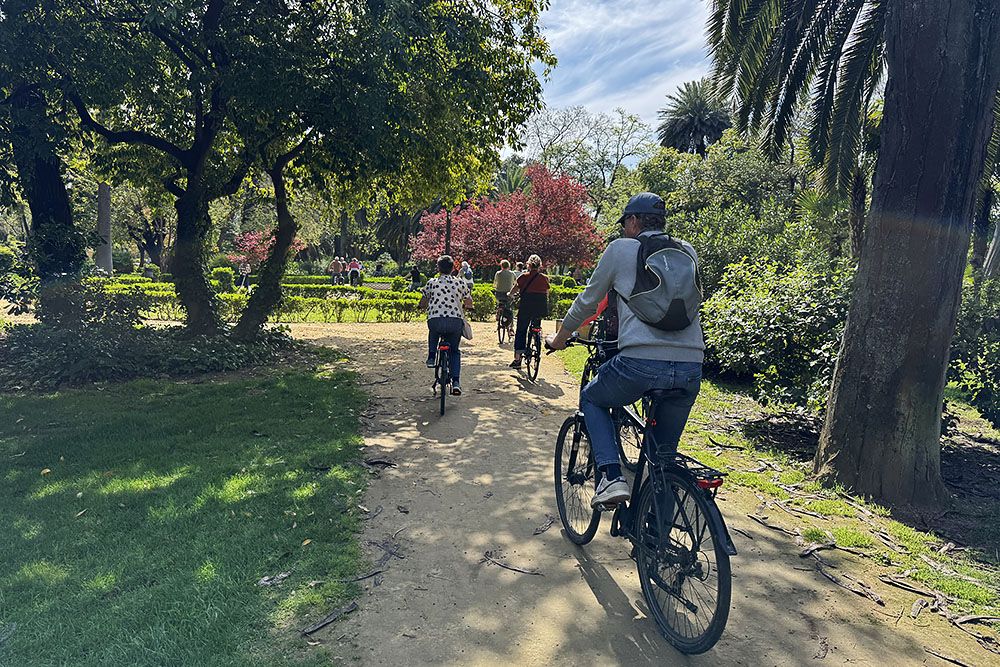
On our first day in Seville, we get on our bikes straight away. A guided tour always works as a gentle introduction to a new city. As we cycle calmly through the streets, the guide tells us about the history, the neighbourhoods and the places you would otherwise walk straight past. The pace is slow, the atmosphere relaxed, and within a short time we gain a clear sense of how Seville fits together. For us, this is the ideal way to get to know a city.
On this sunny day, we check in for our bike tour at Baja Bikes, where it’s pleasantly busy. Several groups are preparing to head out, each with their own guide. Our guide is Michiel, a Flemish local who has lived here for years and knows Seville better than many born‑and‑raised residents. He stops regularly, allowing us to listen to his stories in the warm sunshine. Calmly and with plenty of knowledge, he explains everything while we ask our questions. We absorb almost everything he tells us without effort.
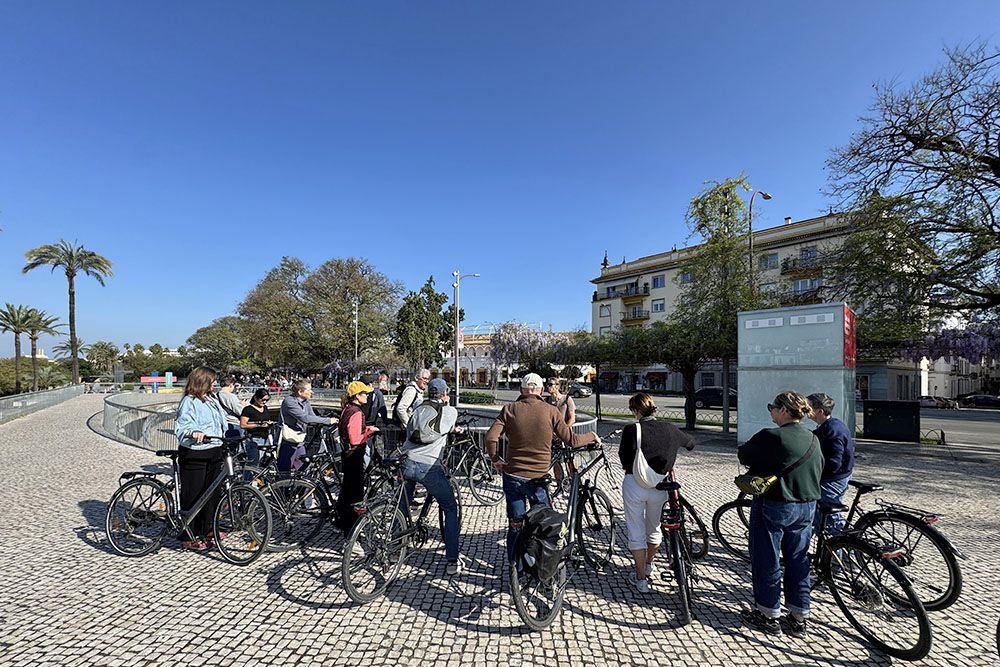
In much of the old centre, cycling is not allowed, Michiel explains. For that reason, he mainly leads us past lesser‑known places. That turns out to be surprisingly enjoyable. It gives us a sense of the city we would never have built on our own. The major highlights, such as the Alcázar and the cathedral, we visit later during a city walk.
Within a few hours, we still gain a clear overview. We cycle through quiet streets, past hidden corners and along wide avenues we would never have chosen ourselves. Because the landscape is completely flat, we ride through the city in a very relaxed way. And thanks to the many stops, we always have time to take everything in properly. We highlight several special places along the route.
Along the riverside towards Plaza de Toros
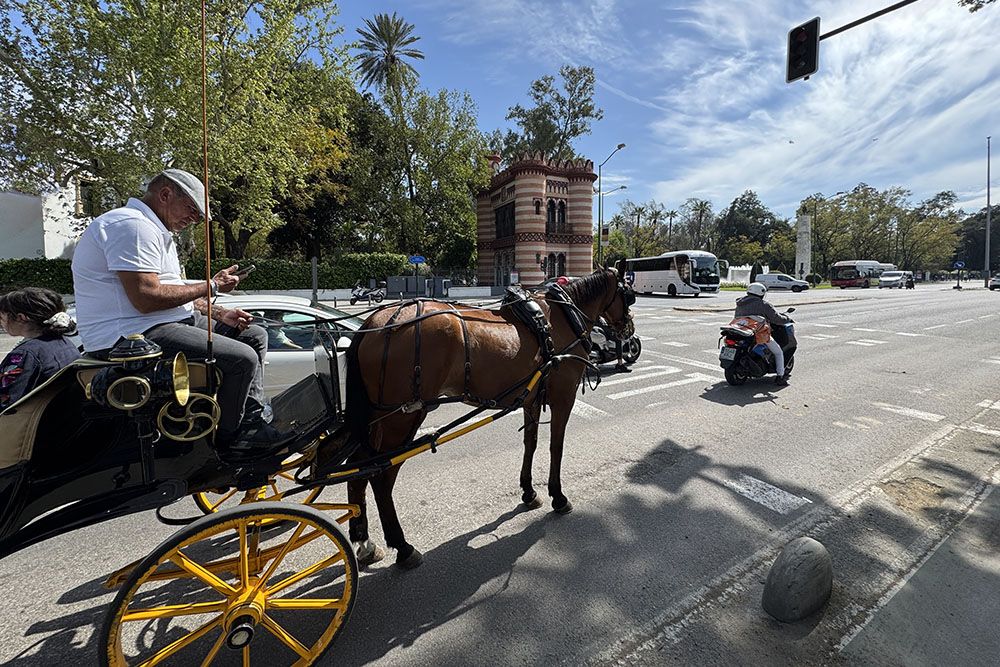
Via the orange tree lined Jardines de Murillo, we cycle towards our first stop. It’s still early, yet the sun already feels warm. Michiel guides us smoothly through the traffic. “This is where Seville slowly comes to life,” he says as we stop at the riverside of the Canal de Alfonso XIII. We stand between two bridges, just a stone’s throw from the Plaza de Toros de la Maestranza. The view is wide and calm. Yet this was once the busiest place in the entire city.
The river that made Seville great
Michiel points towards the water. “This canal was once the main course of the Guadalquivir. Without this river, Seville would never have become what it is today.” He explains how Seville grew into the centre of world trade in the sixteenth century. After Columbus’s voyages, the city received exclusive rights to trade with the New World. All goods — gold, silver, spices, cacao — entered through this river. The Guadalquivir was the lifeline of the Spanish empire.
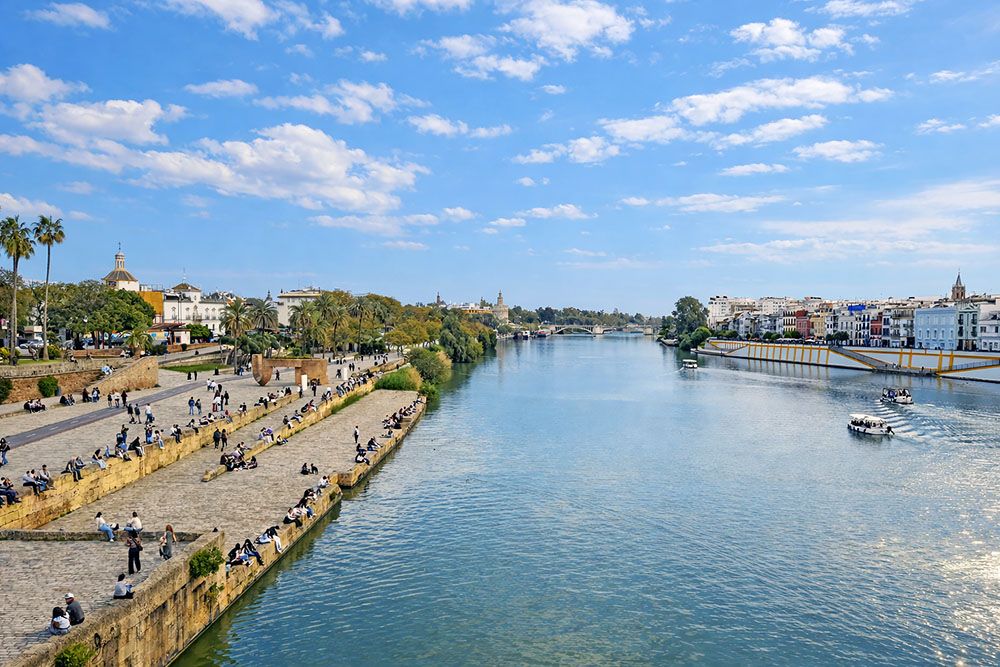
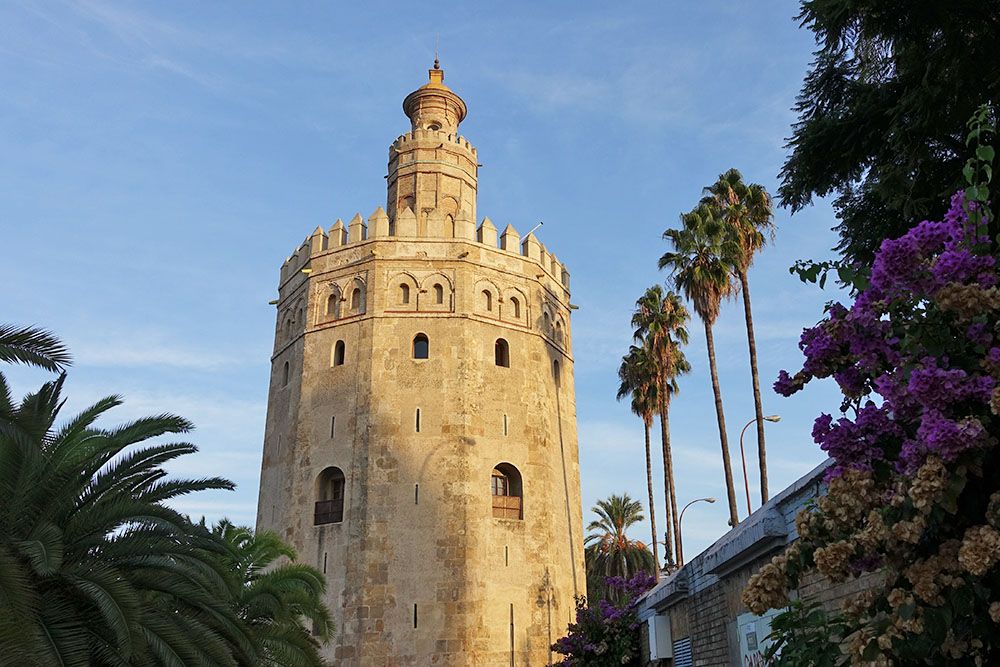
A little further on, the Torre del Oro glitters in the sunlight. This thirteenth century watchtower once formed part of the city walls. It served as a defensive structure and as storage for valuable goods arriving via the river. The golden tiles that once made the tower shine have disappeared, but the name remained.
Near the Torre del Oro lies a striking wooden ship. It’s a replica of the Nao Victoria, the first vessel ever to sail around the world. The original departed from Seville in 1519 with three other ships. In 1522, it returned as the only one to complete the first successful circumnavigation.
Plaza de Toros and the nuance of the arena
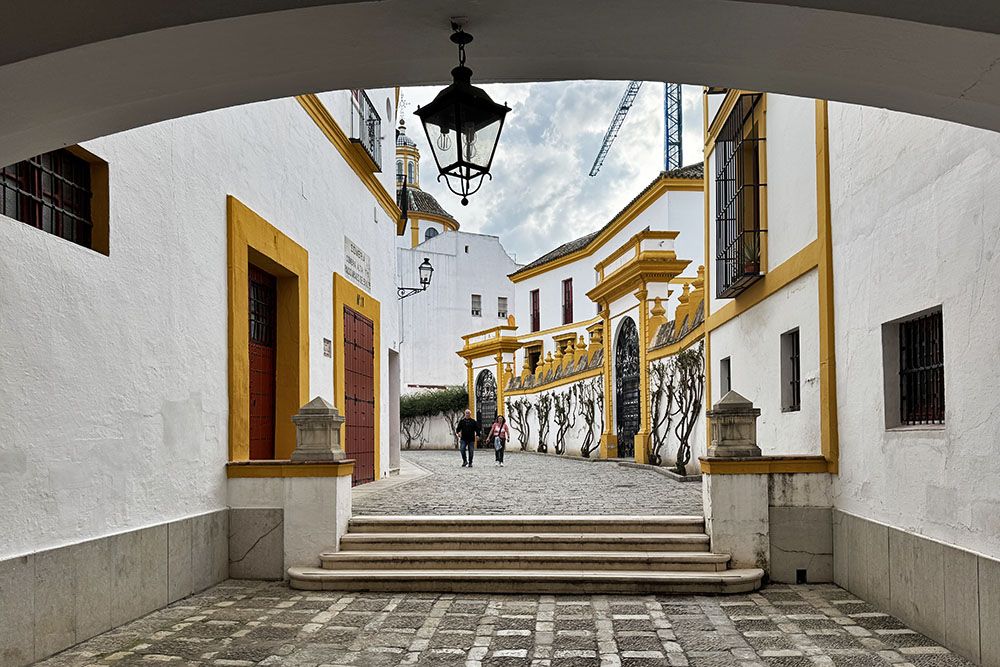
Across the road lies the Plaza de Toros de la Maestranza. It is one of Spain’s oldest and most renowned bullrings. The white façade with yellow accents stands out sharply against the blue sky.
Michiel looks at the building for a moment before he begins. “You may think whatever you want about bullfighting,” he says. “But it helps to understand what it actually is.” He explains that torrero is a collective term for all fighters in the arena. The matador is the lead fighter, the one who holds responsibility and plays the decisive role. “The ultimate goal is for both the matador and the bull to leave the arena alive.”
According to Michiel, it isn’t a brutal fight but a ritual. Almost a dance, in which human and animal approach each other. We listen not to be convinced, but to understand. The nuance is refreshing.
The Expo 1992 and the Monasterio de Santa María de las Cuevas
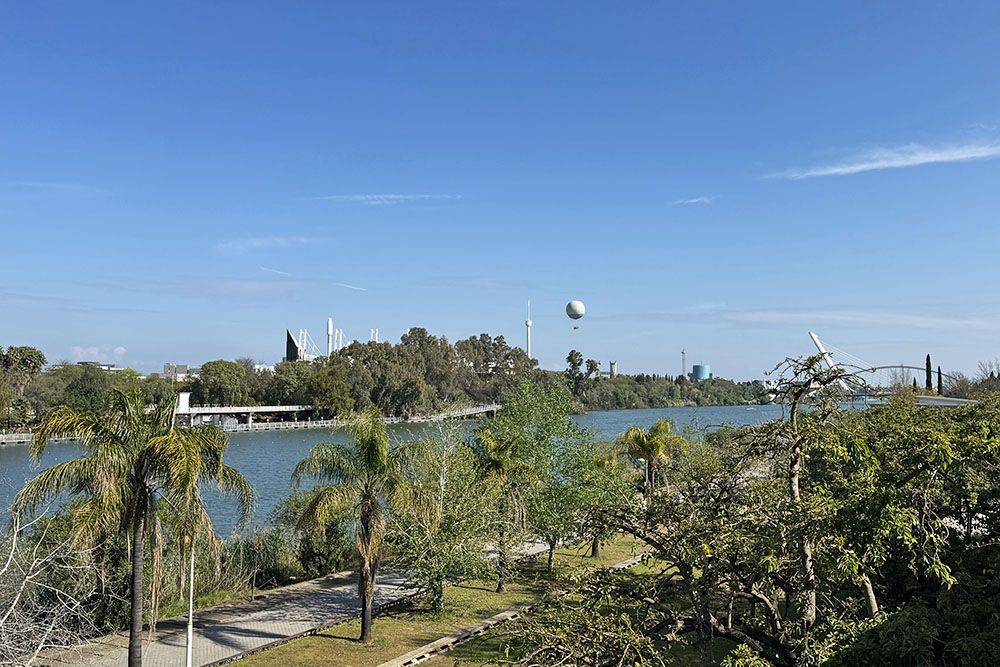
From Plaza Ingeniero Manuel Ríos, we continue along the wide cycle path beside the Jardines de Chapina. It’s the kind of stretch where you naturally slow down a little. There is plenty of greenery, plenty of shade, and always that calm water of the canal beside us.
As we ride towards the ‘Pasarela de la Cartuja’ bridge, Michiel stops now and then to explain something. He tells us about the Expo ’92. During this world exhibition, Seville gained new bridges, a renovated airport, a modern train station and Spain’s very first high speed rail line. Suddenly, you could reach Madrid in just a few hours. The entire area was developed: pavilions, infrastructure, and later even a theme park and a technology zone.
Columbus and the monastery
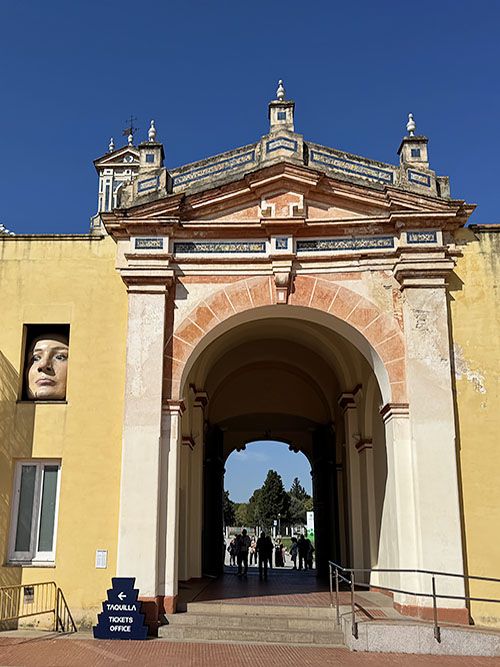
We cross the canal and ride onto the island where the monastery stands. At the statue of Columbus, we get off our bikes. This is where Michiel begins his story. “After his first voyage, Columbus lived in the monastery for a year,” he says. “He found peace here, time to study maps and make plans for what would come next.”
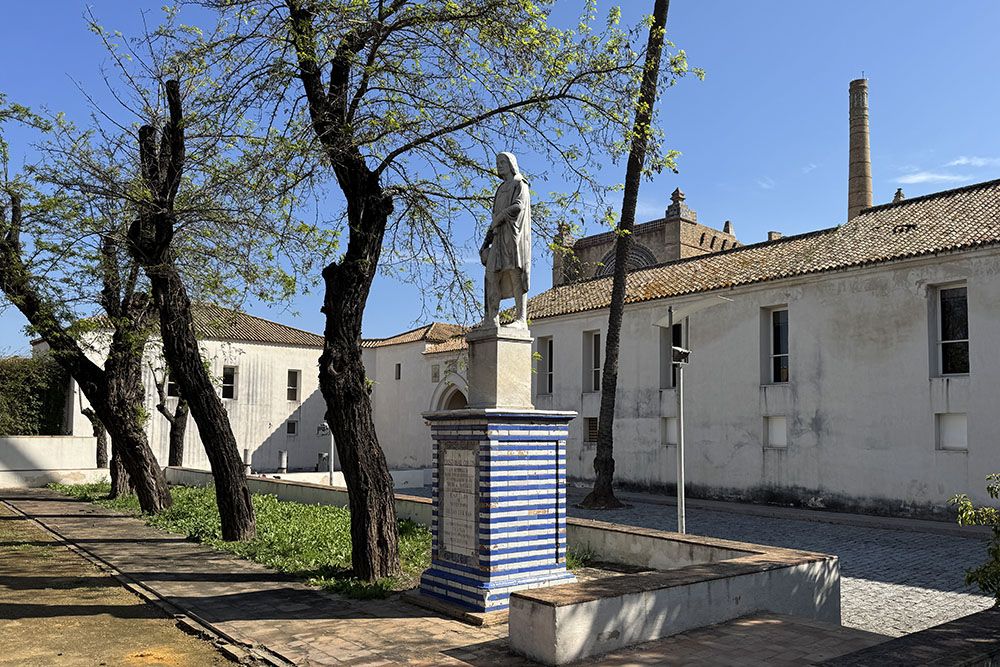
Michiel then tells us about the less cheerful final years of the explorer. How Columbus had to leave Hispaniola after complaints about his harsh rule and the many conflicts that had arisen. How he gradually lost support at court. And how his fourth voyage ended in a shipwreck on Jamaica, where he was stranded for months. “From that moment on, things really only went downhill for him,” Michiel says.
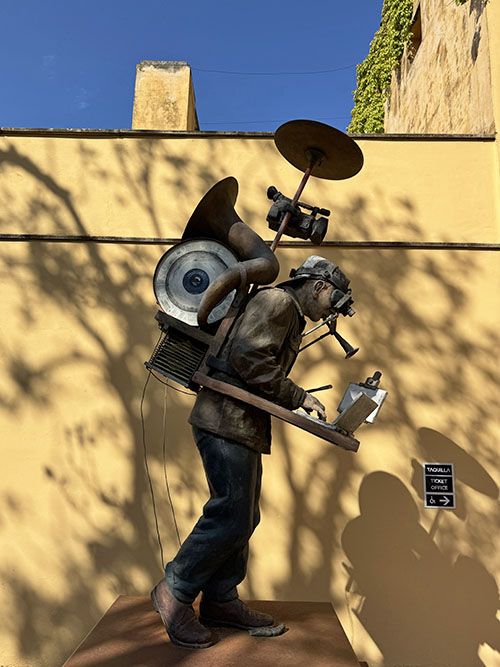
The monastery itself has taken on a completely different role. After centuries of religious use and later a period as a ceramics factory, it is now a museum and cultural centre. It’s a place where modern art, history and industrial heritage come together.
Towards Triana and the Monumento Triana al Arte Flamenco
We follow the water towards Triana. This is the neighbourhood known for its distinctive character, ceramics and deep flamenco roots. We stop at the Monumento Triana al Arte Flamenco.
Here,
Michiel first tells us something about the neighbourhood itself. He explains that Triana was once a district of potters and sailors. Many craftsmen also lived here. For centuries, the neighbourhood stood slightly apart from the rest of Seville. Triana was also a gypsy district for a long time. Many families played an important role in the development of flamenco. Many famous dancers, singers and guitarists come from this area.
He then tells the story behind the monument. Flamenco did not simply arise here by chance. In the old communal courtyards, close knit communities lived together. They used music to keep rhythm during their work. Music also helped them share stories and preserve their identity. The monument reflects that origin. The dancer, the guitar and the anvil refer to labour, rhythm and expression. Together, they form the foundation of flamenco.
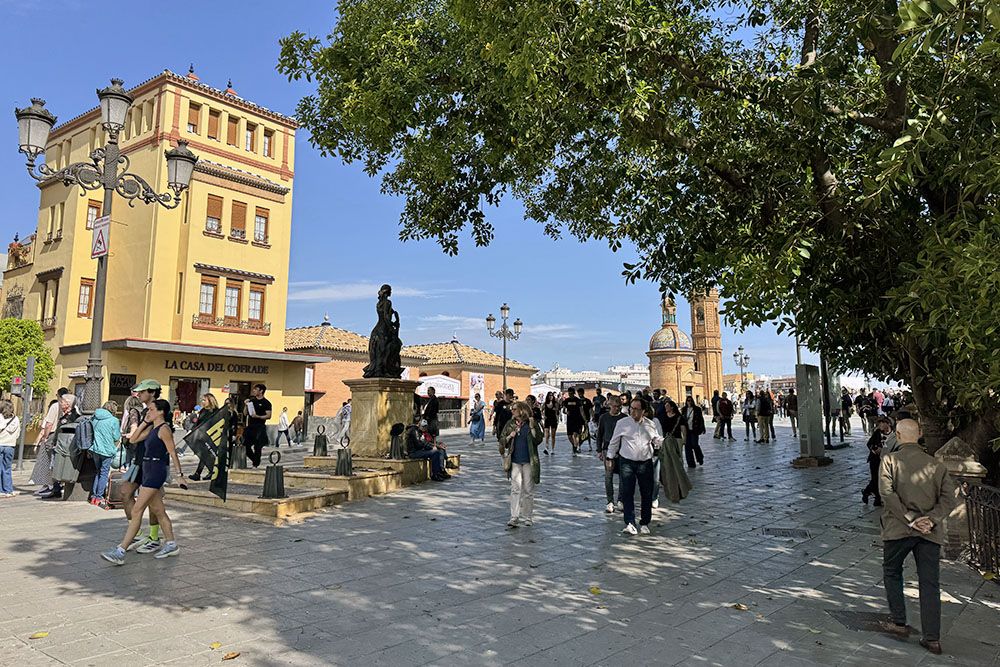
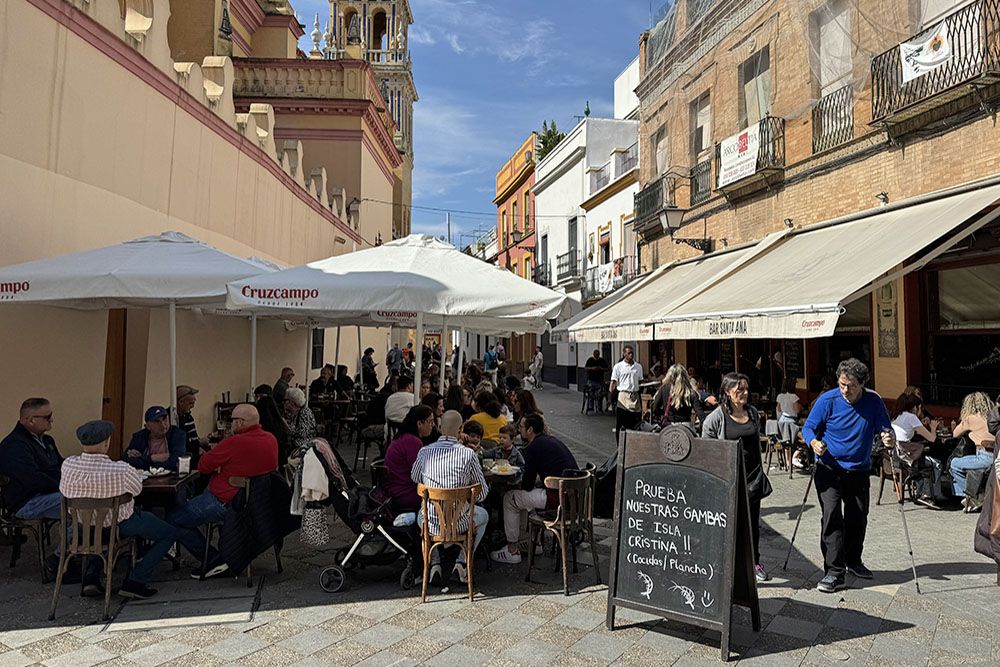
Meanwhile, we experience Triana as it is today. The sun shines beautifully. The lively terraces are filled with people enjoying coffee, wine and tapas. Cheerful chatter fills the air. It’s the kind of place where you happily pause for a moment. Yet we continue cycling. There is still more to discover today.
Parque María Luisa and Plaza de España
We continue our route through Triana and cross the river again at Plaza de Cuba. On the other side, we follow the wide avenues towards Parque María Luisa, the most famous park in Seville. At Plaza América, we get off our bikes. The bikes are locked together with a long cable, and Michiel begins by telling us something about the park.
Parque María Luisa was once part of the gardens of the San Telmo Palace. In 1893, the duchess donated the gardens to the city, intending to create a large public park. For the Ibero American Exhibition of 1929, the park was completely redesigned and gained its current character: broad shaded paths, ponds, fountains, exotic trees and pavilions from various countries. It feels like a green oasis in the middle of the city.
A short walk through Parque María Luisa
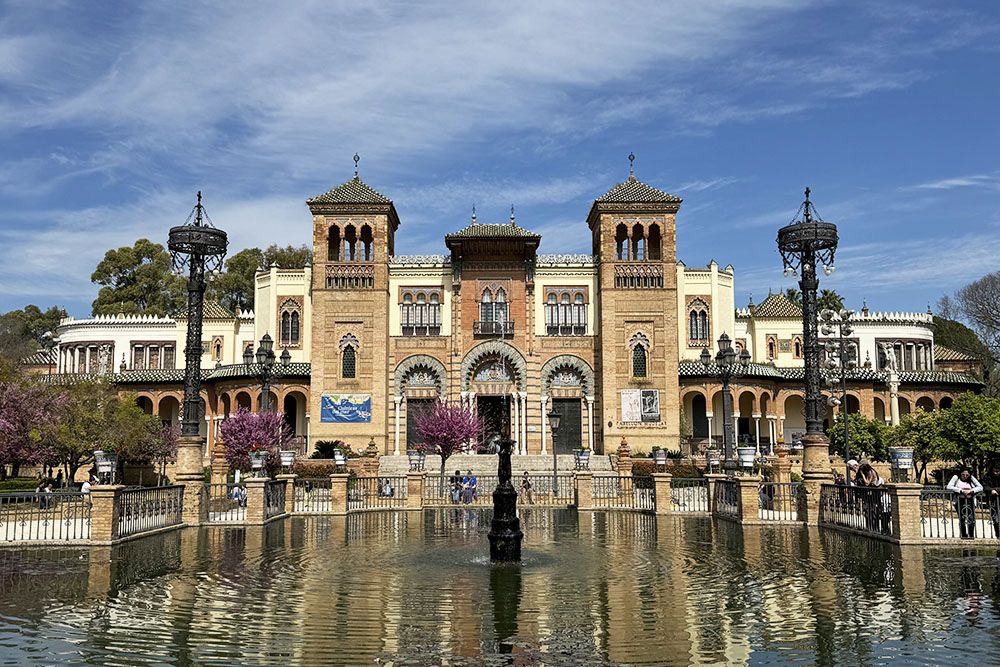
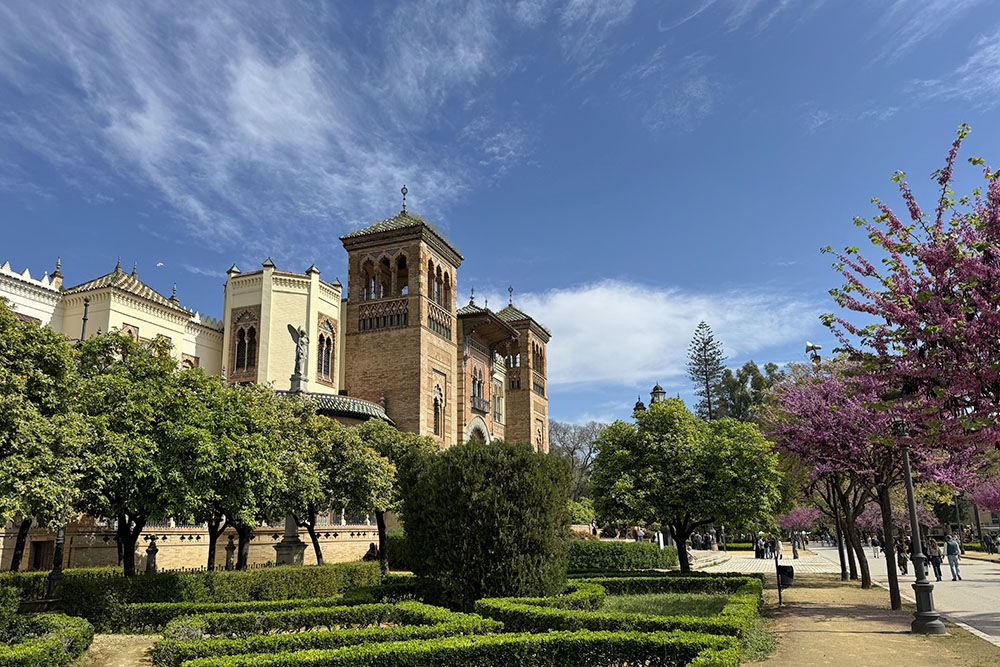
After Michiel’s explanation, we are free to walk around for a bit. We stroll past the Antiguo Pabellón Mudéjar, one of the most beautiful buildings in the park. It was built in the Mudéjar style, a typical Spanish blend of Christian architecture with Moorish elements: horseshoe arches, ceramics and geometric patterns. The building looks warm and elegant, as if it has drifted in from another time. Today, it houses the Museo de Artes y Costumbres Populares.
We enjoy wandering here for a moment. Sunlight filters through the trees, water trickles everywhere, and the atmosphere is pleasantly lively. Many families with young children enjoy the beautiful weather. The park feels vibrant yet relaxed — exactly the kind of place where you want to linger.
The Plaza de España from the photos
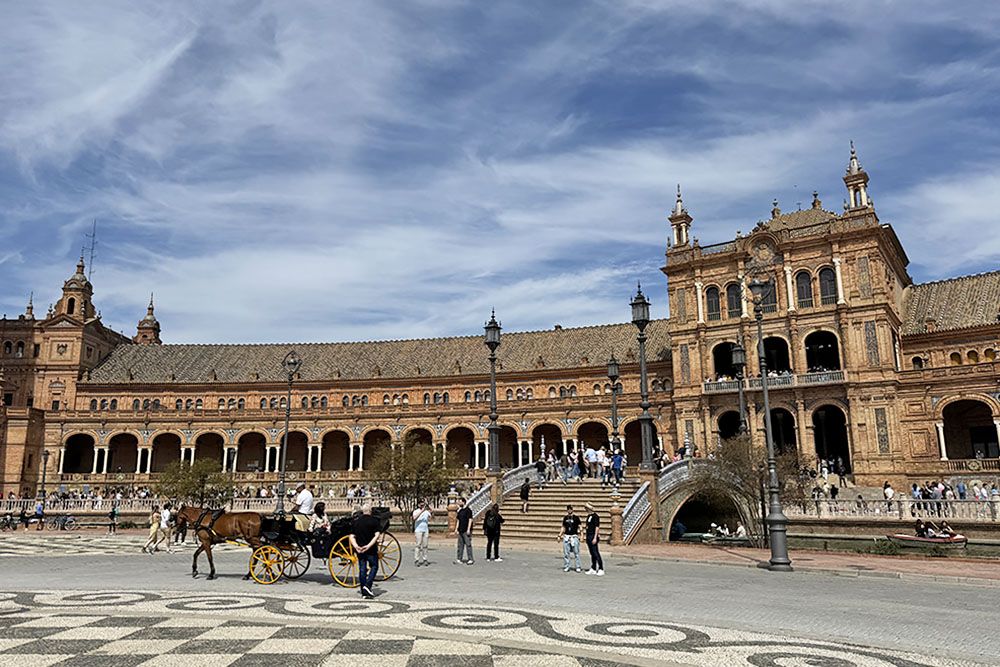
We get back on our bikes and continue towards the Plaza de España. For me personally, this might be the highlight of the entire route. The enormous semi circular building, the towers, the bridges, the tiled alcoves… this is the image I always had of Seville.
Michiel tells us extensively about the history of this square. It was built for the Ibero American Exhibition of 1929 and designed by Aníbal González. He combined several styles: Renaissance Revival, Baroque Revival and Neo Mudéjar. The result is a building that feels Spanish, monumental and almost fairy tale like. The semi circular shape symbolises Spain embracing its former colonies. The four bridges represent the old kingdoms of Spain. And along the walls, you’ll find dozens of tiled niches, each dedicated to a Spanish province.
End of our exploration of Seville
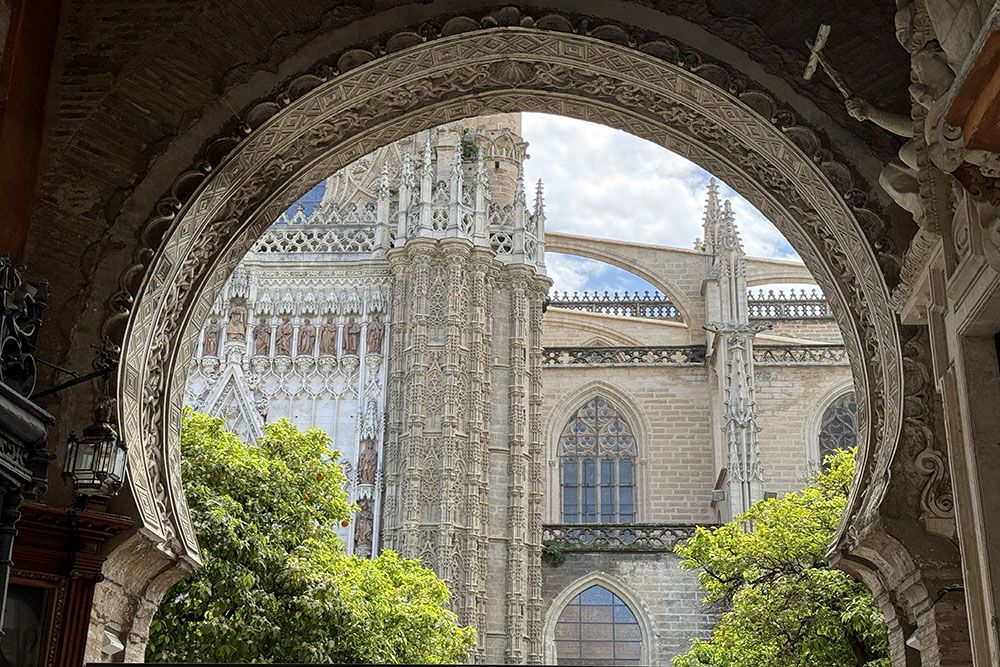
Our bike tour ends back at the Baja Bikes office, yet it feels as though we have only just begun to understand Seville. We saw a great deal today, heard even more, and gained a beautiful first impression of the city. But this was only the beginning. Because we also continued on foot through the neighbourhoods of El Arenal and Santa Cruz. There, we discovered the cathedral of Seville and the royal palace: two places that truly overwhelmed us.
Frequently asked questions about a guided bike tour through Seville
Yes, absolutely. Seville is flat, has wide cycle paths and is one of Spain’s most bike friendly cities. A guided bike tour with Baja Bikes gives you quick orientation and plenty of background stories. It’s ideal for your first day.
During your bike tour with Baja Bikes, you pass historical places, modern districts and green parks. Think of the riverside, Plaza de Toros, Torre del Oro, Triana, La Cartuja, Parque María Luisa and Plaza de España. You don’t cycle through the old city centre because cycling is not allowed there.
Expect around 2.5 to 3 hours. That includes several stops and explanations from the guide.
You cycle past places you often skip on foot: quiet streets, wide avenues, hidden corners and lesser known neighbourhoods.
The Baja Bikes office is located in the centre of Seville, within walking distance of many hotels and apartments. You check in there before the tour and then leave with your guide and group.
Prices vary by season, but expect around €30 to €35 per person for a three hour guided tour.
Yes. Seville is one of the most bike friendly cities in Spain. The city is flat, has wide cycle paths and the traffic is easy to navigate. You also cycle with a guide who knows exactly where you may and may not go.
No. The tour is relaxed, with many stops. Anyone with normal fitness can join without difficulty.
Baja Bikes offers tours in several languages, including English.
That’s wise, especially in spring and autumn.
No. In parts of the old centre, such as around the Alcázar and in Santa Cruz, cycling is prohibited. The guide knows all the rules and therefore leads you along places where cycling is allowed.
It can get hot in summer. Morning is the best choice then. In other seasons, it’s almost always pleasant.
You can, but you miss the stories, context and hidden places a guide shows you. And with a guide, you never need to look at a map — you can simply enjoy the ride.
Yes, you can. But because the landscape is flat, a regular bike is usually more than enough.
Traffic is manageable and the cycle paths are wide. Especially in the morning, it’s quiet. Seville is one of the most relaxed cities to cycle in.
Renting bikes yourself is fine, but with a guide you get far more interesting background information. You see places you would otherwise miss and hear stories that bring the city to life.
We visited Seville at the invitation of the Seville City Office and one of its partners, Época Suites. The content of this blog was created independently and objectively, based on our own impressions.