We spent the previous day exploring the abbey town of Cluny. Today, it’s time to discover the rolling landscapes of southern Burgundy. The route takes us through sleepy villages, vineyards painted in stunning autumn colours, and a remarkable castle. This cycling tour is a string of highlights. Fancy joining us?
A lovely start to the day
It’s hard to leave the breakfast table at Chambre d’Hôte La Porte des Prés. Our hostess, Chantal, has prepared the most delicious treats and entertains us with amusing stories. A perfect beginning to a fresh but sunny day.
Just before nine, we park our car at Parking du Prado on the edge of Cluny. Here, we pick up our e-bikes at Traces & Découvertes. Their small office, right next to the tourist information centre, is conveniently located by the car park. Yannick is busy getting our bikes ready and immediately shares a link to the digital route so we won’t get lost. The batteries are fully charged, the route downloaded — we’re all set for our e-bike tour through southern Burgundy!
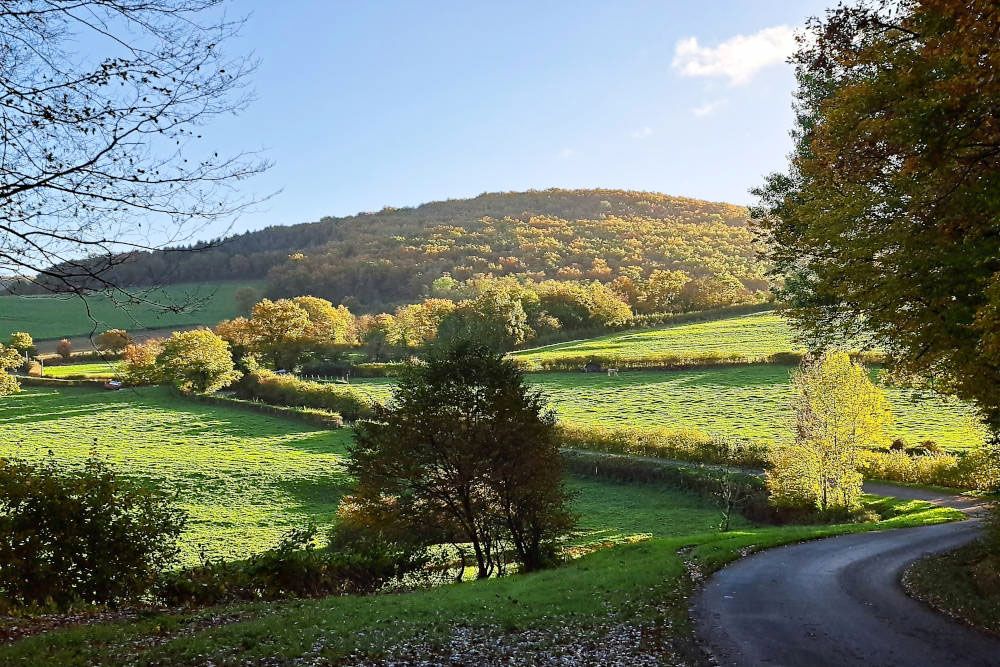
Cycling tour from Cluny
Yannick offers to cycle with us for the first stretch. “Otherwise, you’ll have to keep checking your phone in the town, which is tricky,” he says. He expertly guides us through the junctions at Cluny’s edge. After a few minutes, we pedal in peace along a quiet cycle path.
We enjoy a stunning view of Cluny. The abbey towers and the Tour des Fromages rise above the red rooftops. The many horse racing tracks catch our eye too. Yannick explains that Cluny was not only a powerful religious centre but also an important equestrian hub. In 1806, Napoleon Bonaparte founded the Haras National, a stud farm to breed strong horses for his army. Later, the large Hippodrome de Cluny was built, where official races have been held for years. The whole valley around the town is dedicated to equestrian sports, which explains the many facilities. Cluny truly deserves its title as the “horse capital” of eastern France.
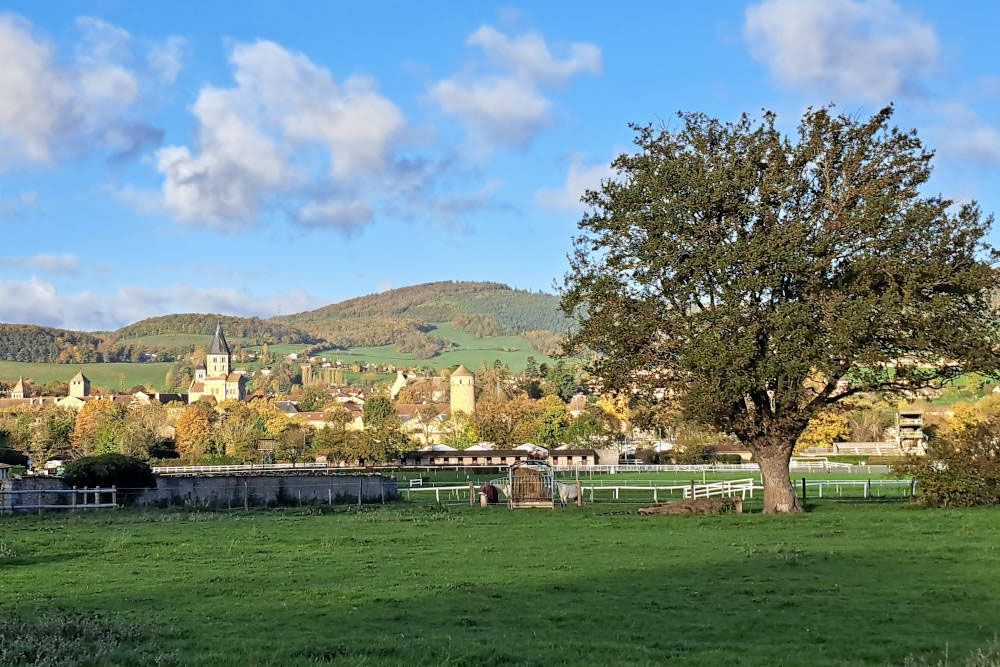
Heading towards Cortambert
At a Y-junction on the edge of a forest, Yannick bids us farewell. From here, we must follow the route ourselves. With the GPS track, that won’t be a problem. “At the end of the day, you’ll come back to this point,” he points out. “From here, you cycle the same stretch back to the car park.” We say goodbye and cycle into the woods.
We leave Cluny behind and soon exchange the bustle for the deep calm of the countryside. As we enter Cortambert, the ochre glow of the houses immediately stands out. The typical Burgundian sandstone shines in the sunlight beneath terracotta roofs. The village feels like a postcard come to life. White Charolais cows lazily watch us from the green meadows. Colourful hollyhocks climb the old walls everywhere.
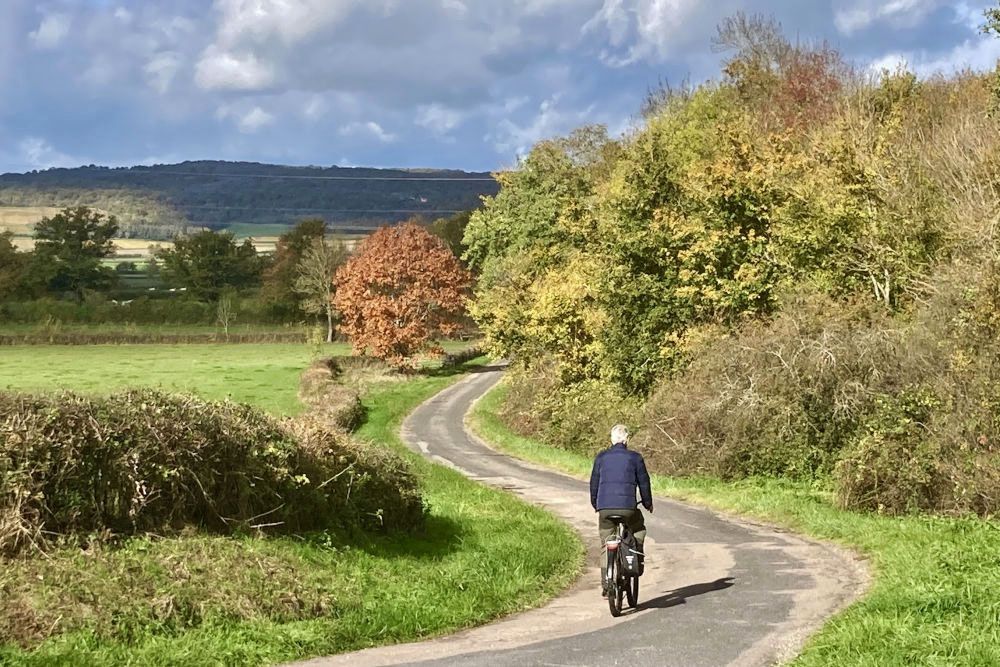
Vineyards of Bray
After Cortambert, the road steadily climbs towards the Col de la Percée. We simply switch our e-bikes to a higher setting and glide effortlessly uphill, taking in the views around us. Once over the ridge, the landscape changes completely. The green meadows give way to the vineyards surrounding Bray.
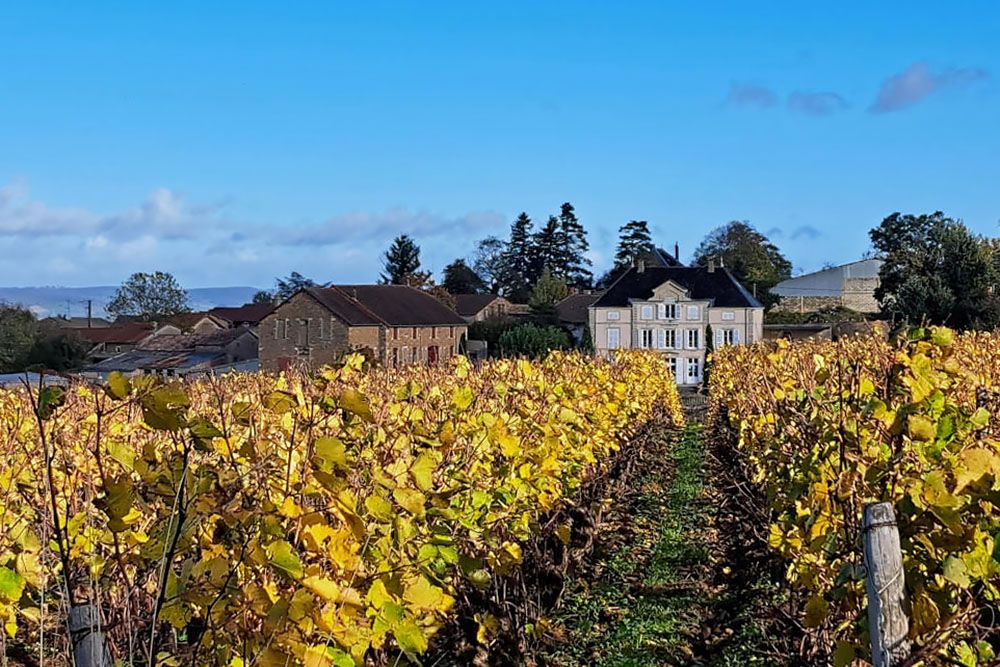
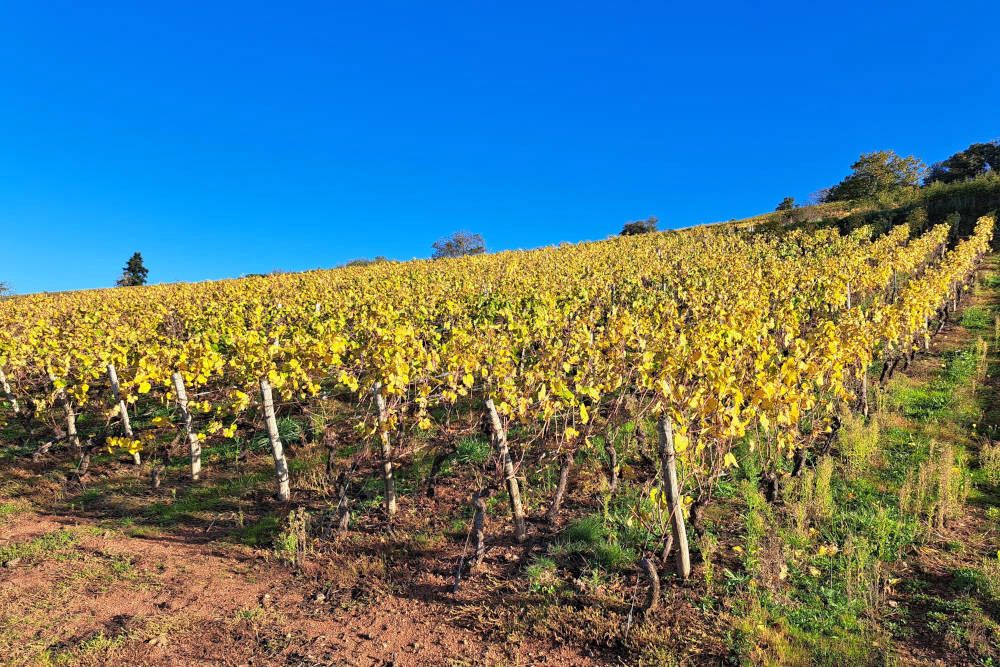
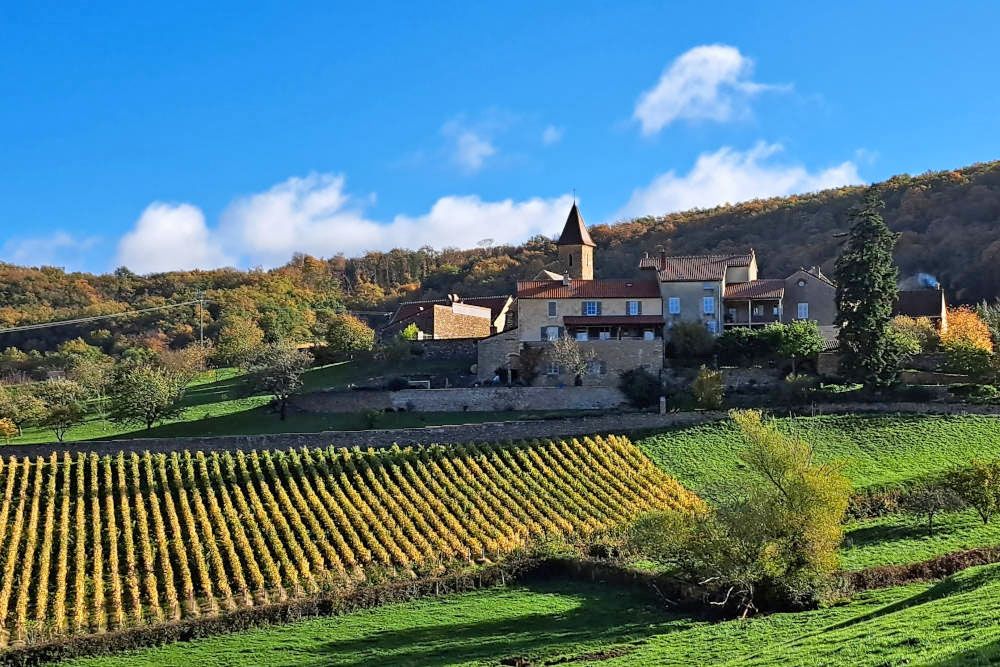
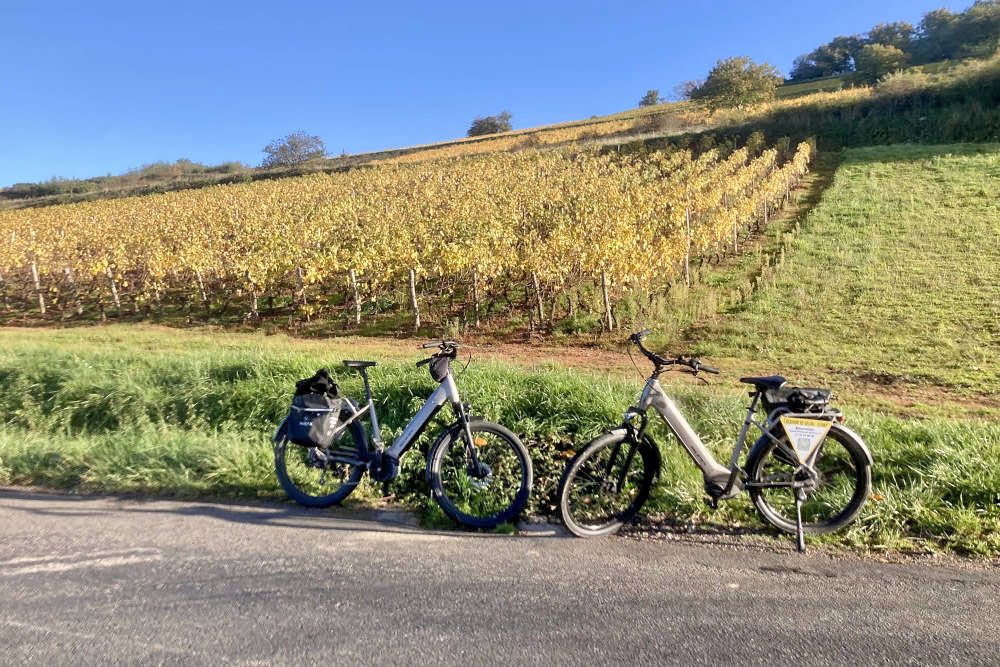
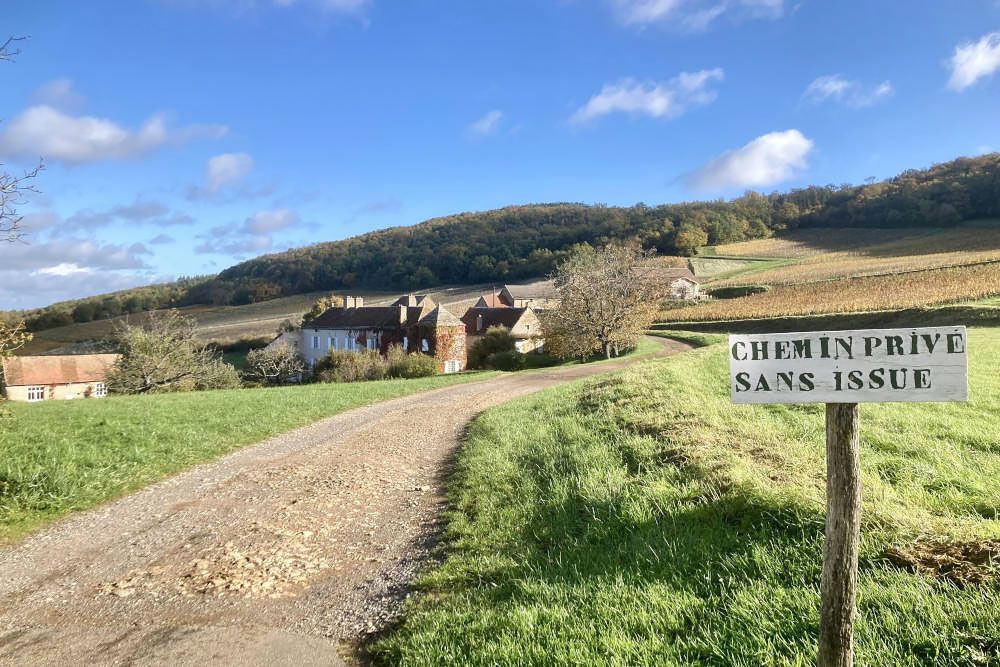
In autumn, this view is truly a feast for the eyes. The vines blaze with deep gold, fiery red, and warm orange. It looks as if the whole valley is on fire under the autumn sun. We pause to quietly enjoy this spectacle of colours.
Bray itself is a charming wine village clinging to the hillside. The old limestone houses seem to watch over the vineyards. The peace here is overwhelming. This is exactly the Burgundy we had hoped for.
Centuries-old churches
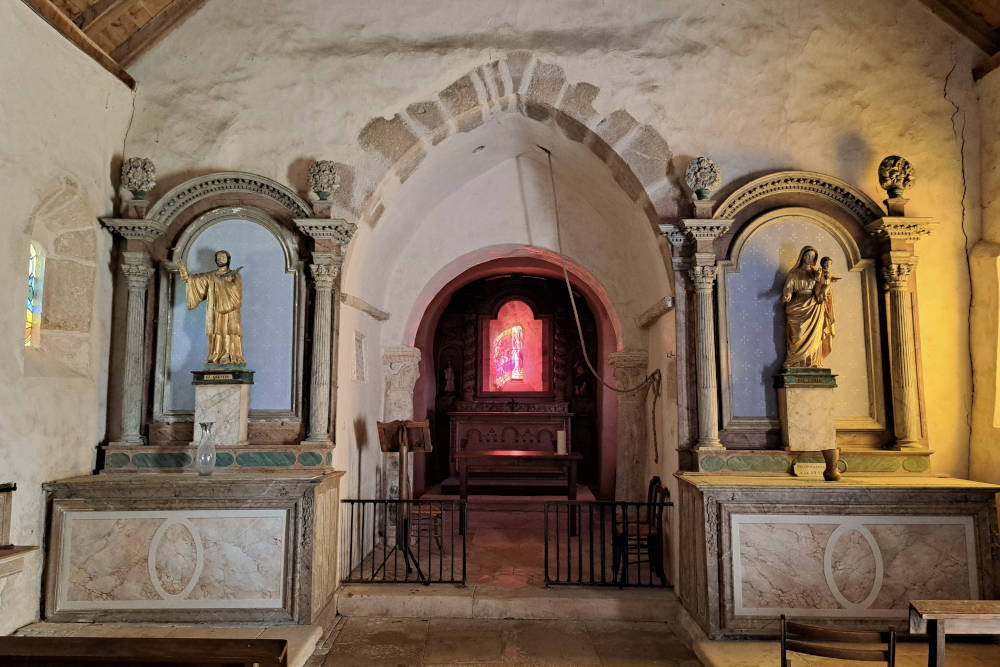
From Bray, we continue our journey. Our first stop is the Église Saint-Quentin, a sturdy Romanesque church standing beautifully alone in the fields. Its thick walls and simple shapes exude serene calm. We take a short walk around the ancient stones and admire the interior.
The route north offers a succession of stunning views. With our e-bikes set just right, we zip along the winding roads. Soon, the distinctive bell tower of Chapaize appears ahead. This village immediately feels special. It’s small but charming, with limestone houses and cosy corners.
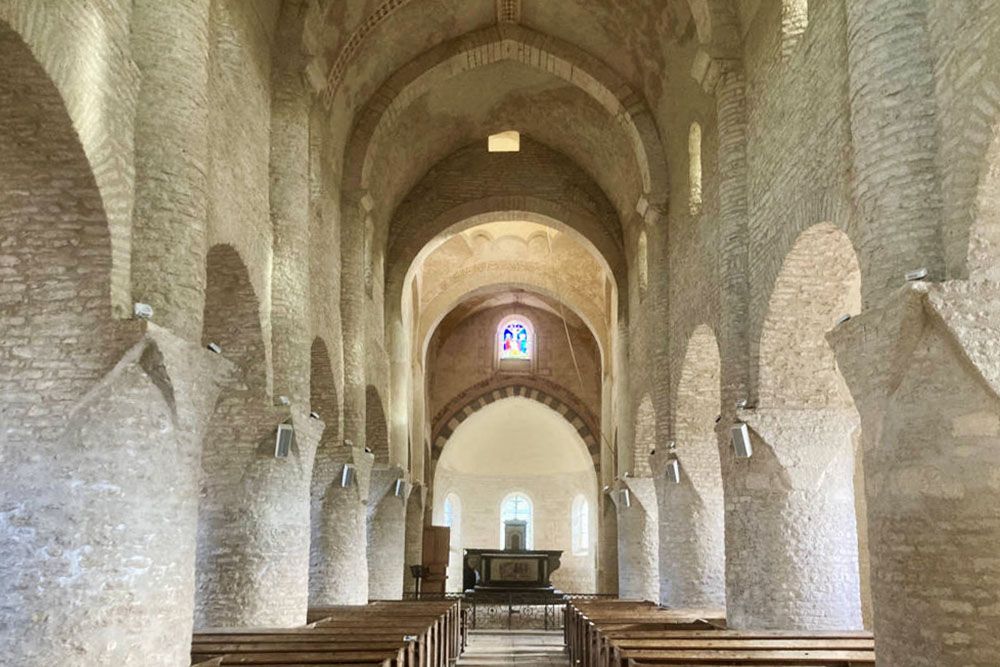
In the centre stands the highlight: the Church of Saint-Martin. This 11th-century church sits right by the road and is impossible to miss. The tower is unusually tall and slender for this region. Inside, it’s refreshingly cool. We admire the enormous round columns that have supported the roof for a thousand years.
Towards Saint-Gengoux-le-National
From Chapaize, we pedal again through golden vineyards. The autumn sun makes the grapevines glow beautifully. We pass the quiet village of Bresse-sur-Grosne and soon reach our northernmost point: Saint-Gengoux-le-National. This town has a rich history dating back to the tenth century. It was once a royal town under the protection of French kings, which explains the ‘le National’ in its name.
Just after noon, we enter the town centre. The streets are deserted, as locals seem to be enjoying a long lunch. The silence enhances the medieval atmosphere in the narrow alleys. We park our e-bikes and marvel at the next architectural gem.
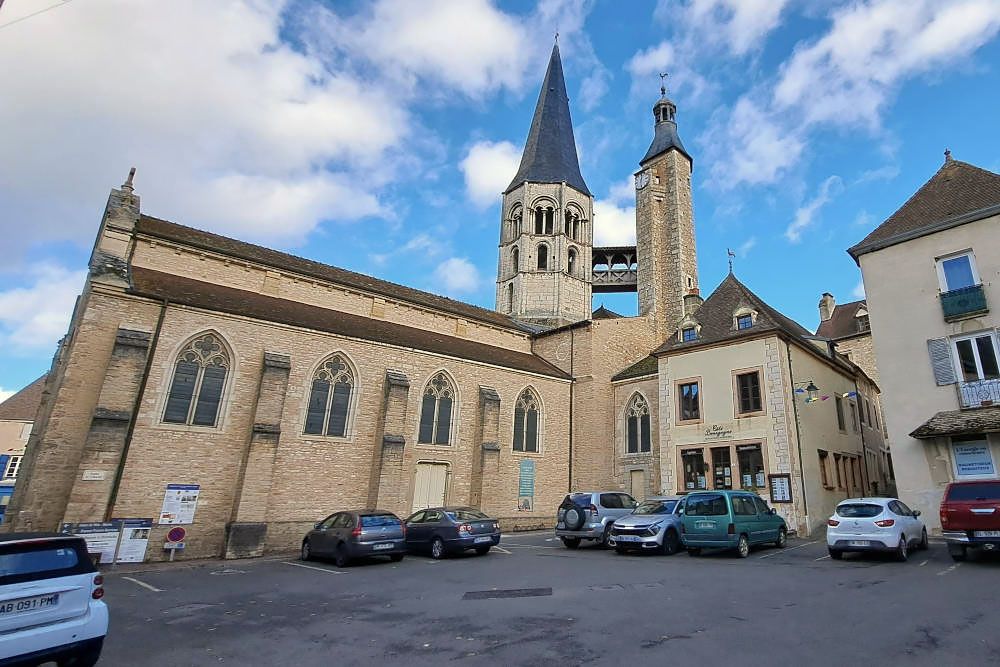
The Church of Saint-Gengoux is a spectacle. Its unique octagonal bell tower immediately draws attention. Particularly striking is the wooden walkway high above the ground, connecting the church to the Tour d’Horloge. It’s a photogenic sight you won’t find anywhere else. As the town slowly dozes off for siesta, we stroll past old timber-framed houses and city walls. Saint-Gengoux is an undiscovered town where time seems to stand still.
Voie Verte
For the return to Cluny, we choose the Voie Verte, a traffic-free cycle path built on an old railway line. The big advantage? The route is completely flat, so our e-bikes can run on the lowest setting. The asphalt takes us through nature, far from other traffic.
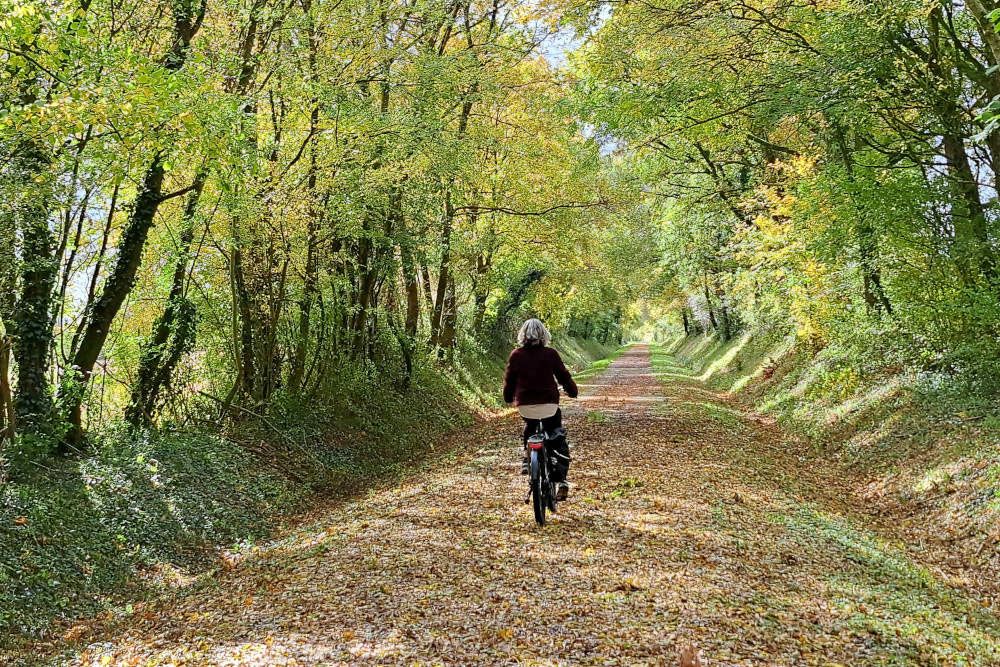
At this time of year, the path has turned into a fairytale woodland trail. The surface is covered with a thick carpet of autumn leaves in shades of brown, yellow, and orange. The leaf blanket is so dense in places that we can barely see the path. We hear only the cheerful crunch of leaves under our tyres.
It’s wonderfully relaxing cycling without cars around. The kilometres fly by as we enjoy the fresh air and the scent of the forest. Near Cormatin, we decide to leave the Voie Verte briefly for a break.
Château de Cormatin
In Cormatin, we take a stop that delights all our senses. We sit down at Le Comptoir, a cosy brasserie packed to the last seat. The owner is working alone today and is running himself ragged. Despite the rush, he stays cheerful. More importantly, he produces the most delicious dishes from the kitchen. We savour the pure flavours and toast with a good glass of Burgundy wine to a successful day. What hospitality!
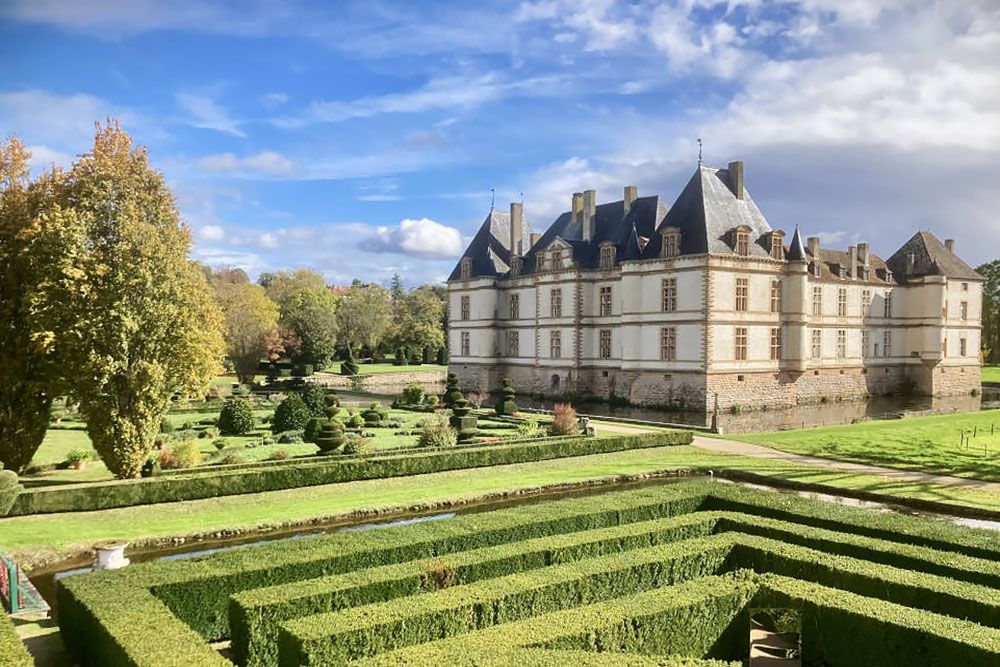
After lunch, we visit the impressive Château de Cormatin. This castle is an absolute highlight of the region. Built in the seventeenth century by the lords of Blé, it was meant to display their power and wealth. And it succeeds brilliantly; the façades reflect beautifully in the wide moats surrounding the building.
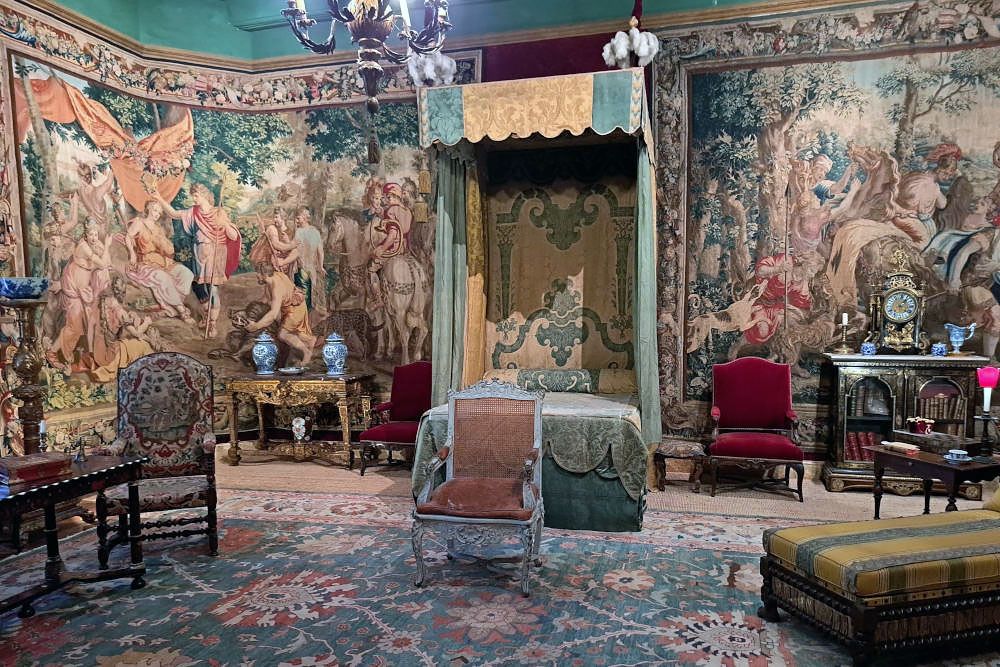
Inside, our eyes feast on the state rooms, among the best preserved from the time of Louis XIII. We see lavish gilded woodcarvings, colourful paintings, and impressive tapestries. The “Golden Room” is truly breathtaking and brings the splendour of the French nobility vividly to life.
The gardens are also well worth a visit. We wander through the large labyrinth and admire the neat parterres in the kitchen garden. The castle looks even more stately than usual in the autumn colours. Cormatin is not just a castle — it’s a monumental work of art where Burgundy’s history becomes tangible. Content, we hop back on our e-bikes for the final stretch along the Voie Verte.
Back in the rain
As we continue, the sky darkens slowly. Friendly white clouds turn into threatening, heavy ones hanging over the landscape. Soon, the first thick raindrops fall. At first, the dense canopy above the Voie Verte shields us from the wetness. But soon, we really start to get soaked. We stop to put on our rain jackets.
Now the power of our e-bikes really comes into play. We switch the support to the highest level and speed back towards Cluny. We had planned to stop at the Massilly marshes to admire the unique nature, but the rain unfortunately puts that plan on hold.
Then something special happens: just as we leave the forest, the rain stops. Perfect timing! We cover the last kilometres through open fields dry. Satisfied, we return our bikes to Yannick. When he asks how we liked the route, we need only one word: “Magnifique!”
Highlights of the cycling route through southern Burgundy
Our e-bike tour from Cluny has been a string of highlights. It starts with the beautiful view of the abbey town and the extensive horse racing tracks. The route winds through a wonderfully varied landscape of dense forests, golden vineyards, and sleepy villages.
The Romanesque churches impress along the way. Their sturdy simplicity is truly timeless. Especially in autumn, the tour is a visual spectacle as the vineyards show their most beautiful colours. Saint-Gengoux-le-National is a charming medieval town with characterful buildings. The visit to Château de Cormatin adds a splendid cultural and historical touch to the day. For us, it’s clear: this cycling tour is the perfect way to enjoy the pure beauty and tranquillity around Cluny and southern Burgundy!
Frequently asked questions about the cycling route through southern Burgundy
The total route is about 45 kilometres. Due to the varied landscape and many sights, you’ll need a full day to complete it.
Yes! You can follow the route via the GPS track we’ve included. Additionally, the bike rental company can provide a detailed route description on request.
We rented our bikes at Traces & Découvertes. They have a location right by the Parking du Prado car park, which is ideal as you can park your car easily and start cycling straight away.
The first part of the route is hilly. To save energy and fully enjoy the stops, e-bikes are very handy. The return route along the Voie Verte is completely flat, so you hardly need any assistance there.
Le Comptoir in Cormatin is highly recommended, but don’t forget to book ahead! You’ll also find charming restaurants in Chapaize or Saint-Gengoux-le-National for a good Burgundy lunch.
Absolutely! It’s one of the most beautiful castles in the region. Allow at least two hours to admire both the lavish interiors and the stunning gardens. You can read more about it in our blog about Château de Cormatin.
B&B La Porte des Prés is a fantastic base. You’ll get a lovely room and an excellent breakfast from a very friendly host. There’s also secure parking on the premises.
Other good accommodations in Cluny include:
Without a doubt! Cluny was once the most powerful monastery in Europe and the spiritual centre of the West. It earned the nickname ‘Second Rome’ in the Middle Ages. Here, you walk among the ruins of what was once the largest church in the world, but also through a perfectly preserved medieval town. It’s the ideal place for lovers of history, architecture, and a touch of drama (the abbey was sadly mostly demolished). You can read a detailed account of our experiences in this abbey town in our blog about Cluny.
On invitation from Burgundy Tourism and Cluny Tourism, we made this cycling tour around Cluny. The content of this blog is independently and objectively compiled based on our own impressions.