Seville had been on our bucket list for quite some time, and in March we finally experienced the city ourselves. The city drew us in with iconic places such as the Alcázar, the cathedral and the impressive Plaza de España. These are places you simply need to see at least once.
What struck us immediately was how warm and inviting Seville feels. The city lives outdoors. Life unfolds in its squares, narrow alleys and neighbourhoods where history and daily routines blend effortlessly. During our trip, we explored the famous sights. But we also wandered into quieter corners and places you only find when you allow yourself to get lost. In this blog, we share our first impressions of Seville and how we experienced the city.
Seville through the centuries
Before leaving, we read up on Seville’s history, which helps us understand the city more clearly. We see the city differently when we know what happened here. It gives us context. And it shows why Seville feels so special today.
Seville began as a small settlement along the Guadalquivir, and the river gave the city strength. Traders arrived. Cultures mixed. The Romans built temples and roads here. Later, the Moors took control of the city and brought knowledge, architecture and new ideas. Much of that influence is still visible. Afterwards, the Christian kings conquered Seville, and the city changed once again.
Something remarkable happened in the sixteenth century. Seville became the centre of trade with the New World, and ships filled with gold, silver and spices arrived here. The city grew rapidly. Wealth filled the streets. Art and culture flourished. You feel that long history everywhere. It makes Seville rich, colourful and unique.
Bike tour through Seville: the perfect start to our city break
On our first morning in Seville, we get on our bikes. We do this more often in a new city, because it immediately gives us a clear sense of our surroundings. We don’t need to figure anything out. We simply listen to stories. And we see places we would probably skip otherwise. It works perfectly in Seville as well. We cycle with Baja Bikes and follow a route that leads us through several neighbourhoods.
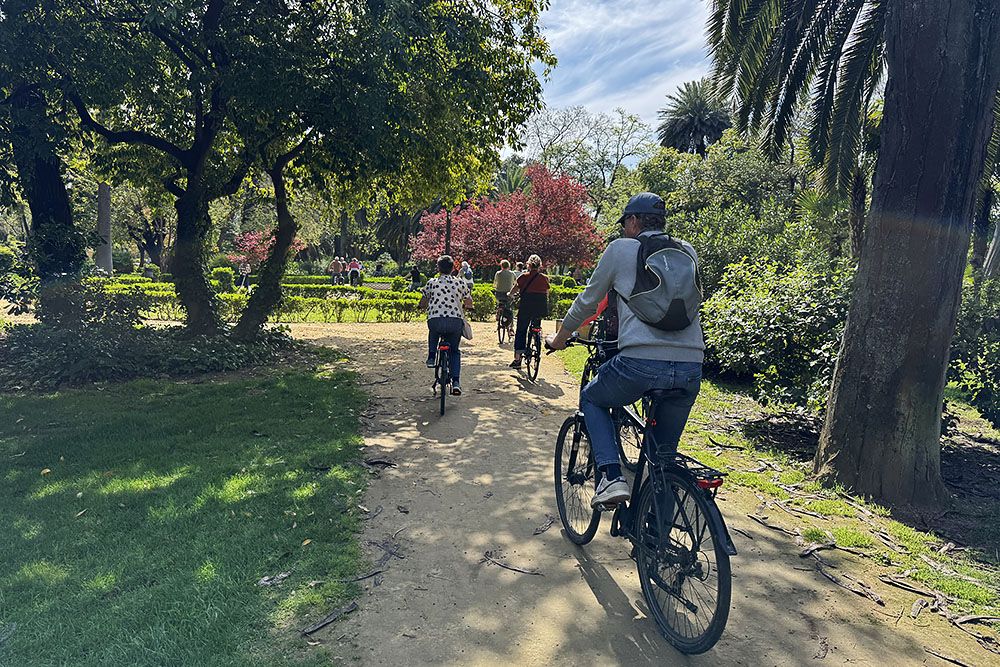
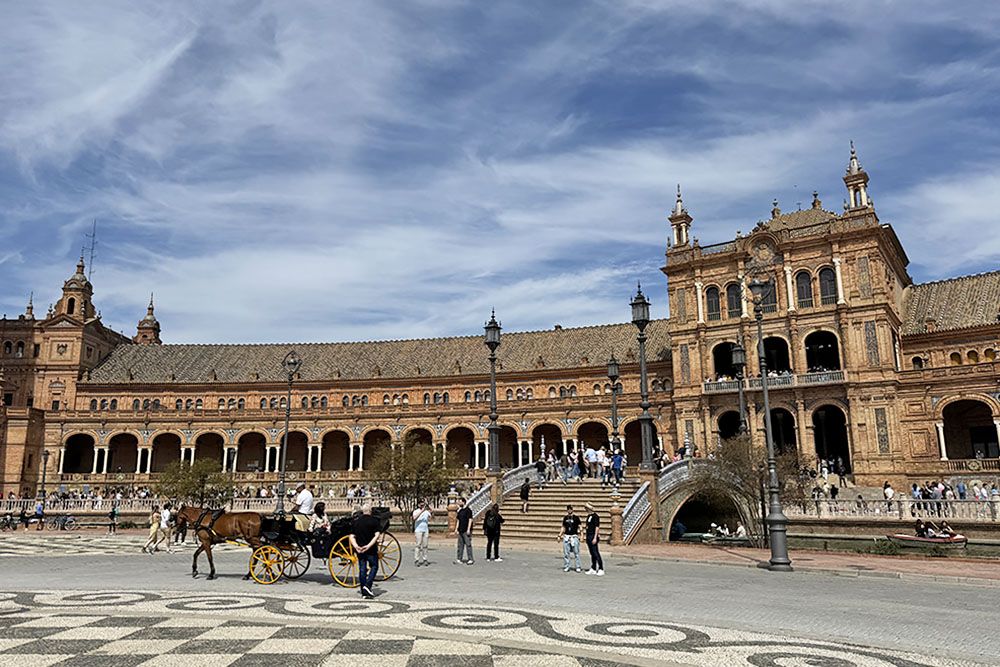
Along the water, we ride through the edge of El Arenal, and we mainly see the boulevard because most of this district is off‑limits to cyclists. The same applies to Santa Cruz, the old Jewish quarter with the famous Real Alcázar. We save that for later. We then cross the bridge to La Cartuja, the modern island created for Expo ’92. A little later, we cycle into Triana, a neighbourhood known for ceramics, flamenco and its very own atmosphere. We finish in the green Parque María Luisa and at the impressive Plaza de España. This tour gives us a clear picture of the city straight away. In a separate blog, we go into detail about this fantastic bike tour. And about our guide Michiel, who shares everything with infectious enthusiasm.
City walks through Santa Cruz, El Arenal and Triana
After that first morning, we already have a good sense of the city. Yet it feels as though Seville reveals far more when you explore her on foot. That’s why we choose three neighbourhoods, each with its own atmosphere. At different moments, we wander through them and gradually get to know the city better. Every walk begins directly from our fantastic Época Suites apartment. It sits in the heart of the old town, just a stone’s throw from the royal palace. We couldn’t wish for a better base.
Santa Cruz – narrow streets, old stories and lively squares
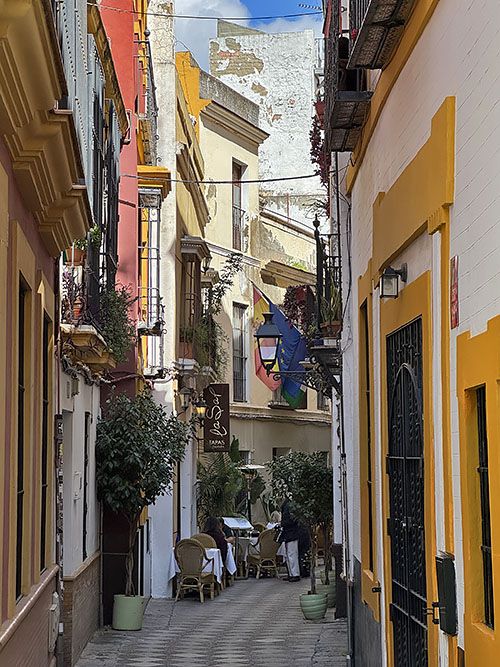
Santa Cruz is our first stop. Guide Dori leads the way and speaks clearly and enthusiastically. Small details immediately catch our eye. Narrow streets form a maze. Squares filled with orange trees give the neighbourhood a gentle scent. Along the way, we hear stories about the Jewish community that once lived here. For centuries, Jews lived here in relative freedom. That changes when Isabella becomes Queen of Castile in 1474. The Inquisition begins, and fleeing or converting becomes the harsh reality. History feels close in these streets.
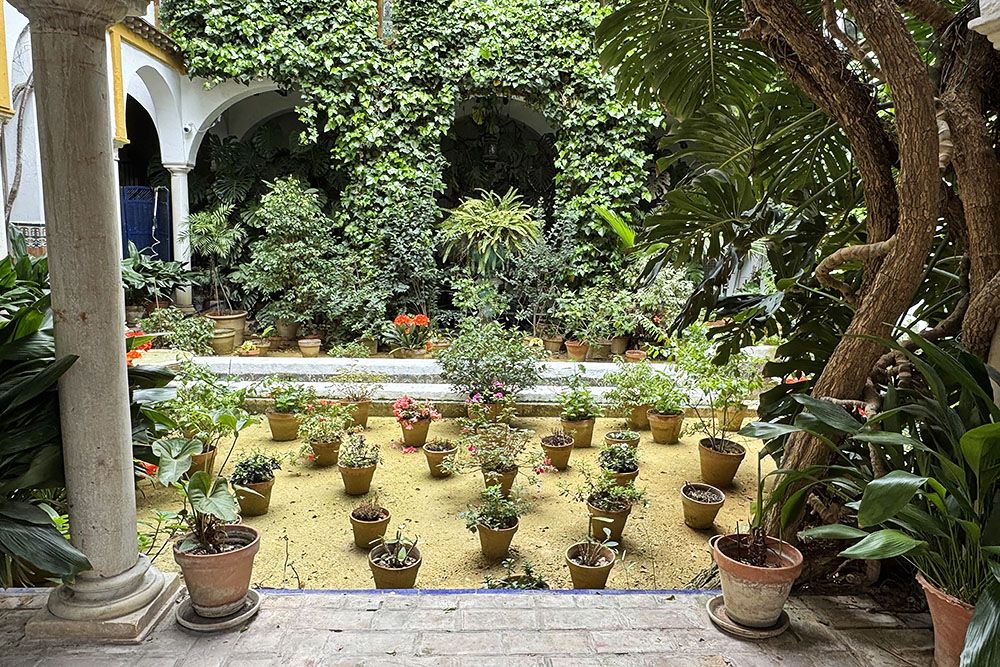
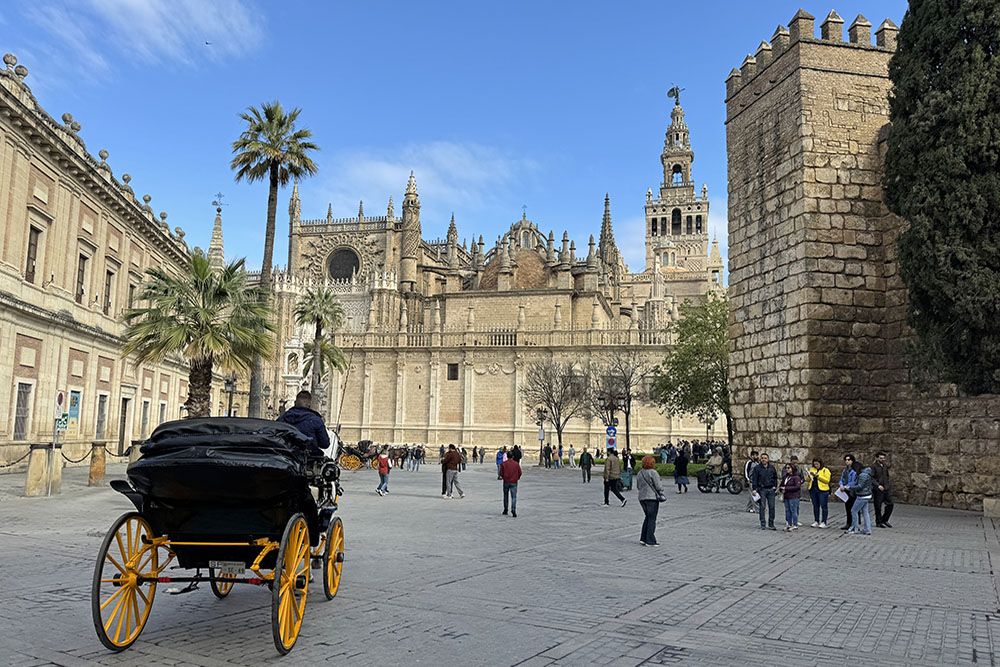
Horse‑drawn carriages move through the lanes. Groups of friends celebrating a hen weekend laugh loudly and wear matching flowers in their hair. Flamenco dancers earn a little extra in the open air. Patios and courtyards draw our attention. Each patio is different: some are small and simple, others are filled with plants and decorative tiles. Dori never tires of talking about these places. She explains how residents maintain their patios with pride. We also find terraces everywhere, each one more inviting than the last. Life here revolves around eating, drinking and being outdoors.
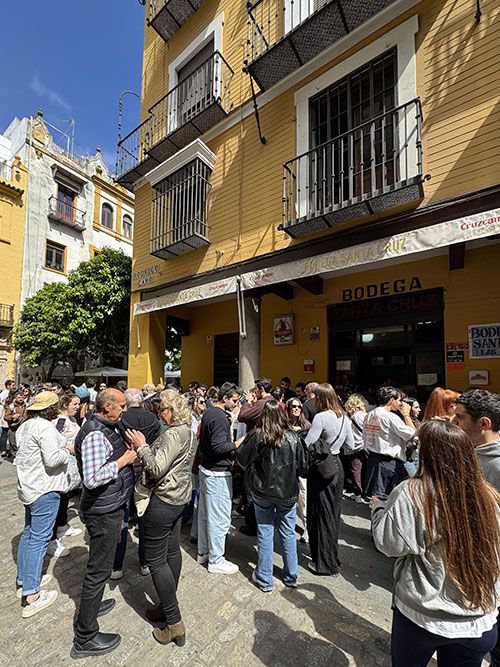
Dori also shares a few “local tips”. Many Sevillians start their free afternoon in this neighbourhood at Bodega Santa Cruz. They order a montaito pringá, a warm roll with slow‑cooked meat. Afterwards, they continue to a place like Cervecería Giralda for tapas and a drink. Later, we try her suggestion. The Bodega is packed. Almost only locals. The montaito pringá tastes fine, though not exceptional. Still, it feels good to slip into the rhythm of the neighbourhood for a moment.
The famous Real Alcázar
The most important sight in Santa Cruz is undoubtedly the Real Alcázar. We visit this royal palace in detail with Dori as our guide.
The Alcázar was originally built as a Moorish fortress. Later, Christian kings expanded the complex. As a result, you see a unique blend of Moorish, Gothic, Renaissance and Baroque architecture. The palace is still used by the Spanish royal family, making it the oldest royal residence in Europe still in use.
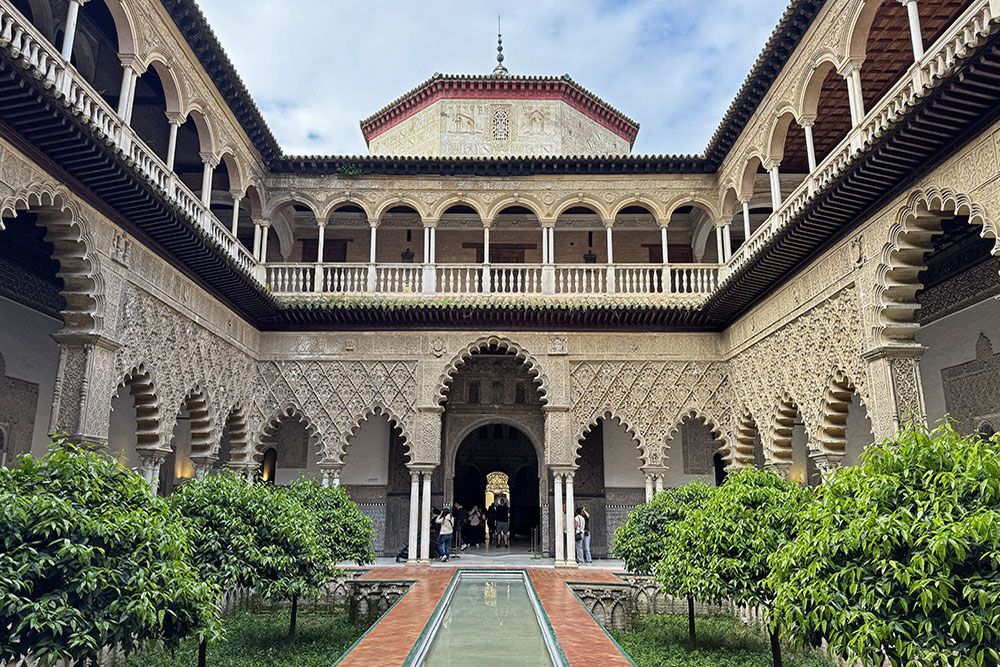
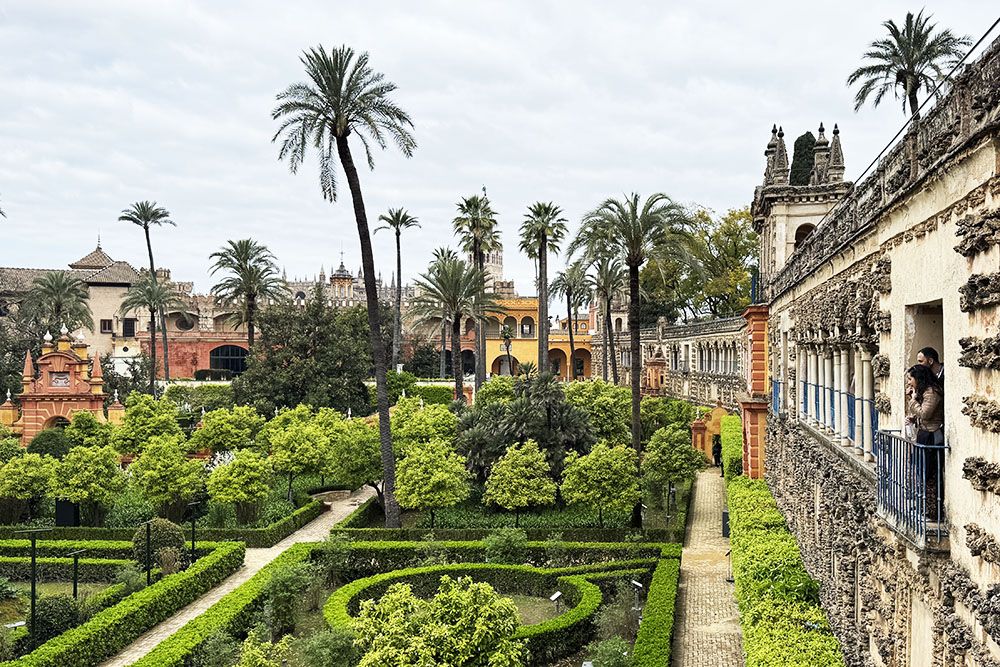
Dori leads us through the beautiful gardens and richly decorated rooms. We marvel at the fountains, azulejos, intricate stucco, courtyards and domed ceilings. The gardens are an oasis of calm, filled with orange trees and colourful flowers. The palace offers so much beauty and history that it deserves a blog of its own.
El Arenal – cathedral, processions and a touch of grandeur
We begin our exploration of El Arenal with Dori, who confidently guides us towards the cathedral. The building is so large that it’s almost impossible to grasp. That was exactly the intention. After the Reconquista, the Christian rulers wanted to build a church that would leave everyone speechless. Construction began in the fifteenth century and continued for more than a century. As a result, styles overlap and create an impressive mix. Inside, light pours through high windows, and we see Columbus’s tomb, which has stood here since 1899. The scale of the interior keeps surprising us. Every chapel feels almost like a church of its own.
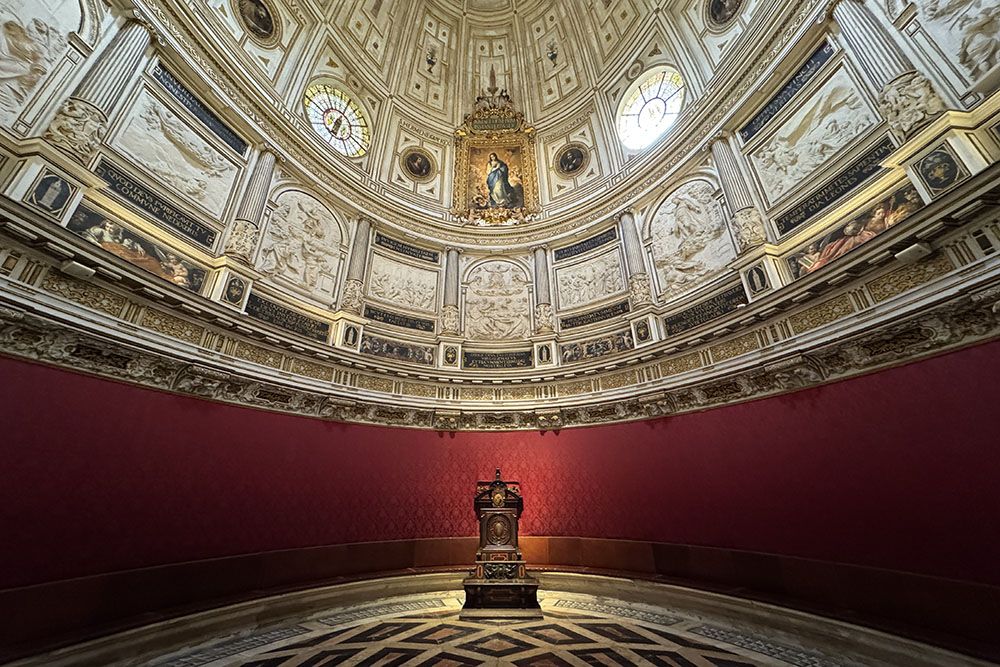
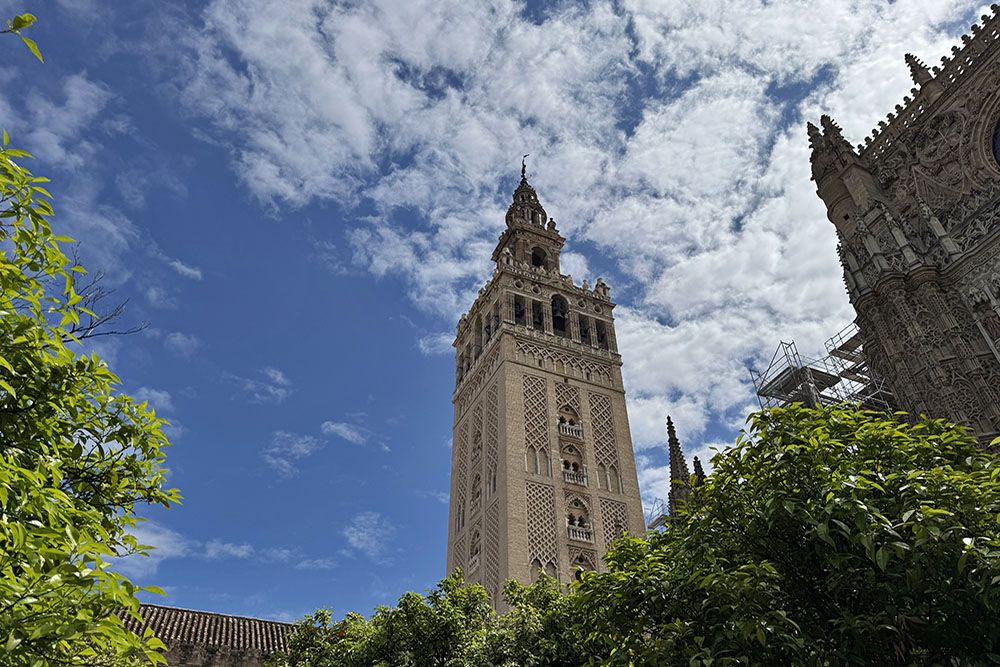
Afterwards, Dori takes us to the Giralda, where we say goodbye. The tower was once the minaret of the Almohad mosque. After the reconquest, it remained standing. The Christians later added a bell chamber on top, but in keeping with the Mudéjar style, they left the Moorish base intact. The climb is easy thanks to the 35 gently rising ramps once designed for riders on horseback. This allowed the muezzin to reach the top without dismounting. At the top, a view awaits that opens the entire city before us. Seville suddenly feels clear and understandable. This visit deserves its own blog, because there is far more to say about the imposing cathedral.
El Arenal – Iglesia del Salvador
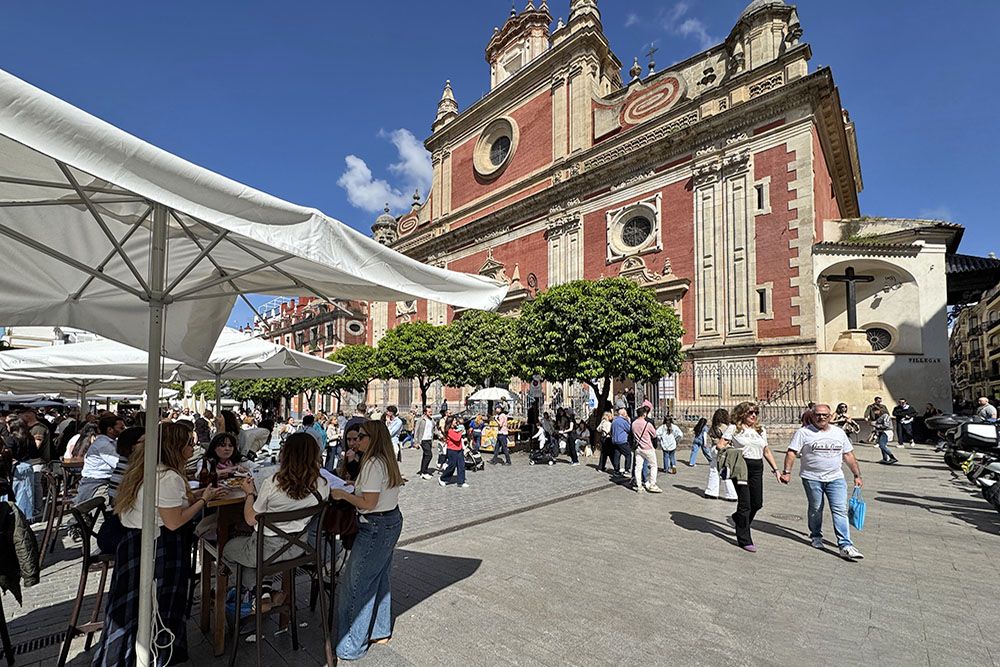
Once back down, we explore El Arenal on our own. The neighbourhood feels different when you wander through it at a slower pace. Streets open gradually and lead us to a large square filled with lively terraces. On this square stands Iglesia del Salvador, an impressive Baroque church. The current building dates from the eighteenth century and replaced an earlier mosque. Remains of that mosque still lie beneath the church. The mix of styles gives the building a distinctive character.
Our cathedral ticket also grants access here, so we step inside with curiosity. In the vast space, large processional floats are on display. They are richly decorated with woodwork, silver and deep colours. During Semana Santa, the holy week before Easter, brotherhoods carry these floats through the city. It’s heavy work, and the tradition goes back centuries. The floats stand here for maintenance and preparation. Up close, you truly see the craftsmanship. It feels as though the entire history of Seville gathers in this room.
El Arenal – the Maestranza and the quiet streets around it
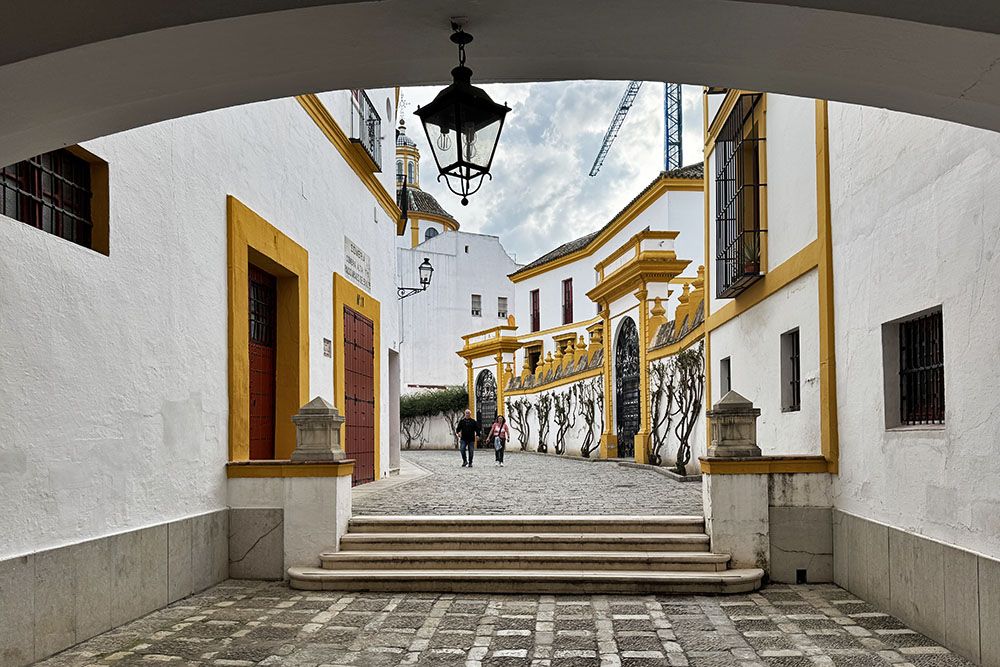
From El Salvador, we slowly walk towards the Plaza de Toros de la Maestranza, Seville’s famous bullring. The round building suddenly appears between the houses and immediately draws attention. The arena dates from the eighteenth century and is one of the oldest in Spain. Construction took decades, which created subtle shifts in style.
Where the cathedral was crowded, it is quiet here. That contrast lingers for a moment. Around the arena lie peaceful streets and small squares. The façades shine in the sun and give the neighbourhood a stately feel. The pace is slower here, and it suits the grandeur of the arena surprisingly well.
We eventually reach the boulevard, where trendy lounge bars appear. They sit half‑hidden behind palm trees and pale parasols. The atmosphere looks relaxed and inviting. For a moment, we wonder whether this might be a place for later in the day. It feels like the kind of spot where afternoon easily turns into evening.
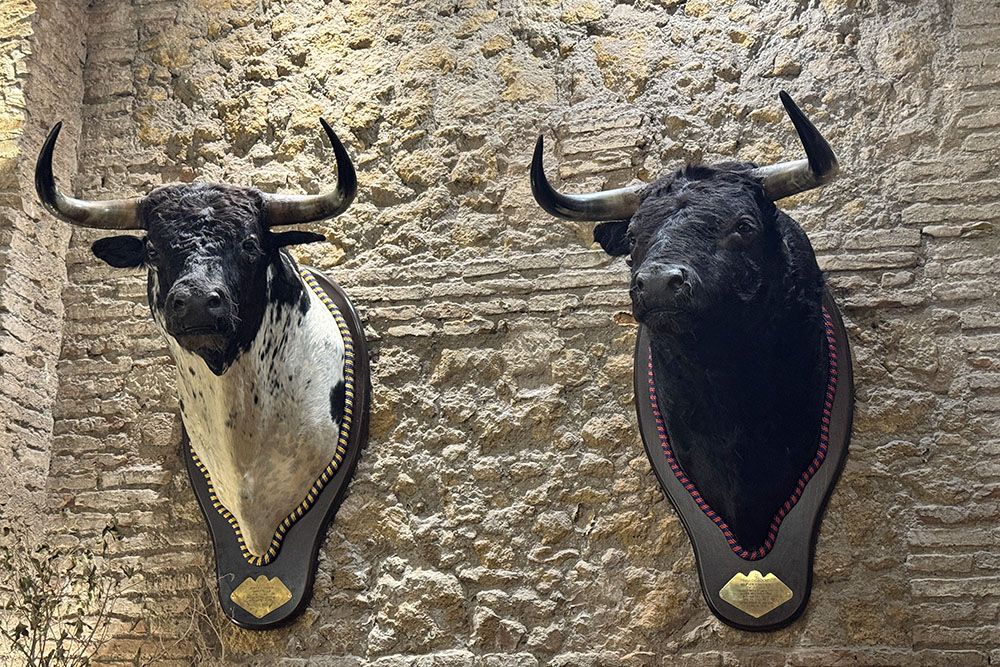
Later that evening, we end up at El Baratillo, a restaurant that fits this neighbourhood perfectly. Stuffed bull heads hang on the walls, and the atmosphere feels traditional. It’s a place you won’t forget quickly, and it matches the character of El Arenal beautifully.
Triana – ceramics, riverside life and an unexpected encounter
Triana is our final neighbourhood of the day. We recognise some places from the bike tour, but everything feels different on foot. Quiet streets with colourful houses lead us deeper into the district. In small ceramic workshops, we see craftsmen at work, focused and precise. Music drifts from open windows and gives the neighbourhood its own distinctive rhythm.
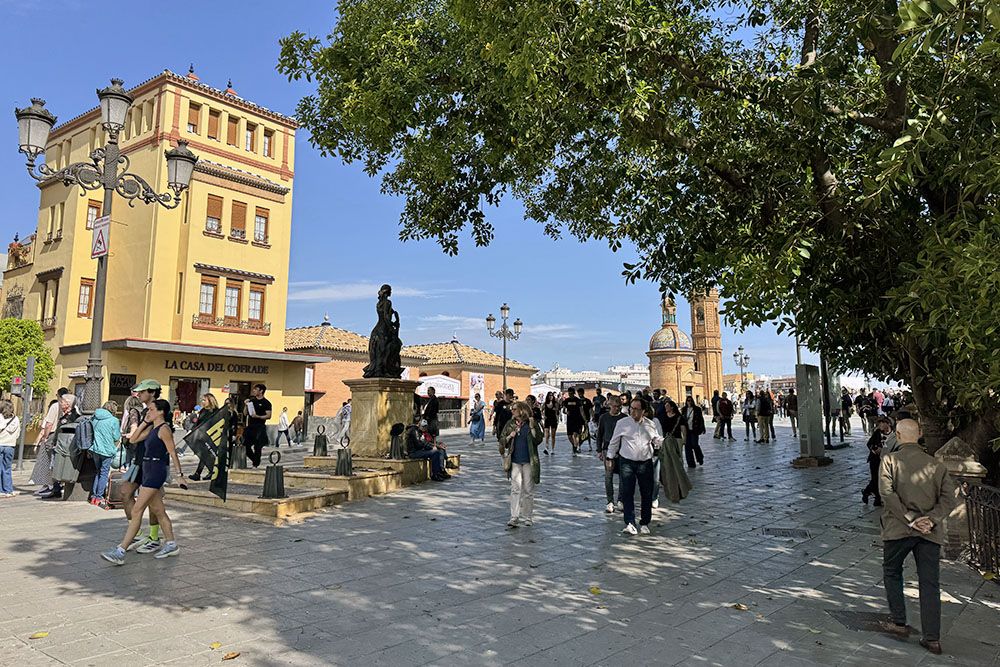
Along the riverside, we sit down for a drink. From here, daily life unfolds at a gentle pace. People stroll along the water, others exercise or chat with friends. The neighbourhood is much quieter than the centre across the river, except for the riverside itself. That calm suits Triana surprisingly well.
Just as we are about to leave, we notice Puerto de Cuba, a trendy lounge bar. We check for a free table, but everything is taken. As we turn to walk away, our guide Dori suddenly appears. It feels almost unreal to meet her again among so many people. She introduces us to some of her friends, and before we know it, we stay for hours. There is laughter, conversation and drinks. The hospitality is generous and the warmth sincere. For a moment, it feels as though we are part of the local community.
Seville, a city that calls for a return
After a long weekend in Seville, it feels as though we have only discovered the city’s first layer. Santa Cruz, El Arenal and Triana already give a wonderful sense of how varied Seville is. Yet during our walks, we also hear about other neighbourhoods that are just as worthwhile. La Macarena, for example, with its basilica and the famous processions that begin there. Or Los Remedios, where the Feria de Abril turns life upside down every year. And then there is Nervión, a modern district with wide avenues, shops and a rhythm completely different from the historic centre. San Bernardo and San Julián are also often mentioned as places where you find the “real” Seville, far from the crowds around the cathedral.
We haven’t visited any of these neighbourhoods. Time flew by, and the city kept surprising us. Because of that, we kept discovering new things in the districts we did explore. But that is exactly what makes Seville so appealing — there is always something left to return for. And one thing is certain: we will return to Seville.
Frequently asked questions about a city break to Seville
Seville lies in the south of Spain, in the region of Andalusia. The city sits on the Guadalquivir River and forms the cultural and historical heart of southern Spain.
You can choose between taxi, bus or rental car. The EA airport bus runs directly to the centre and takes around 35 minutes. A taxi or Uber is faster and takes you straight to your hotel.
Seville combines centuries of history with a relaxed atmosphere. You’ll find impressive monuments, colourful neighbourhoods, lively terraces everywhere, delicious tapas and sunshine for most of the year. The city is compact, vibrant and perfect to explore on foot or by bike.
Seville is full of highlights, many of them within walking distance of each other. The Real Alcázar is undoubtedly the most famous monument. It’s a royal palace with Moorish halls, green courtyards and vast gardens where you can wander for hours. The cathedral, the largest Gothic church in the world, is just as impressive. Inside, you’ll find Columbus’s tomb, and outside, the Giralda rises above the city. The Giralda was once a Moorish minaret and is now Seville’s most recognisable symbol.
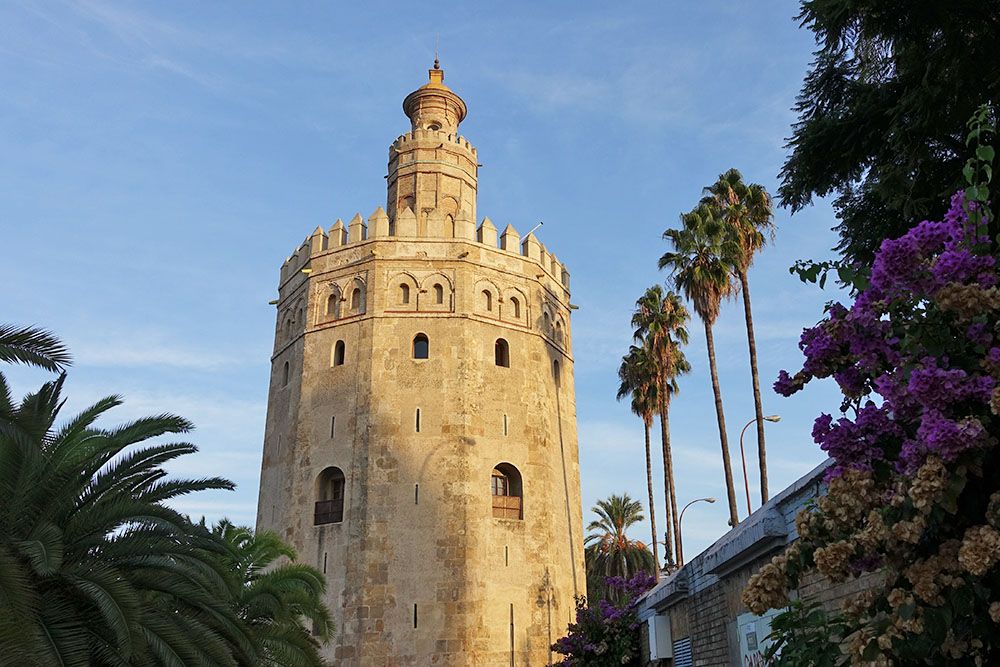
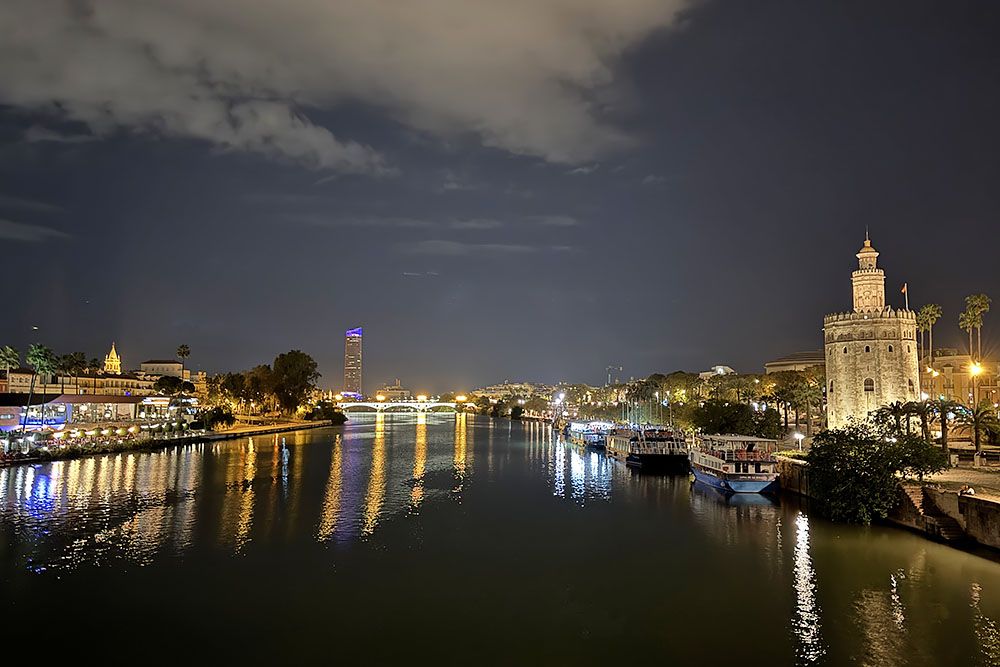
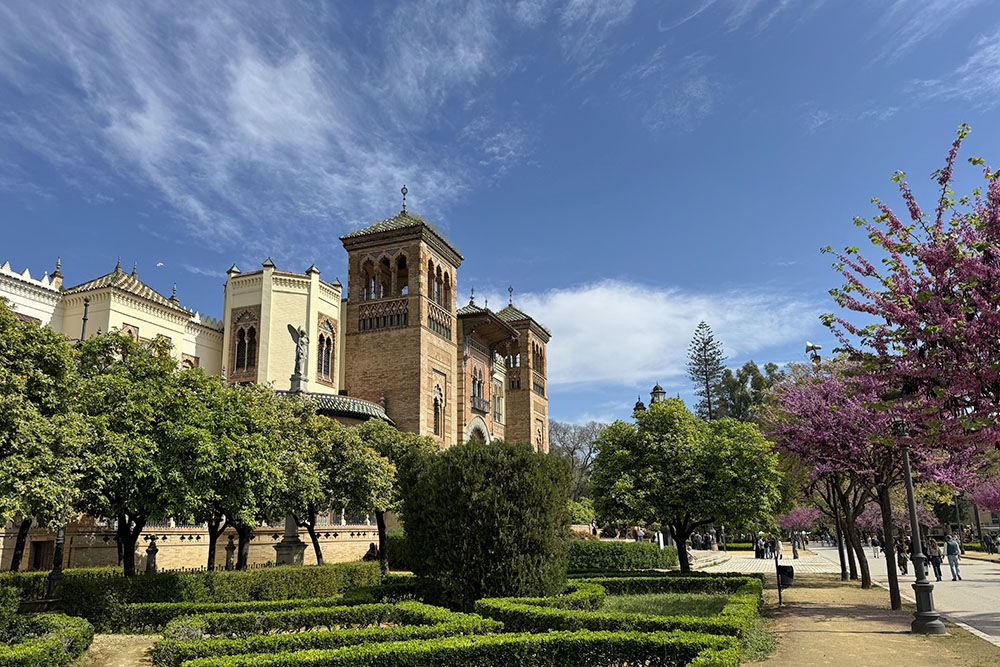
Plaza de España is another must‑see. This huge semi‑circular square was built for the Ibero‑American Exhibition of 1929. It’s a mix of grandeur, ceramics and water features. Along the river stands the Torre del Oro, a thirteenth‑century watchtower that once formed part of the city walls. Today, it houses a small maritime museum.
The neighbourhoods themselves are also attractions. Santa Cruz, the old Jewish quarter, is a maze of narrow streets, patios and squares filled with orange trees. Triana is known for ceramics, flamenco and its lively riverside atmosphere. Together, these places offer a complete picture of Seville’s soul.
Yes, absolutely. Seville is flat, has wide cycle paths and is one of Spain’s most bike‑friendly cities. A guided tour with Baja Bikes gives you quick orientation and plenty of background stories. It’s ideal for your first day.
Spring (March–May) and autumn (September–November) are ideal. Temperatures are pleasant, and the city feels alive. Summer can be extremely hot.
Seville has several great areas to stay in. These are the best options, based on location, atmosphere and strong reviews.
Santa Cruz – romantic, historic and perfectly central
Narrow streets, patios, orange trees and many sights within walking distance. Ideal if you want to stay in the heart of old Seville.
Top accommodations:
- Apartamentos Casa del Contratador – atmospheric, spacious and fully equipped. We stayed here ourselves and were extremely satisfied. You also get a welcome drink on the private rooftop terrace with fantastic views of the old town.
- Hotel Casa 1800 Sevilla – charming boutique hotel with a rooftop terrace and views of the Giralda.
- Legado Alcázar – elegant hotel right next to the Alcázar, with peaceful rooms and beautiful details.
El Arenal – culture, gastronomy and close to the river
Here you’ll find the cathedral, Plaza de Toros and many excellent restaurants. A lively district with everything within reach.
Top accommodations:
- Hotel Kivir – modern, sleek and with a fantastic rooftop terrace overlooking the river.
- Vincci La Rábida – classic hotel in a beautiful mansion with Andalusian courtyards.
- Las Casas de El Arenal – warm, stylish and loved for its service and location.
Triana – authentic, lively and full of flamenco atmosphere
The neighbourhood across the river. Known for ceramics, music and a local vibe. Perfect if you want something less touristy.
Top accommodations:
- Barceló Sevilla Renacimiento – luxurious and spacious, ideal for travellers seeking comfort.
- Monte Triana – modern hotel with quiet rooms and an excellent location.
- Triana House – small boutique hotel with beautiful interiors and personal service.
Centro – shops, restaurants and a modern feel
Centrally located but less touristy than Santa Cruz. Many shops, cafés and broad streets.
Top accommodations:
- Hotel Gravina 51 – elegant boutique hotel with exceptional service.
- Hotel Unuk – luxurious, modern and with an excellent restaurant.
- H10 Casa de la Plata – stylish hotel with Andalusian details and a pleasant atmosphere.
La Macarena – quieter, local and more affordable
A district with broad streets, markets and a relaxed feel. Ideal if you want more space while staying close to the centre.
Top accommodations:
- Hotel San Gil – charming hotel with courtyard and pool.
- Exe Sevilla Macarena – large hotel opposite the historic city wall.
- Patio de la Alameda – atmospheric hotel built around a beautiful patio, popular with travellers.
Every neighbourhood has its own specialities.
- Triana: traditional tapas, fish dishes and flamenco atmosphere.
- Santa Cruz: classic Andalusian dishes in cosy patios or on small squares.
- El Arenal: modern tapas bars and excellent wine bars.
- Centro: plenty of variety, from street food to refined restaurants.
Yes, especially the old town is perfect for walking. Many streets are low‑traffic, and distances are short. Neighbourhoods like Triana are also easy to reach on foot.
Very hot. Temperatures above 40 degrees are not unusual. Morning and evening are the most pleasant times to go out.
With three to four days, you can see the main sights without rushing. A bike tour on your first day is the perfect start.
We visited Seville at the invitation of the Seville City Office and one of its partners, Época Suites. The content of this blog was created independently and objectively, based on our own impressions.