Briançon is an ideal destination for a city break in every season. This town in the French Alps surprises us the moment we arrive. It is the highest‑located city in France, and you feel that in everything. The sky is a deep, clear blue and the mountains rise around us on all sides. Briançon is a place where history meets an active outdoor lifestyle. In winter, you can step straight from the centre into the lift that takes you to the snowy slopes. In summer, it is a paradise for hikers and lovers of old culture. We think Briançon offers the perfect mix for anyone looking for something different from a standard city trip.
In this blog ...
- Briançon: (almost always) easy to reach by train
- Briançon: a city with a rich history
- City versus villages in the valley
- The Vauban fortress
- Modern life in the lower town
- The surroundings of Briançon
- Winter in Briançon
- Briançon is a top destination in every season
- Frequently Asked Questions about a City Break to Briançon
- Other topics you may be interested in
Briançon: (almost always) easy to reach by train
Briançon is normally very easy to reach by train. A night train departs from Paris every day and goes directly to the city. We love the idea of stepping off the train around half past eight in the morning, well‑rested, right in the heart of the Alps. Comfortable, relaxed travel — and good for the environment too.
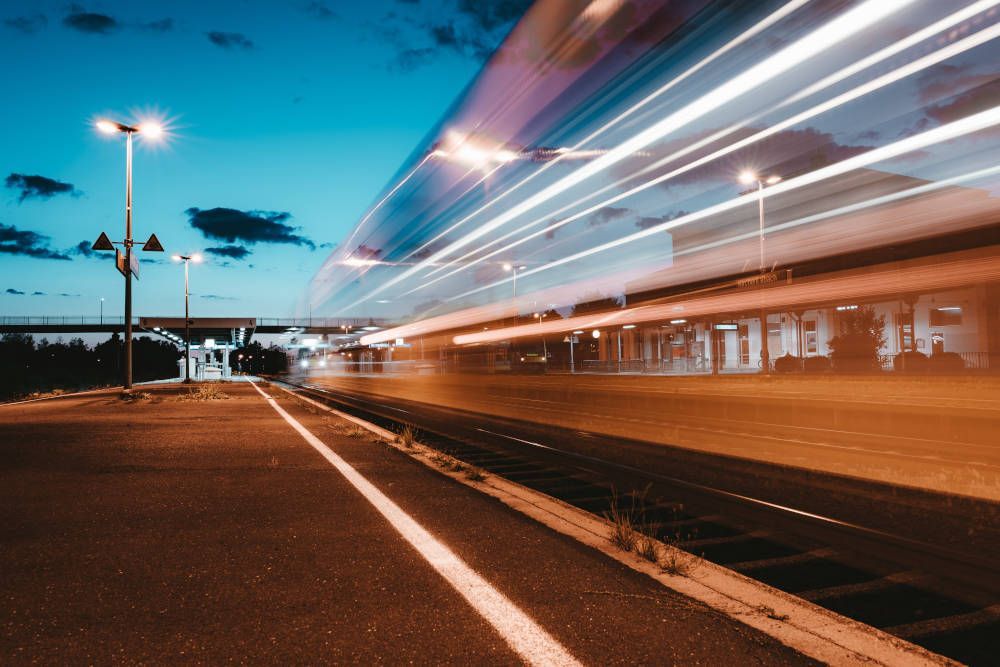
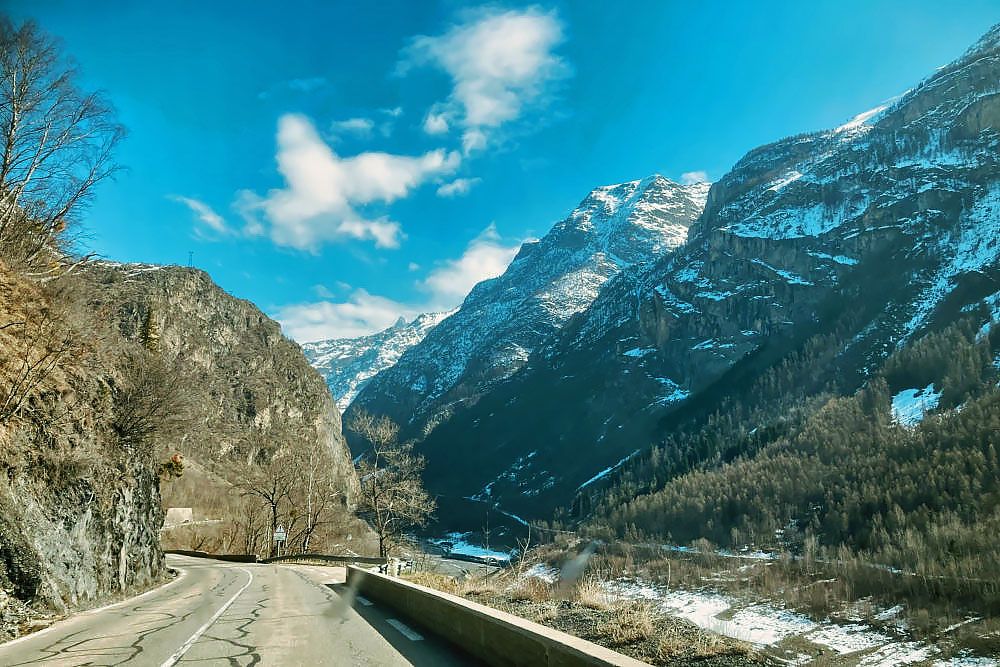
Unfortunately, engineering works throw a spanner in the works. The French railways are working on this line, and during the month we want to travel, the night train is not running at all. The alternative is a complicated journey with many changes. We would even have to travel via Italy to get there. Too much hassle with luggage and far too time‑consuming. So this time, we decide to go by car. It’s a long drive, but the freedom along the way is worth something too.
Briançon: a city with a rich history
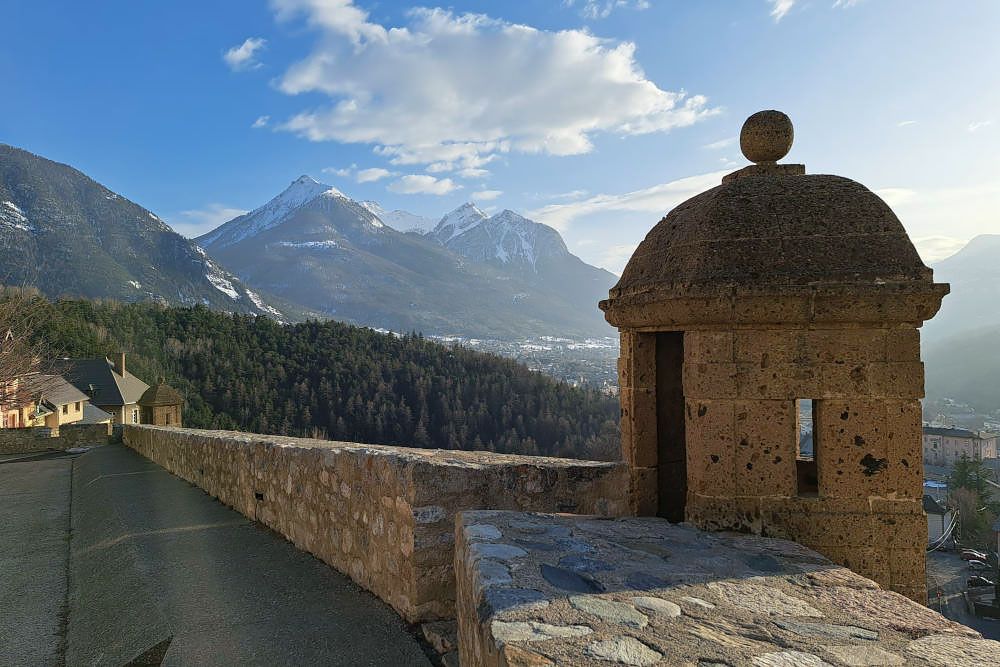
Briançon’s history is closely tied to its strategic location. The city lies at the crossroads of several valleys near the Italian border. As early as Roman times, it is an important stop for travellers. In the Middle Ages, it grows into a regional centre. A major fire destroys much of the town at the end of the seventeenth century. That is when the famous architect Vauban comes into the picture. He designs the enormous fortifications that still define the city today. His work is meant to protect Briançon from invasions by neighbouring powers. Thanks to these military structures, Briançon is now listed as a UNESCO World Heritage Site.
City versus villages in the valley
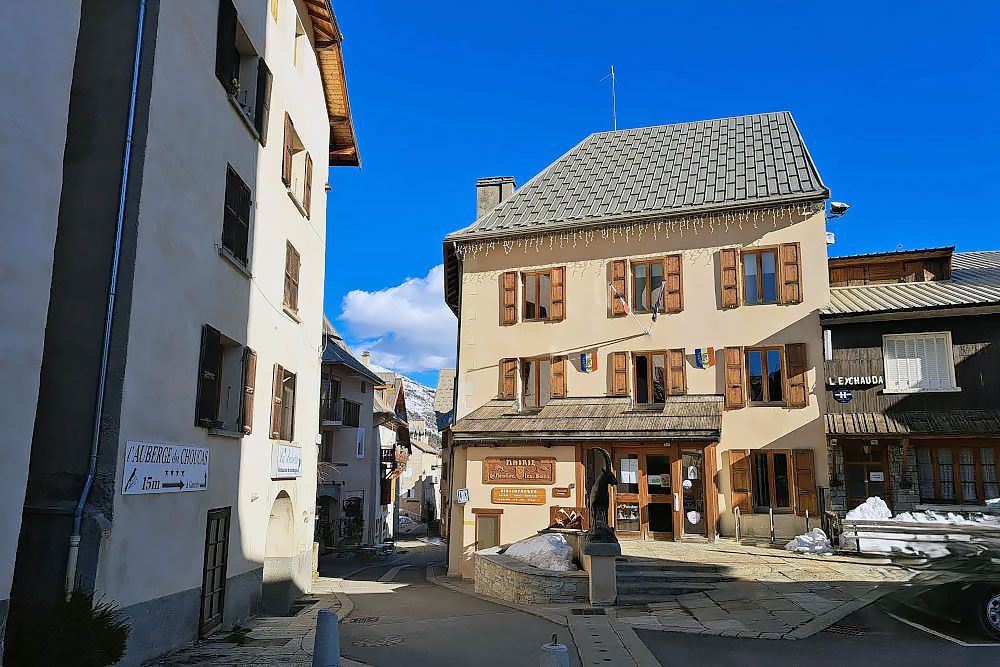
Briançon is the last town in the Guisane valley. It forms a sharp contrast with the surrounding villages. Places like Le Monêtier‑les‑Bains, Villeneuve and Chantemerle are much more traditional. These are former farming villages where the authentic character has been well preserved. You see old stone houses and small squares with fountains. The charm of the past is visible on every corner. Briançon, by contrast, is a real city with all the facilities that come with it. Larger shops, a hospital, and busy traffic in the lower town. We enjoy the contrast between the urban atmosphere and the quiet villages — it makes the Serre Chevalier valley a wonderfully varied holiday destination.
The Vauban fortress
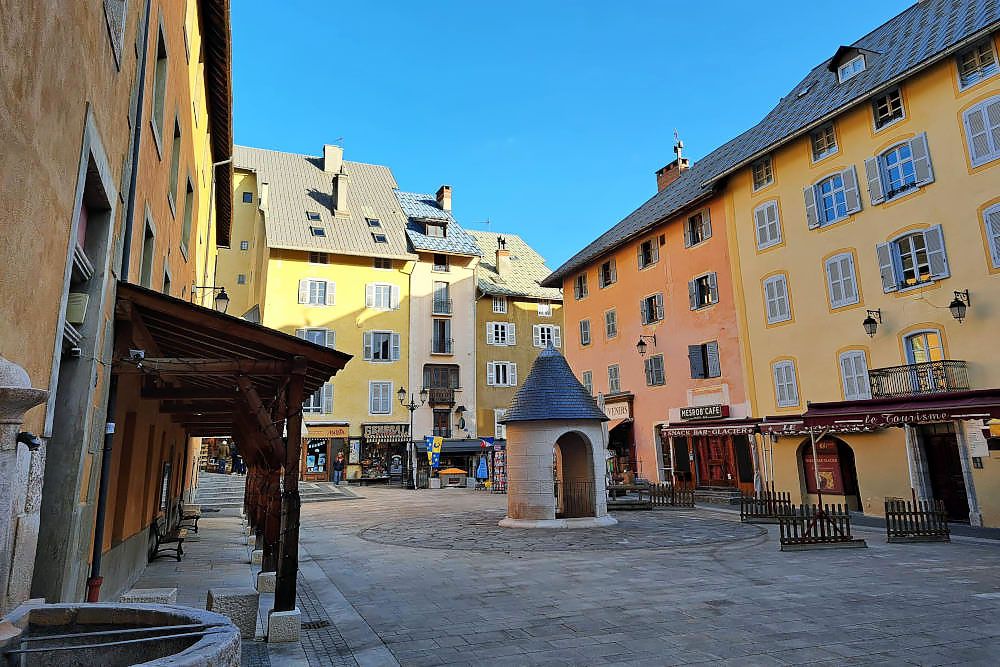
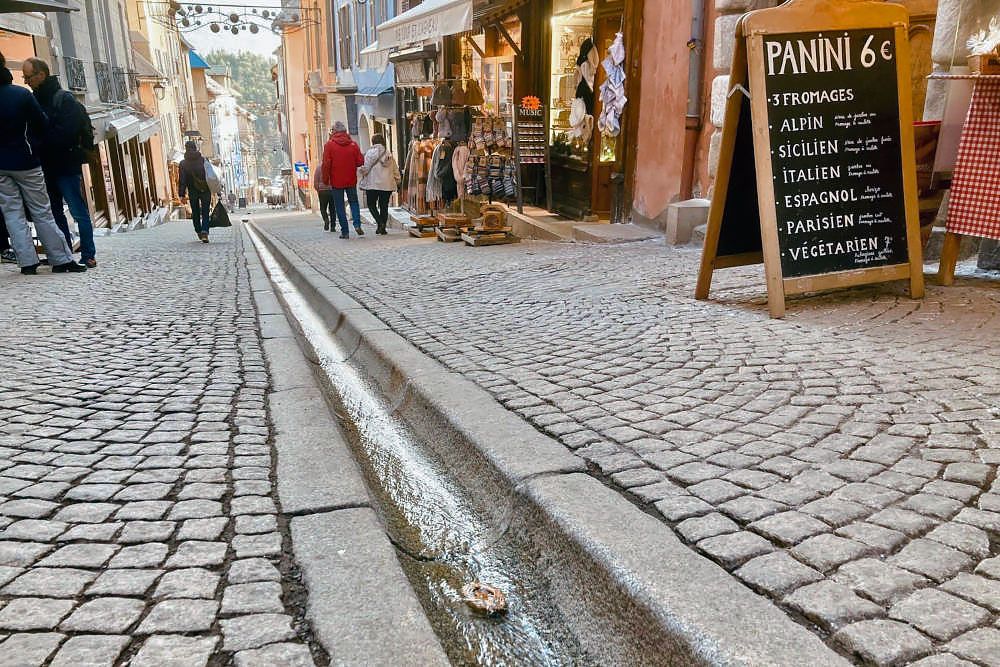
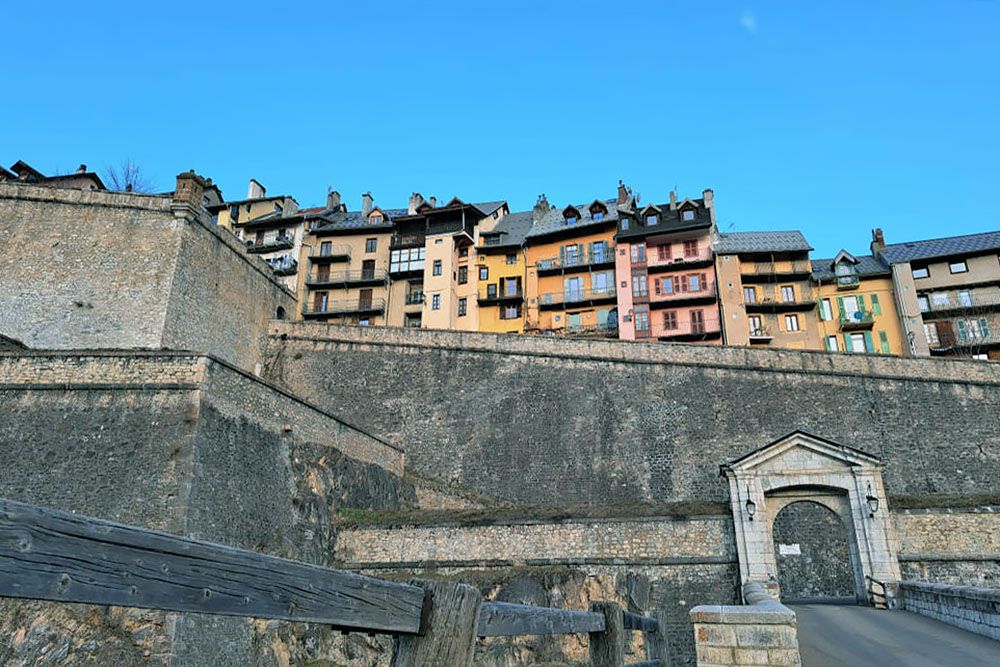
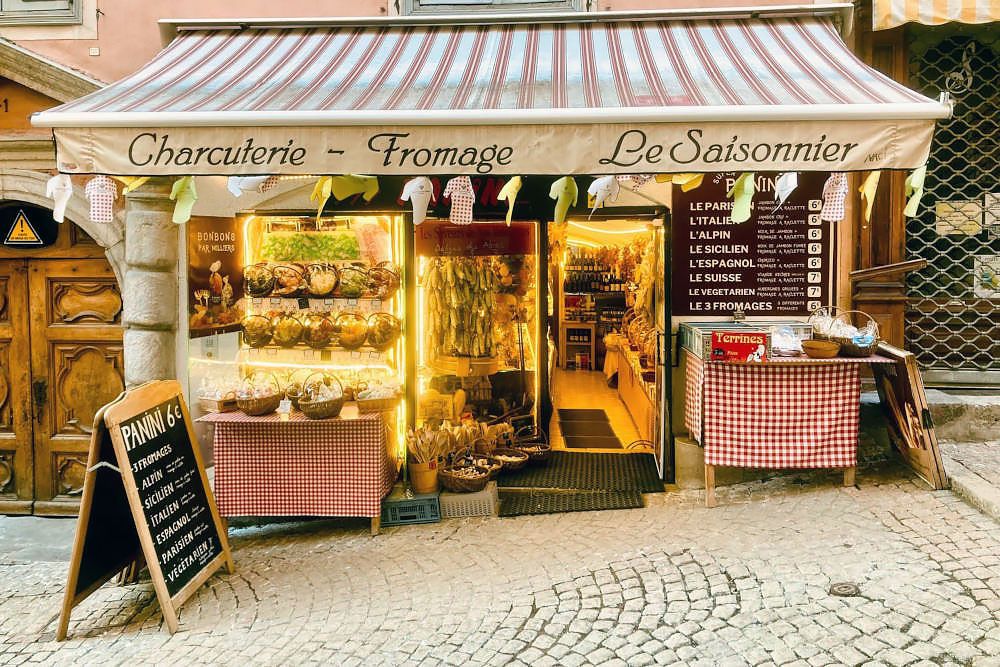
The biggest attraction in Briançon is without doubt the Cité Vauban. This historic upper town is fully walled and car‑free. We walk through the Porte de Pignerol and enter a world of steep streets and colourful houses. The Grande Rue is the main street of the fortress. Here we see the famous . These are narrow channels running through the middle of the street where water flows. In the past, this water is used to extinguish fires in the wooden houses. Unfortunately, during the great fire centuries ago, the channels are frozen solid — there is no water available, and the town largely burns down. Today, the give the street a charming and authentic character. We browse the small shops selling local products and handicrafts.
|
TIP: From the terrace of Panorama Café you have a beautiful view of the surroundings. It’s a great place for a break — affordable and very friendly staff. |
Church and bridge
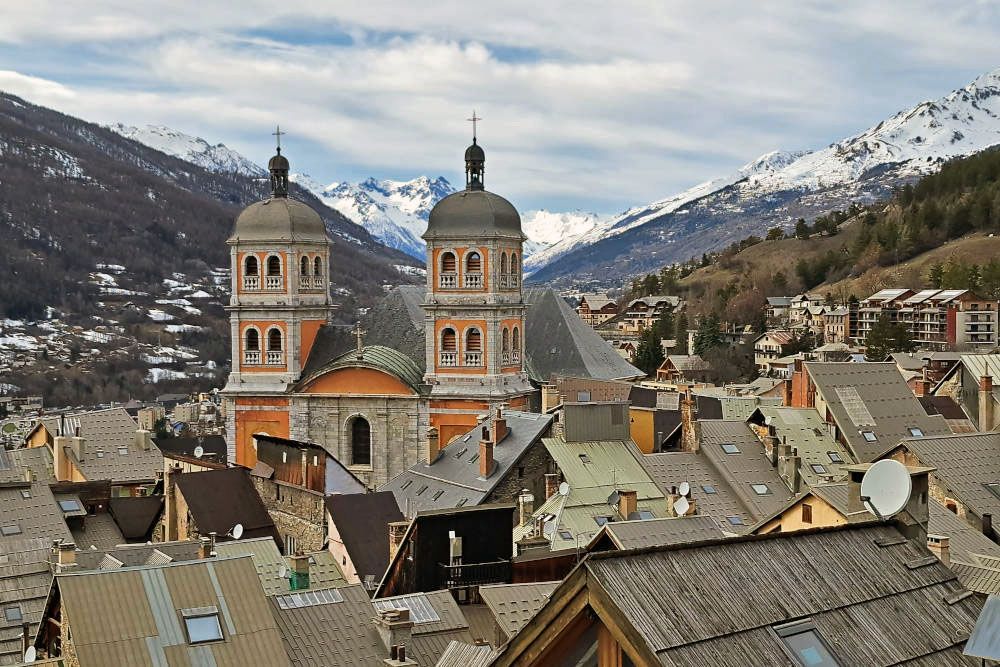
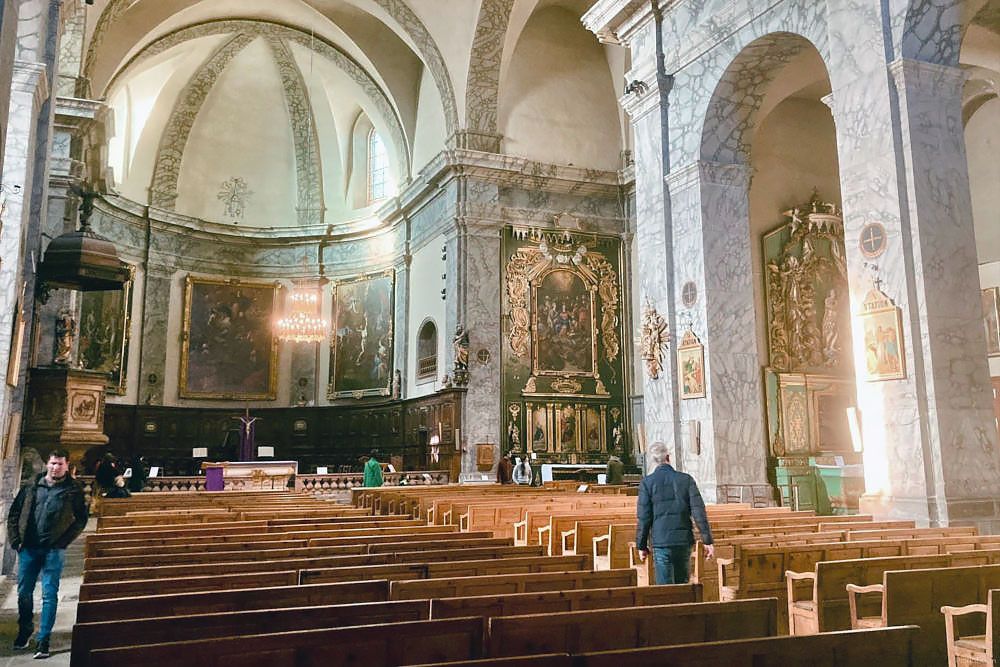
In the fortress we visit the Collégiale Notre‑Dame‑et‑Saint‑Nicolas. This eighteenth‑century church is striking because of its two large bell towers. The interior is simple but atmospheric. Our guide points upwards. To our surprise, we see a clock inside the church itself — something quite rare. The clock is meant to warn soldiers during mass when they need to return to duty. This way, they don’t have to step outside to check the time on the towers.
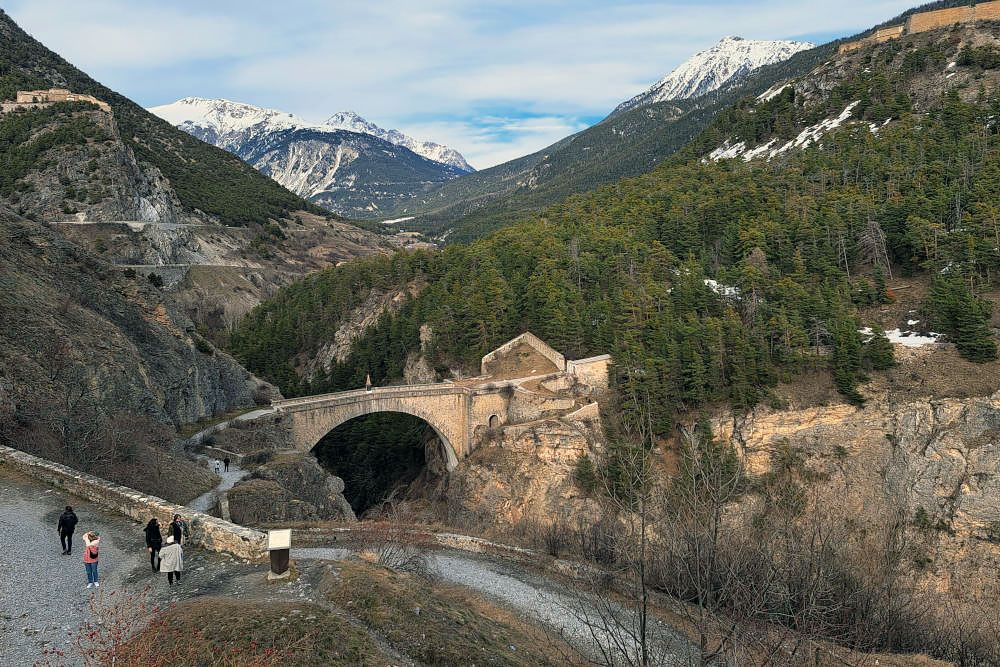
We continue to the Pont d’Asfeld, a bridge that spans the deep gorge of the Durance at great height. It is a technical masterpiece from 1734. From the bridge, we look down at the swirling water far below. The bridge connects the town to the forts on the opposite side of the valley.
The mountain forts around Briançon
The forts around the city are well worth a visit. They lie close together. The path up to them is steep, but the view over the town is the reward. You can clearly see how the city walls enclose the old centre. The first fort is Fort Dauphin. A little further on are Fort des Têtes and Fort du Randouillet. These forts are positioned strategically above one another on the mountainside, forming an impenetrable defensive line. It is impressive to see how much effort is once put into protecting this region. The thick walls and dark corridors tell the story of the soldiers who once stood guard here.
Briançon and the 2030 Winter Olympics
During our walk, we notice that the city is buzzing with activity. Briançon is preparing for a major event: it will be one of the locations for the 2030 Winter Olympics. The Serre Chevalier ski area will host several freestyle skiing disciplines. We love the idea that the world’s best athletes will soon be competing here.
What makes this project even more special is the accommodation for the athletes. Instead of building soulless new apartment blocks, the city chooses to renovate existing historic buildings. Parts of the old forts, such as Fort des Têtes, are being prepared to house hundreds of athletes. It is a huge undertaking to equip these centuries‑old military structures with modern facilities. What an extraordinary place to prepare for the most important competitions of your life. After the Games, the buildings will be converted into housing for local residents — a wonderful example of sustainable heritage use.
Modern life in the lower town
Many visitors stay in the old upper town, but the lower town deserves attention too. This modern part of Briançon is lively and full of activity. The Rue Centrale is the place to be. It’s a pleasant street with many restaurants and terraces. We notice that this is where the locals come for their daily shopping. The atmosphere is relaxed and typically French.
On Avenue du 159ème RIA, you can see the military past of the lower town. This is where the large barracks once stood. Walking past these monumental buildings gives you a sense of the scale on which soldiers are once housed here. Many of the buildings have now been beautifully renovated and turned into homes or shops. The Caserne de Briançon, for example, has been transformed into the stylish Garrigae hotel.
Near Rue Centrale lies Parc de la Schappe, a green park surrounding a small lake. It’s the perfect spot for a sunny picnic. In summer, many families relax here by the water. You can also enjoy a pleasant walk along the banks of the Durance river.
For sports lovers, the René Froger ice rink is a well‑known place. It is not named after the Dutch singer, but after a local resistance hero and famous ice hockey player. Ice hockey is very popular in Briançon. The local team plays at a high level and the matches attract a lot of spectators. An evening of ice hockey is a fun way to mingle with the locals. The town’s casino is also located in this lower part — a striking building with an eye‑catching design. Briançon has plenty to offer outside the city walls too.
The surroundings of Briançon
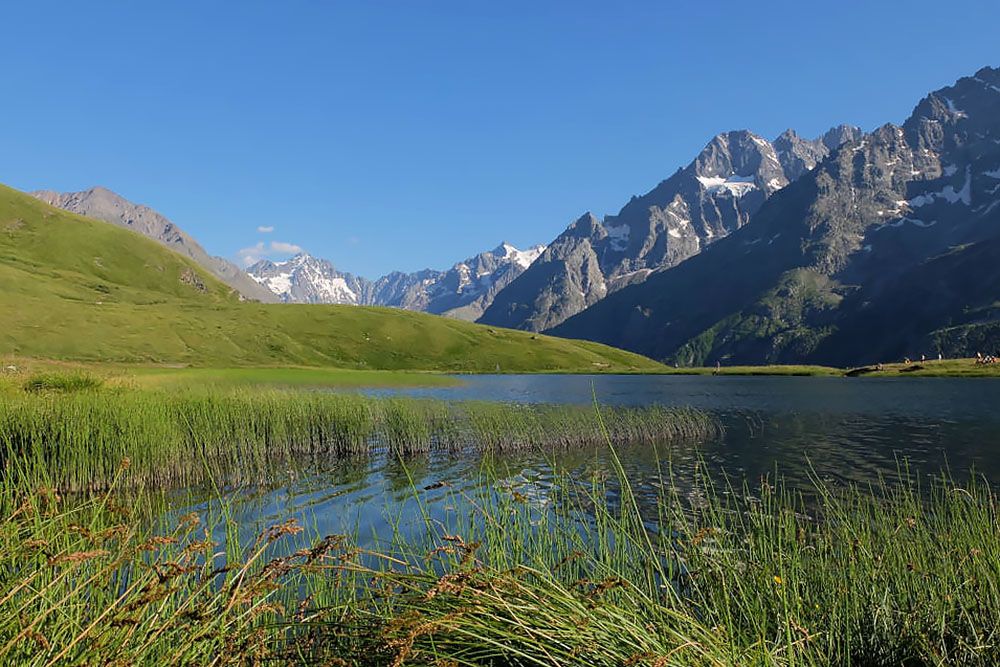
The area around Briançon invites you to get outdoors. There are countless hiking trails starting at the edge of the city. A beautiful area to explore is the Vallée de la Clarée, a protected nature reserve with authentic villages and crystal‑clear streams. The tranquillity here is a lovely contrast to the bustle of the city.
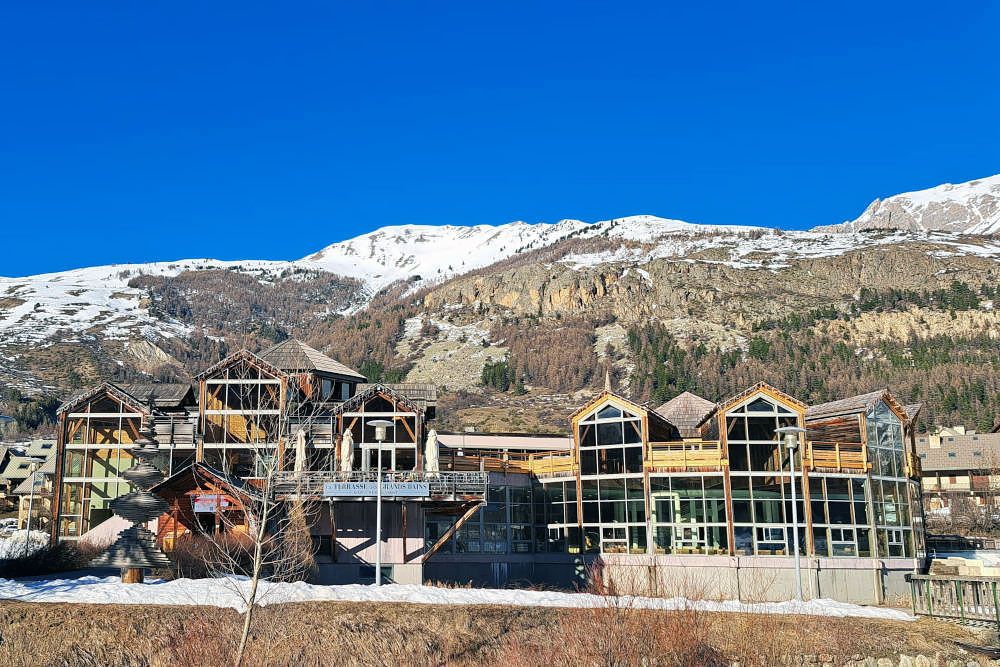
After an active day, a visit to the thermal baths is a great idea. We drive to Le Monêtier‑les‑Bains for the Grands Bains du Monêtier. The natural spring water is wonderfully warm. You can swim in an outdoor pool while looking at snow‑covered peaks. The complex also has various saunas and steam rooms. It’s the perfect place to relax your muscles. The baths are very popular, so it can get busy, especially in the heated outdoor pools.
A trip to Italy is easy from Briançon — the border is very close. Cross the Col de Montgenèvre and within twenty minutes you’re in another country. The first village you reach is Claviere. A little further lies Sestriere, best known as a winter sports destination. It’s fun to enjoy an Italian espresso in one of the villages. You immediately notice the difference in atmosphere and architecture. The blend of French and Italian culture makes this region especially interesting.
Winter in Briançon
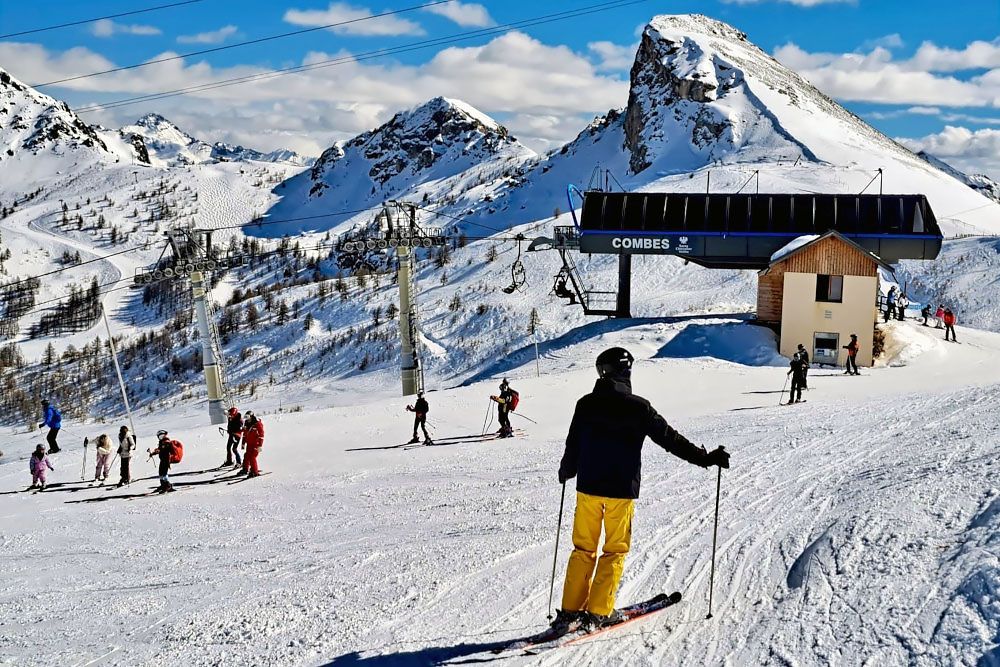
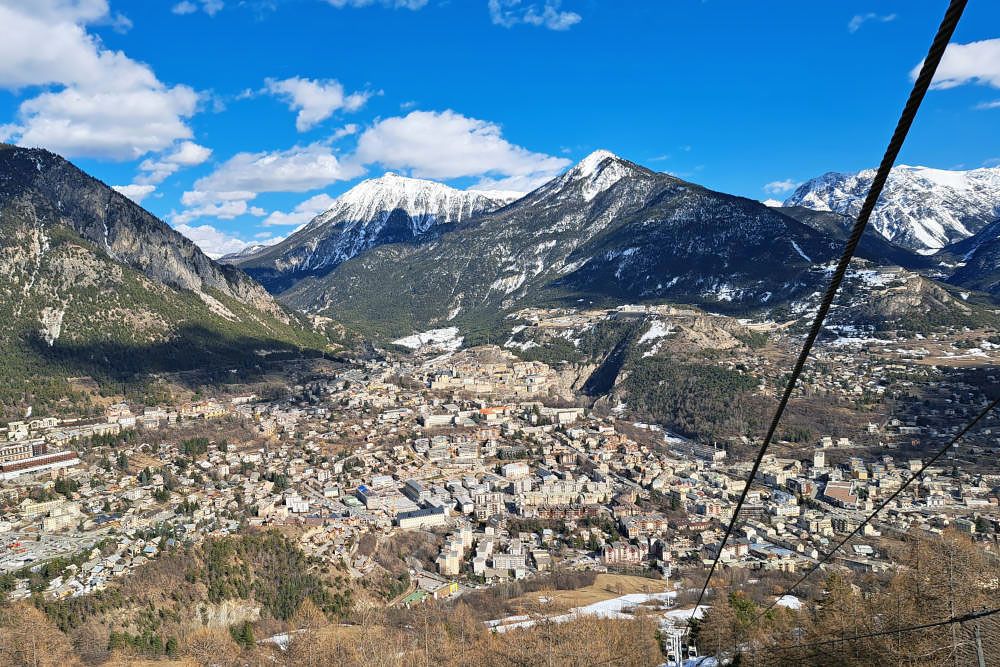
In winter, Briançon transforms into a lively winter sports hub. The location is ideal for skiers. From the heart of the city, you take the Télécabine du Prorel. This lift brings you quickly to the top of the mountain, right in the middle of the vast Serre Chevalier ski area. The area has around 275 kilometres of pistes, mainly for intermediate and advanced skiers. We love that you can step straight from your hotel into the snow. The runs are varied and often offer stunning views of the town deep in the valley. The combination of a historic city and direct access to the slopes makes Briançon a unique winter sports destination. We will return later with a full guide to all the skiing possibilities.
Briançon is a top destination in every season
Briançon pleasantly surprises us as a city break destination. It is not a standard city with only shops and museums. The combination of Vauban’s impressive fortifications and the overwhelming natural surroundings is special. In the coming years, the city will be shaped by preparations for the 2030 Olympics, adding an extra dimension to any visit. In winter, you enjoy excellent snow conditions; in summer, endless outdoor activities. Briançon is truly a destination for all seasons.
Frequently Asked Questions about a City Break to Briançon
The city lies in the southeast of France, in the Hautes‑Alpes department. It sits at an altitude of 1,362 metres, making it the highest city in France. The Italian border is close by — within about twenty minutes you can be in Italy.
The walled upper town, the Cité Vauban, is the highlight, with its remarkable church and the Grande Rue. The Pont d’Asfeld and the surrounding forts are also must‑sees. In the lower town, Parc de la Schappe and Rue Centrale are well worth a visit.
The upper town is beautiful but steep in places, with cobbled streets. Good walking shoes are essential for grip and comfort. Walking up from the modern lower town takes around twenty minutes and is quite a climb.
The city is attractive all year round. In winter, you can enjoy the Serre Chevalier ski area. In summer, the temperatures are ideal for hiking and cycling in the mountains.
Absolutely. The villages in the valley have a very different atmosphere. Places like Le Monêtier‑les‑Bains and Villeneuve are more authentic and quieter than Briançon. The contrast between the modern city and these traditional villages adds an extra dimension to your trip.
You can enjoy beautiful hikes in Parc National des Écrins or the Vallée de la Clarée. Relaxing in the thermal baths of Le Monêtier‑les‑Bains is also a great option. A trip across the border to Italy is easy. In winter, you have direct access to the vast Serre Chevalier ski area.
These restaurants come highly recommended:
- Le Bastion in the Caserne de Briançon hotel — refined dishes in a beautifully renovated barracks.
- Le Quinze Neuf — a cosy grill restaurant focusing on local produce and good wines.
- L'Alpin — perfect for traditional mountain dishes such as raclette and fondue.
- Le P’Tit Zinc — a small bistro in the lower town with tasty dishes.
- Margherita Briançon — great for wood‑fired pizzas and Italian specialities.
- Table du Cairn in Le Monêtier‑les‑Bains — high‑level dining with fantastic mountain views, ideal after a visit to the thermal baths.
Briançon offers a wide range of accommodation. Excellent options include:
- Garrigae Caserne de Briançon & SPA Cinq Mondes — a luxury hotel in a beautifully renovated barracks with extensive wellness facilities.
- Maison Soyeuse — a small, elegant 4‑star hotel with great attention to detail and history.
- Domitys – Les Aiglons Blancs — a modern complex with fully equipped apartments.
- Hotel Vauban Briançon Serre Chevalier — centrally located in the lower town, ideal for skiers.
- Hôtel Mont‑Brison — simple, welcoming, and excellent value for money, close to the centre and ski lifts.
We visited Briançon and its surroundings at the invitation of Serre Chevalier. The content of this blog is based entirely on our own impressions and has been written independently and objectively.