In October, we explored the Via Algarviana, a popular long-distance hiking trail in Portugal. The route offers an ideal mix of experiences: we enjoyed walks through stunning nature under a pleasant autumn sun, and discovered authentic villages and towns that have retained their traditional character. One such place is Alcoutim, the official starting point of the Via Algarviana. We spent a few days here. This historic town sits on the border between Portugal and Spain, with its medieval castle, whitewashed houses clinging to the hills, and narrow streets, feeling unmistakably Portuguese. Here, you encounter the other, more authentic Algarve.
Alcoutim Through the Ages
We stroll from our hotel towards the old town centre. Along the way, we pass white stone walls adorned with typical Portuguese tiles bearing inscriptions. Our guides from our Via Algarviana hike accompany us again, translating and explaining the messages on the tiles. Since both are named Ana, we’ve taken to calling them Ana Algarve and Ana Algarviana to tell them apart. Ana Algarve works for the Algarve tourism board, while Ana Algarviana is connected to the Via Algarviana organisation. They explain that the inscriptions highlight the bond between Portugal and Spain, and the river that both divides and unites the two countries.
As we walk on, they share the long history of Alcoutim. The town was already a significant trading post in Roman times. Later, the Moors ruled the area for nearly five centuries until the Portuguese reclaimed it in the 13th century. Ana Algarviana points out the resilience of the people who lived here despite harsh conditions. In the distance, the castle still stands guard over the town. Slowly, we approach the old centre, where the historic atmosphere is palpable.
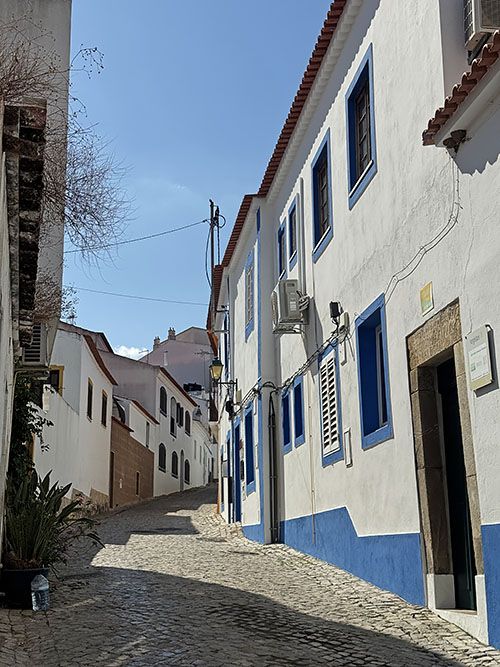
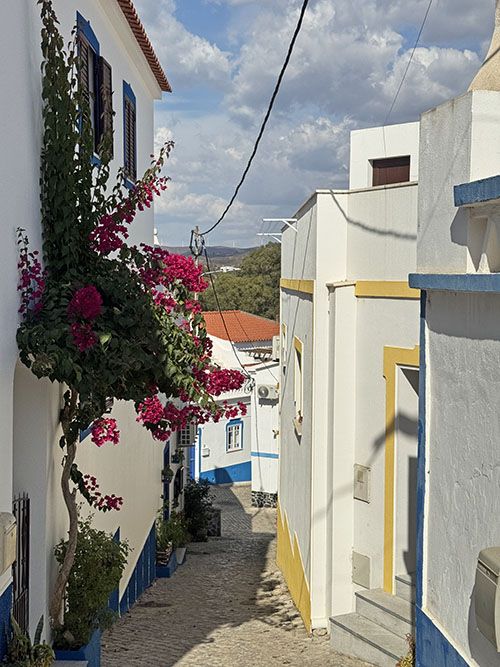
Along the Guadiana to Alcoutim Castle
We cross the bridge over the Ribeira de Cadavais and spot an information board about the Grande Rota do Guadiana, a 78-kilometre hiking trail that winds through three municipalities and seventeen villages. Ana Algarve tells us the route connects the interior with the coast, offering varied landscapes of mountains, riverbanks, and abundant nature. There’s more to explore here than just the Via Algarviana—this area attracts hikers for its rich heritage and fresh air.
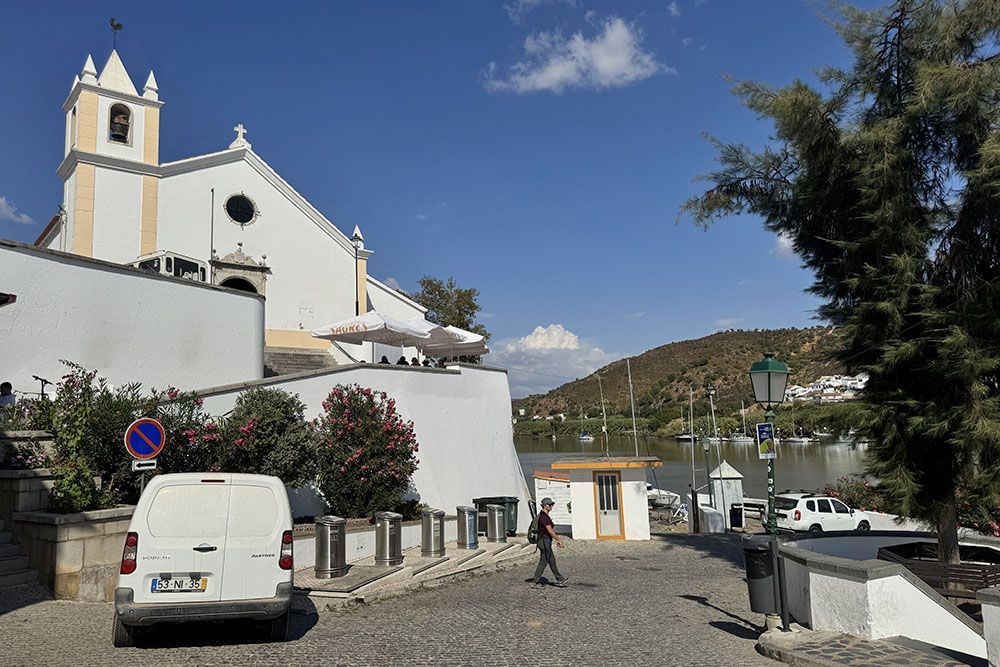
Entering the old town, we see several information boards, helpfully written in both Portuguese and English. We pass the Church of Mercy, built in the early 16th century. The associated brotherhood has existed here since 1513. The church survived a devastating flood in 1876, though much damage was done. Later, the interior was adapted to accommodate a hospital extension.
The Long Guadiana
By the banks of the Guadiana, Ana Algarviana recounts the river’s long history. One of the longest on the Iberian Peninsula, the Guadiana was once a vital trade route and border between Portugal and Spain. It teemed with fish, caught using traditional methods, while olive trees, figs, and vines flourished along its fertile banks. The 1876 flood caused widespread destruction, but today, the Alqueva Dam regulates the water level.
Along the river, we see sculptures, each depicting a piece of history, created by a local artist. We continue past the official starting point of the Via Algarviana, which also marks the beginning of the Lourinhã Hiking Trail, another scenic route through hills and olive groves. The views of the castle and the Spanish town of Sanlúcar de Guadiana are breathtaking. For hikers, this area is nothing short of paradise.
Border Guards and Smugglers
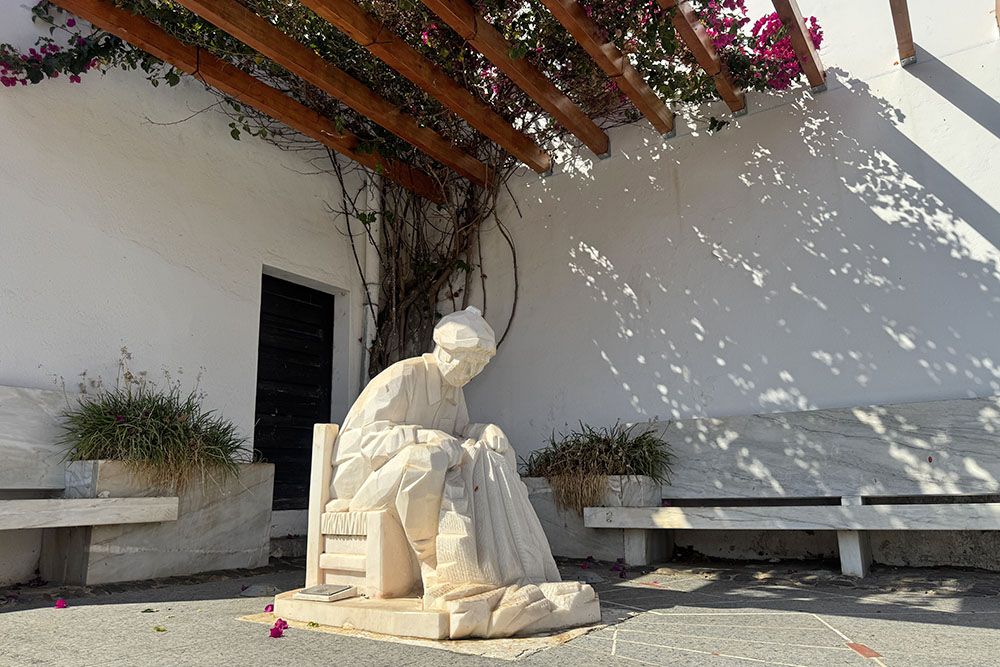
By the river stands a statue of a border guard, a silent reminder of the region’s smuggling past. Ana Algarve explains that the guards were not always strict—many had family ties to smugglers, so enforcement was often lax. Smuggling was a way of life here, and it’s celebrated annually at the popular Festival do Contrabando (Smugglers’ Festival), a three-day event where residents of Alcoutim and Sanlúcar de Guadiana come together.
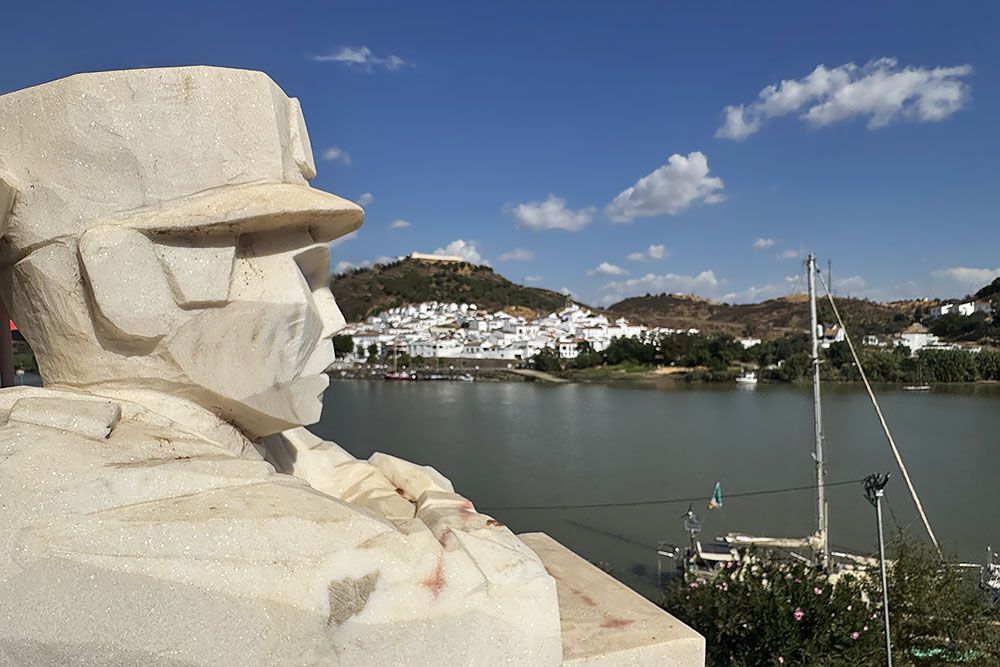
From the river, we can see Sanlúcar de Guadiana and the Castillo de San Marcos. The Spanish town is so close, we could almost swim across. This proximity makes the border feel especially tangible.
On our way to the castle, we visit an exhibition on Mediterranean cuisine, recognised as intangible cultural heritage. The display highlights the importance of this tradition for health and culture, adding another layer to our walk. Here, we discover not just nature and history, but also daily life.
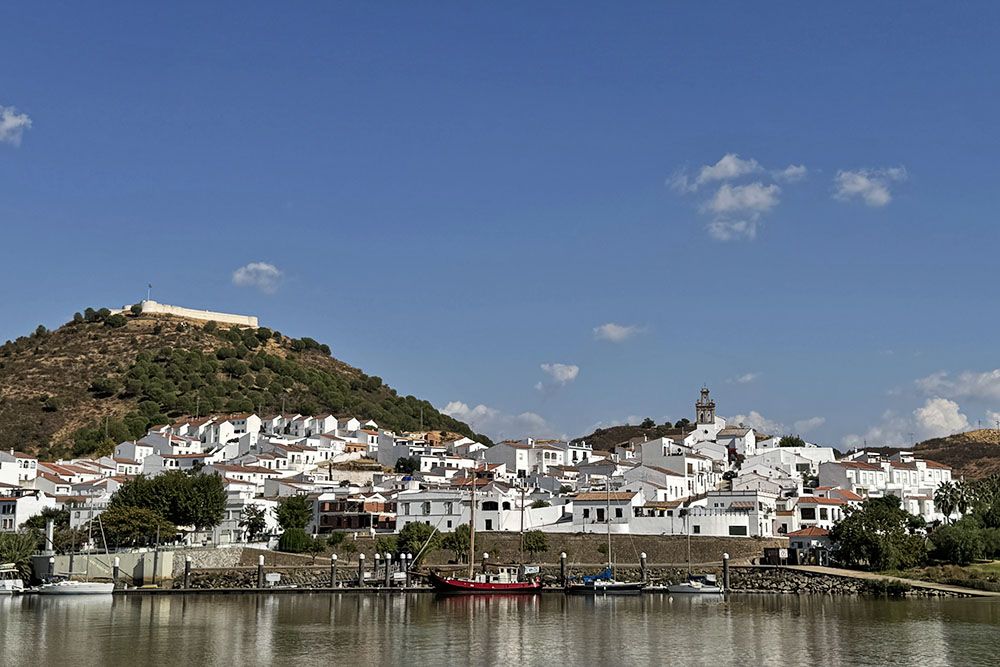
Visiting Alcoutim Castle
We ascend through narrow, idyllic streets towards Alcoutim Castle, perched high on a hill overlooking the Guadiana River and the town. It’s clear why this spot was so strategic: the view is perfect for monitoring the border.
Construction began in the 14th century under King Dom Dinis, who aimed to defend the border and control river trade. Within the castle walls stood houses, a prison, and a water reservoir. One house had two storeys and likely served as a watchtower—a medieval apartment block with a view!
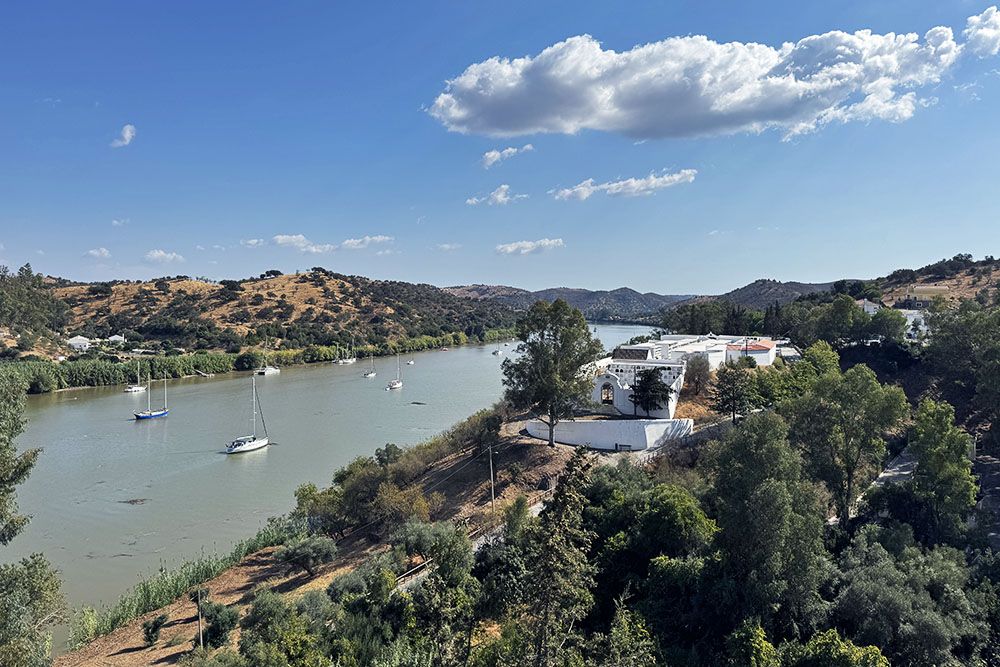
In the 17th century, after Portugal regained independence, the castle was reinforced. With Spain still a threat, old defences were strengthened and new ones added, including a platform with seven cannons pointed at Sanlúcar de Guadiana. The walls were reinforced with bastions to support the cannons, ensuring the castle could withstand a barrage.
Inside, the governor’s house, soldiers’ quarters, and a powder room were built, transforming the town into a garrison fortress. 18th-century drawings show buildings for military, administrative, and commercial use, with no structures around the castle—clearly, a clear line of sight was preferred.
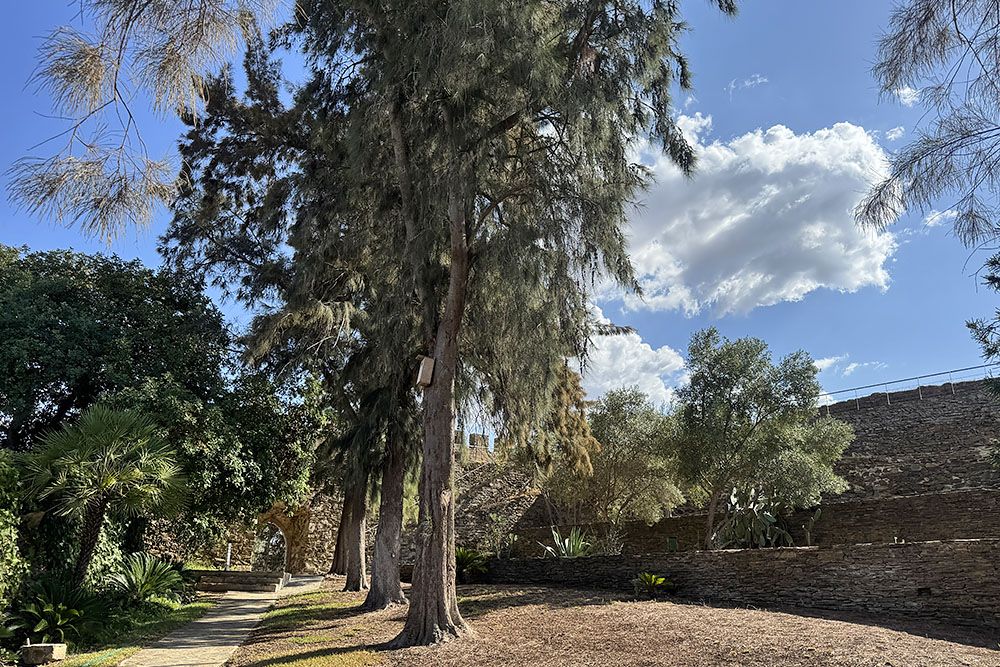
From Fortress to Slaughterhouse and Museum
In the 19th century, the castle took on a surprising new role: it became a slaughterhouse. Not the most romantic use for such a historic building, but it shows the castle’s adaptability.
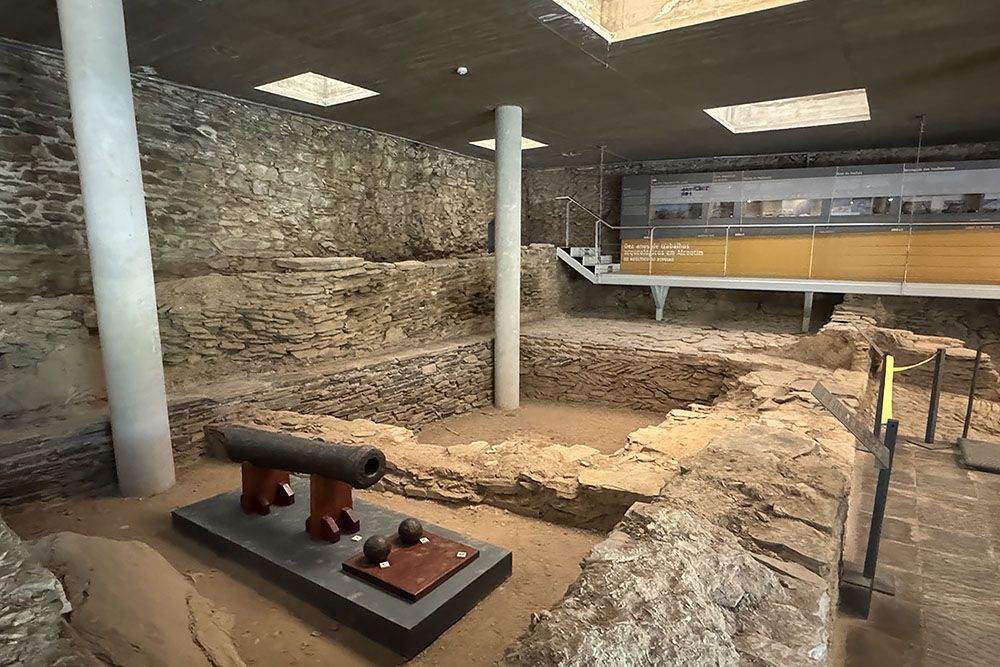
In the 1960s, restoration work began to reinforce the walls and clean up the area. In the early 1990s, Alcoutim’s council launched a project to restore the castle. Archaeological finds were made during excavations, later studied in detail. Today, the castle is both a ruin and a museum, with exhibitions on archaeology and medieval games in the old powder room. Apparently, they enjoyed more than just cannons here—they liked games too.
As we wander, we realise Alcoutim Castle is more than just stone and mortar. It tells stories of war and peace, trade and daily life, all with a stunning view over the river and Spanish countryside. History feels tangible here, without being dusty. All in all, an impressive experience, even for those not usually drawn to castles.
From Church to Terrace
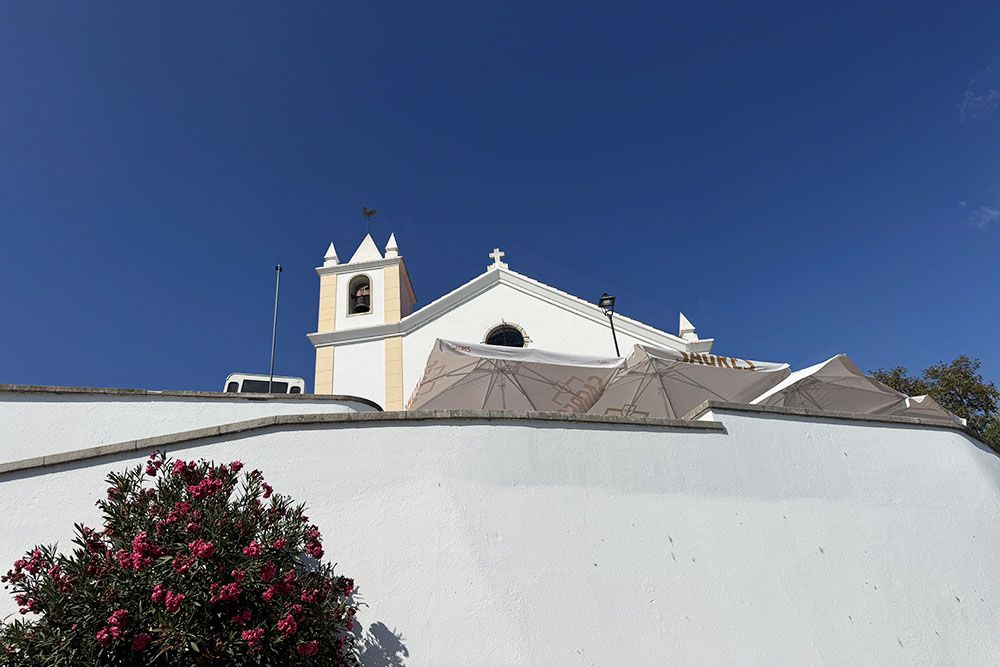
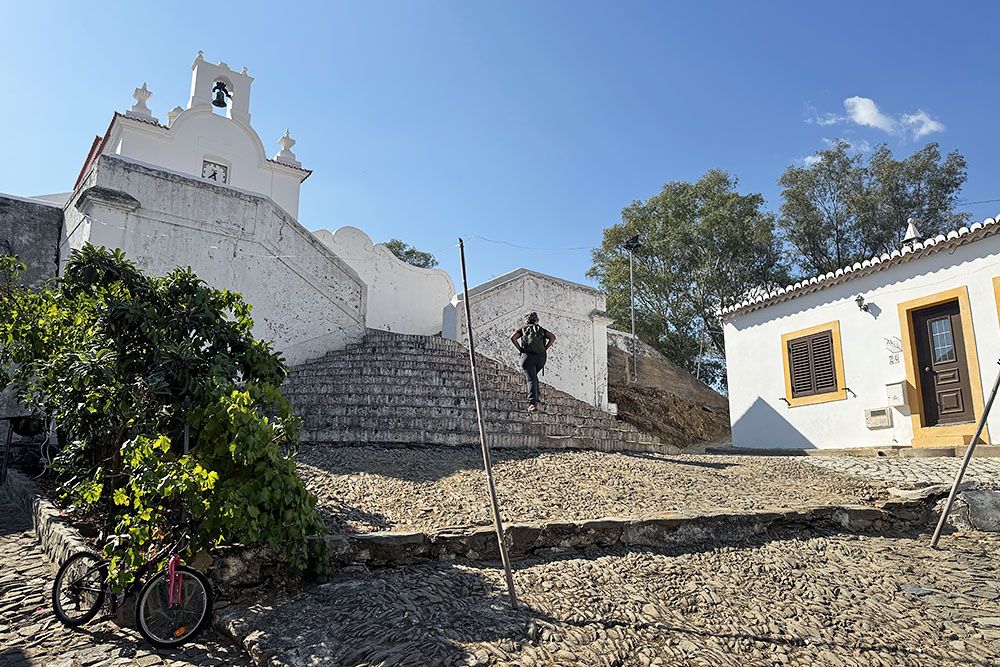
We descend from the castle, then climb steeply through the most picturesque streets. The final stretch to the Hermitage of Nossa Senhora da Conceição is via an impressive staircase, built by military engineers in the late 17th and early 18th centuries. Despite its Baroque style, the round steps are precise, almost militarily orderly, connecting the church to the town and offering beautiful views.
At the top, we find the small chapel we’d admired from the castle. It exudes charm. Dating from the 17th century, it’s dedicated to Our Lady of the Immaculate Conception. Sadly, it’s closed, so we walk around it, taking photos.
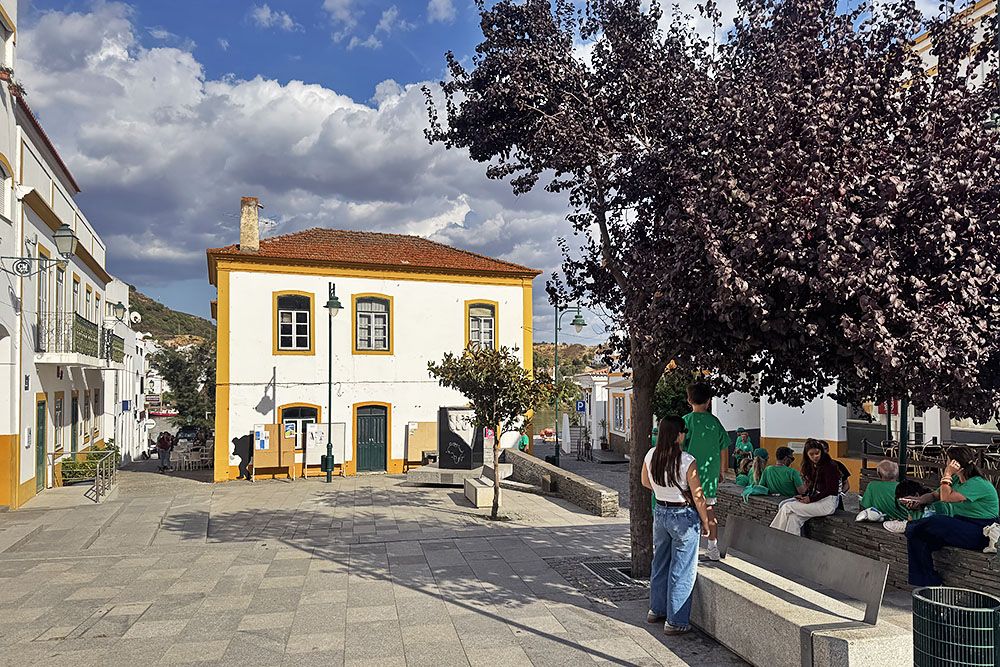
After visiting the hermitage, we wind through narrow alleys back down to Alcoutim’s central square. There, we see a few young people in green political shirts, trying to engage undecided voters, though the square is almost empty. Bored, they stare into space, probably waiting for a miracle or a passerby up for a chat.
We end our day with a drink on a terrace, enjoying the view of the river, castle, and chapel. What a delightful and fascinating visit to such a small place! We decide that while Alcoutim might not be worth a special trip from the coast, if you want to explore the authentic Algarve, a thorough visit is a must.
Practical Tips for Visiting Alcoutim
Alcoutim is on the Portugal-Spain border, in the eastern Algarve. The best way to reach it is by car via the N122 or N124. Public transport is limited, so a car is recommended.
Yes, Alcoutim is the official starting point of the Via Algarviana, a long-distance trail. The Grande Rota do Guadiana (GR15) and the Lourinhã Hiking Trail also begin here, offering plenty of options for walkers.
Alcoutim is a small town with a rich history and lovely walks. It’s perfect for a day trip, especially if you want to hike or visit the castle. For a more relaxed stay, consider spending a few days.
Yes, the town centre has several restaurants and terraces with views of the river and castle. You can enjoy local dishes and the laid-back atmosphere.
Absolutely. The Spanish town of Sanlúcar de Guadiana is just across the river, accessible by ferry, so you can visit two countries in one day.
For us, one day was enough to explore Alcoutim thoroughly. It’s also an ideal base for the start and finish of Stage 1 of the Via Algarviana. If you visit during a festival, plan at least two days.
The Alcoutim Walking Festival (also known as Caminheiros: Border Experiences) takes place every March. This three-day event brings together hiking enthusiasts to explore the stunning nature around Alcoutim. You can join guided walks of varying difficulty, enjoy boat trips on the Guadiana, and experience local traditions. It’s a perfect opportunity to discover the quiet beauty of the Algarve’s interior, far from the busy coastal resorts.
The Festival do Contrabando (Smugglers’ Festival) is usually held in late March or early April in odd-numbered years. This colourful event celebrates the unique history of smuggling between Portugal and Spain across the Guadiana River. The highlight is a temporary pedestrian bridge built between Alcoutim and Sanlúcar de Guadiana, allowing free movement between the two countries—a symbolic reversal of the clandestine night-time crossings of old. Expect historical re-enactments, traditional markets, music, dancing, and delicious food.